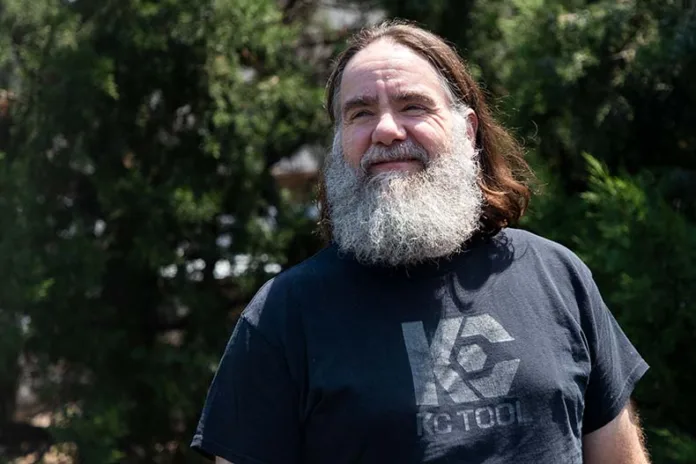
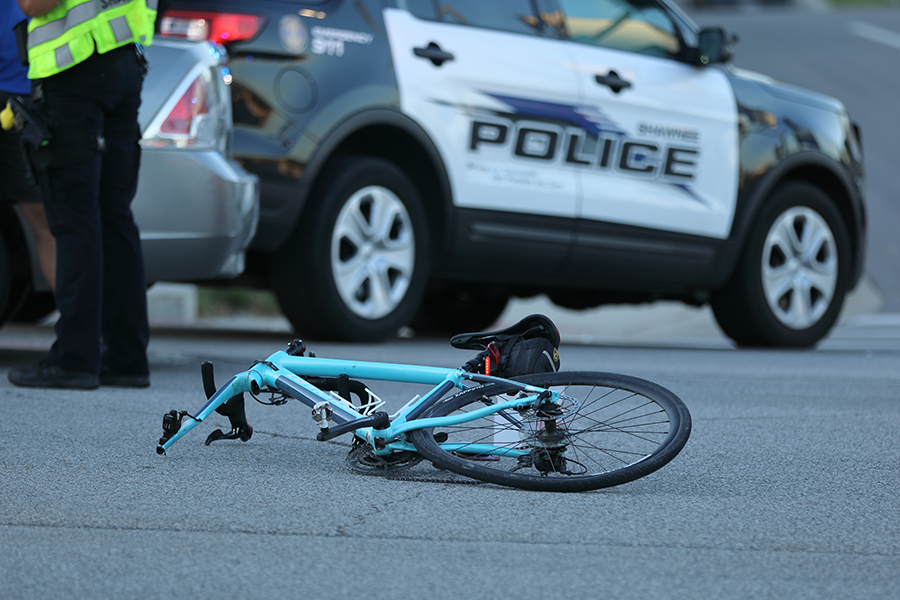
Chris Scott has been hit by a car while on his bike three times in his life. Maybe three and a half times, depending on the way you look at it.
The first time was when he was 5 years old, riding a bike on the sidewalk, when a car turned and ran over him.
The next time — the worst one, he says — he went through a windshield headfirst after an elderly man in a big SUV turned into him.
And the third time, something similar happened, when someone turned into him, though the outcome was less severe.
For that time, he counts as a half; he didn’t get hit, but it was close. It happened when a teenage driver near one of the Blue Valley high schools in Overland Park didn’t see him when they turned.
“I managed to veer out of the way, but hit the curb, went over the curb, and my bike was pretty well damaged,” he said.
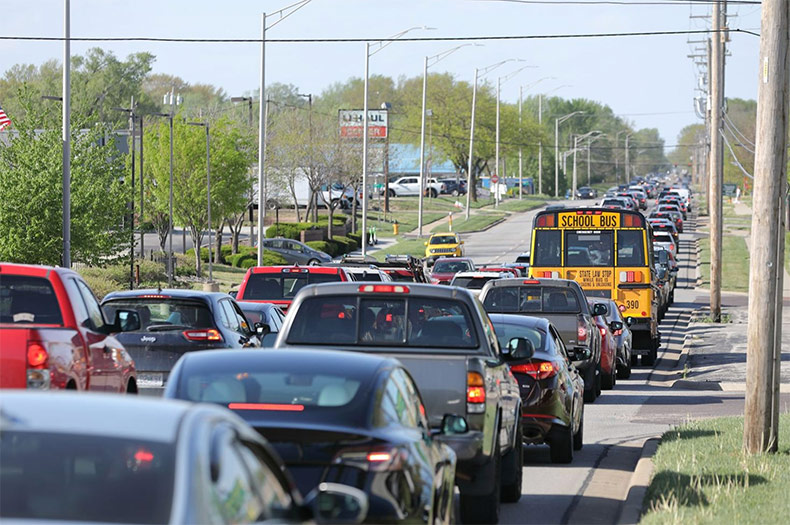
There have been several other close calls he’s had over the years. He’s also encountered reckless and angry drivers who don’t want to share the road with cyclists like him. Don’t even get him started on school zones during morning drop-off or afternoon pick-up times.
“People aren’t expecting to see a bike, so when there’s one in front of them, they don’t see it,” he said.
60+ pedestrians, cyclists killed or seriously injured in OP over past decade
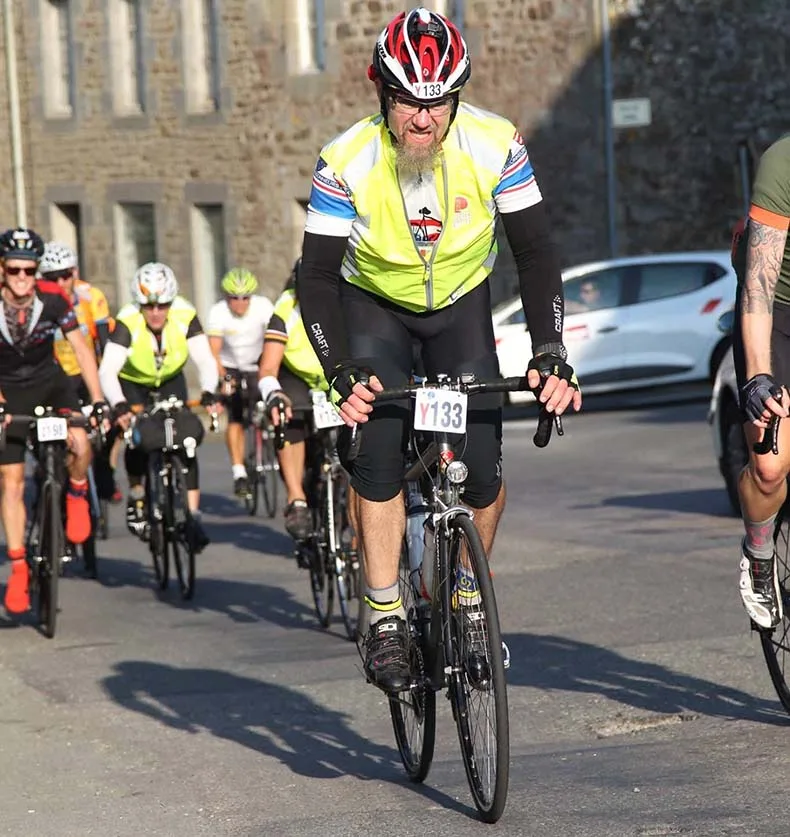
Scott, who lives in Overland Park, is an endurance cyclist who has competed in multiple long-haul races. He likes to cycle to work in Olathe when the weather cooperates, too.
Transportation experts consider individuals like Scott to be vulnerable road users. That is, anyone traveling on the road on foot, by bike or scooter or even in a wheelchair. They are more at risk of being seriously injured or killed in traffic accidents since they lack the protection of a car’s steel frame, seat belts and airbags.
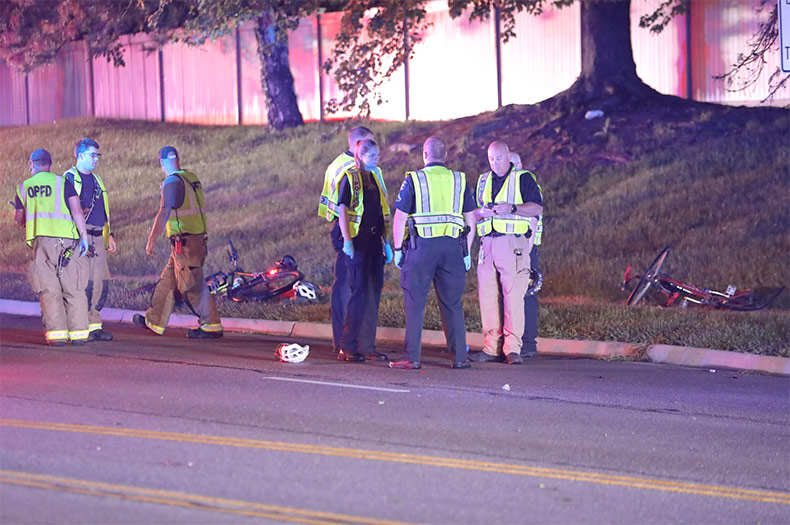
In the past decade, 617 people have been killed or seriously injured in Overland Park in traffic accidents. More than 10% of those individuals who were killed were either walking or biking at the time of the accident, according to data presented to the Overland Park City Council during a Committee of the Whole meeting in June.
City leaders in Overland Park are looking to change all of that, and eventually, bring the number of people killed or seriously injured to zero.
It’s all part of the process for the Safe Streets Plan, which Overland Park is developing through the billion-dollar federal Safe Streets For All (SS4A) grant program. However, questions remain about what that will look like and what investments that kind of commitment will take.
What’s happening now with the safe streets plan?
Currently, the city is using some of the grant funds to conduct a series of traffic-calming demonstration projects in the form of speed cushions along four corridors around the city that have a history of speeding complaints.
At the same time, Overland Park is gathering data to inform future projects and potential funding decisions.
After that, Overland Park will have identified its most pressing road safety issues and assessed potential infrastructure changes to address them, mapped and prioritized by need.
As part of the process, participating communities are required to make a commitment to reduce traffic accidents that result in fatalities and serious injuries. In Overland Park’s case, that step could position it as one of the first Johnson County cities to take the Vision Zero pledge.
“We can get to zero, because one [death or serious injury] is too many,” Mayor Curt Skoog said in June.
Vision Zero explained
While not legally binding on its own, Vision Zero is the pledge to fully eliminate traffic fatalities and severe injuries by a certain date. It typically comes with benchmark goals that need to be met to keep a community on target to reach the bigger goal.
For instance, Kansas City, Missouri — one of the most car-dependent cities in the U.S. — signed on in 2021, with the intent of reaching zero traffic deaths by 2030. Since then, the city created a Vision Zero Task Force, identified dozens of projects to work toward the goal and earmarked funding for them.
Eric Rogers, executive director of the regional nonprofit BikeWalkKC, said Vision Zero, when done correctly, makes it a public health conversation.
“It looks at the problem holistically,” he said, “and all the factors that go into why there are crashes.”
Part of the issue is that deaths and serious injuries from traffic accidents are often treated as inevitable.
“They’re one-offs, and they’re devastating for people that die or lose a loved one, but it’s so normalized that we don’t think of it as a daily emergency like it actually is,” Rogers said.
But it doesn’t have to be like that, Rogers says. Getting to zero is “possible and achievable.”
Plus, it’s something BikeWalkKC actively encourages all local jurisdictions to tackle.
What realizing Vision Zero actually takes
Critics of Vision Zero often are skeptical of its effectiveness. They say, without real investments, it’s nothing more than an empty pledge.
Amy Scrivner — an Overland Park councilmember who also works for BikeWalkKC and is married to Scott, the endurance cyclist — agrees.
During conversations with her city council colleagues in June, she stressed the need to consider what it will actually take for Overland Park to have zero traffic accident deaths and serious injuries.
“We need to ask ourselves, ‘What are we willing to invest in and push,’ because meeting those goals requires investment, input, commitment,” she said. “[The] commitment sounds like a great PR soundbite, but the reality is it quietly just gets pushed either later out or [there are] excuses.”
In a recent interview with the Post, she said the real steps can get lost in “the marketing message around Vision Zero.”
“Vision Zero is a rallying cry, but at the end of the day, we have to have the political will and commitment,” she said. “This is not a short-term solution; it is a long-term investment.”
Rogers has a similar assessment, saying, “Show me your [city’s] budget, and I can see where your values lie.” That’s because local governments typically do invest millions of dollars in infrastructure but very little of that is set aside for sidewalks, trails or protected bike lanes.
“To be serious, they need to be serious about spending money on Vision Zero,” he said. “It really takes the efforts of everybody across the community to buy into the goal and then support the changes and investments that it takes to achieve the goal.”
Next steps for Overland Park’s Safe Streets Plan:
Overland Park officials are still drafting the city’s Safe Streets Plan.
Anthony Gallo, a contractor from Kimley-Horn and Associates who is working on the project, estimated in June that a draft version of the plan would be finalized this year.
Then, the city council will review the plan in early 2027 and then consider a resolution to formalize the city’s commitment to reducing traffic deaths and serious injuries, possibly within the Vision Zero framework.
In Scrivner’s eyes, Vision Zero could be in the cards for Overland Park.
“I’m hopeful that we can really move past a campaign slogan and dig into actual real results,” she said.