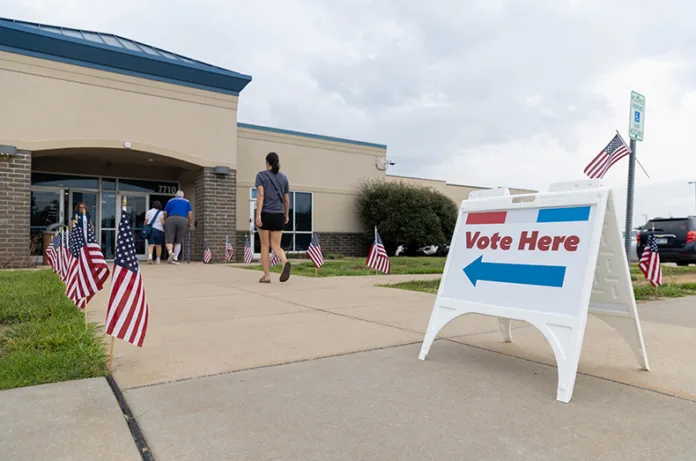
People hoping to look up who’s donating to candidates for city and Johnson County government will find that information harder to get this year, due to a decision by county officials not to continue posting it on the election office’s website.
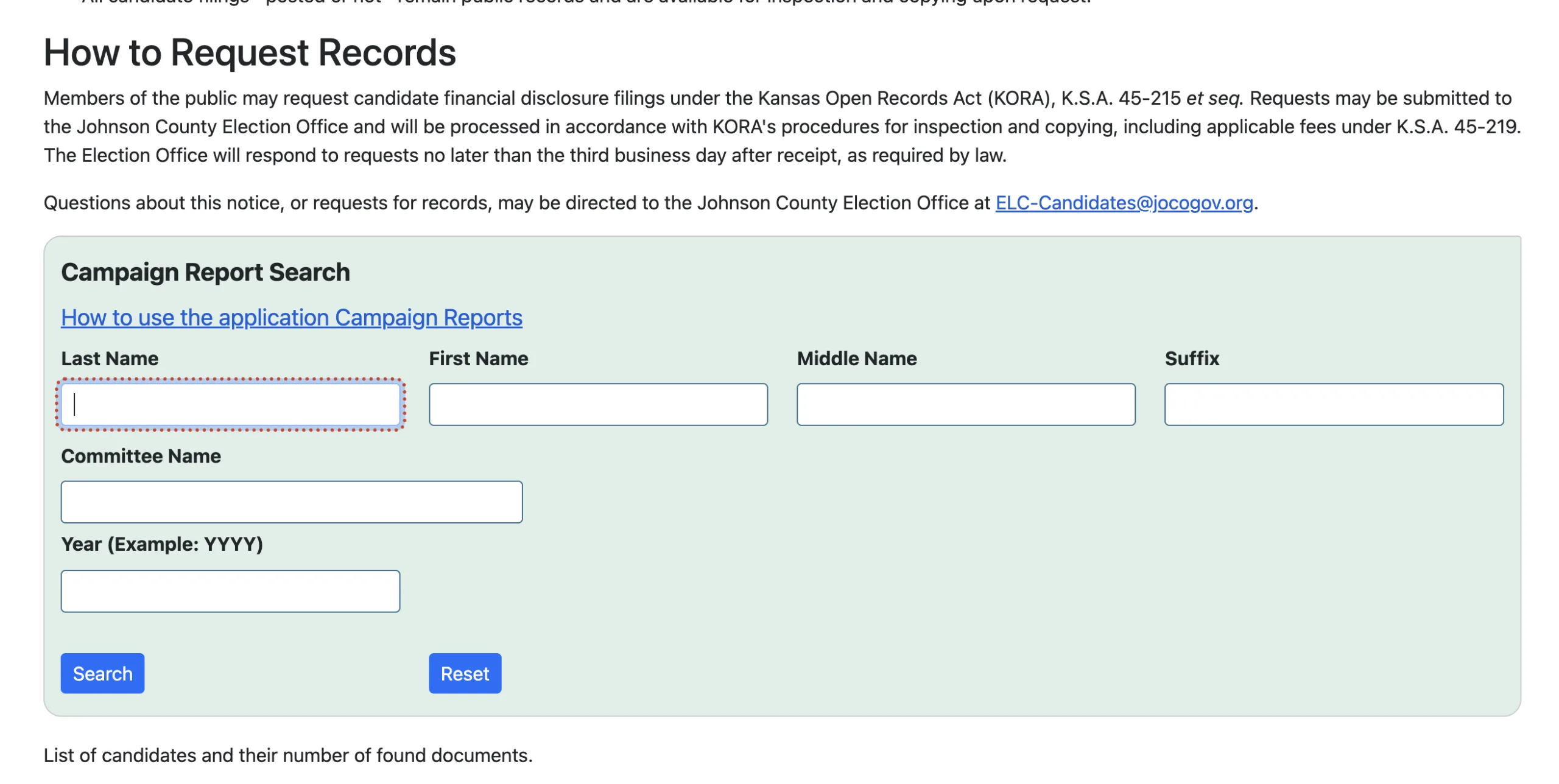
Instead, the forms for this year’s candidates, which include lists of campaign donors, receipts and expenditures, will only be available through a Kansas Open Records Act request, which could take longer and possibly include fees for staff time.
County legal and election office officials say the change was made necessary by a new federal rule on website accessibility under the federal Americans with Disabilities Act.
The Johnson County Election Office has for years made various filings, including statements of interest, appointments of campaign treasurers and receipts and expenditures, searchable on its website for municipal and county candidates.
As of this year, however, anything filed on April 22 or later can only be obtained through a more cumbersome open records request.
An announcement on the election office website said this is to meet the Web Content Accessibility Guidelines of the Americans with Disabilities Act, a rule first published in the Federal Register in April 2024.
“Many candidate financial disclosure filings are handwritten or otherwise submitted in a format that does not conform with this standard, so they are being made available through request rather than posted directly online. For these types of documents, the county continues to evaluate the availability and feasibility of technology options that satisfy ADA standards,” the announcement states.
Handwritten forms are not specifically outlawed under the ADA. County officials did not provide an estimate of how many forms they receive that are handwritten, but it’s the fact that they are all submitted on paper, rather than digitally, that is the problem, said county Communications Director Lisa Thurber.
“A key aspect of these guidelines is that content must be accessible to tools such as screen readers, which read text aloud for individuals who are blind or have visual impairments,” she said.
In the same email, Election Commissioner Connie Schmidt said, “Just about all of the campaign finance documents we receive come in a format we can’t easily fix to meet web accessibility rules.”
Only city and county candidate records impacted
The federal rule affects all government websites.
The deadline for compliance was extended earlier this year to set the deadline for local governments of 50,000 residents or more to April 26, 2027. Smaller governments have until April 2028 to be in compliance.
The county election office’s decision only affects people running for local offices like city council, county commission and others that have to file their papers with the county.
Candidates for higher offices, like state legislature, district attorney and statewide offices, file their disclosures with the Kansas Secretary of State and the Kansas Public Disclosure Commission.
Local campaign reports from before April 22 will remain on the county site and searchable as usual. The website also instructs people who want the newer records to submit a request under the open records act.
The county is required to respond in some way to that request within three business day. In some cases, the county could charge someone requesting the records. State law regarding fees for open records can be found here.
How are other large Kansas counties responding?
A check with larger Kansas counties showed varying efforts to align their practices with the new administrative rules.
Wyandotte County does not post financial filings online but makes them available to people who request them in person.
In Shawnee County, Election Commissioner Andrew Howell said officials are aware of the rule, but are still working with their IT department on finding a solution.
Queries to Sedgwick County and Douglass County went unanswered, but both currently have records on their websites that include handwritten forms.
The county runs the risk of a Department of Justice action if it does not comply with the rule, Thurber said.
A first offense could bring a fine of about $115,000, increasing to $230,000 if it happened again. Failure to meet the guidelines could also leave the county open to lawsuits, she said.
Transparency vs. following the law
Two media experts contacted by the Post acknowledged that concerns about exposing the county to lawsuits for violating ADA guidelines are legitimate.
Max Kautsch, a Lawrence civil rights lawyer who staffs the legal hotline for the Kansas Press Association (of which the Post is a member), said that although the county has an interest in preventing the “trolling type of lawsuits” that can follow ADA compliance disputes, its leaders also have to balance that compliance with the accessibility the public has enjoyed.
“The question is to what extent should the county go to overcome the limitations that come with the anti-discrimination statutes and still make it so that members of the public can access that same information that they did before,” he said.
There are ways to do both, he continued.
For instance, problematic filings could be transcribed or the election office could offer a fillable PDF form and include a disclaimer that the originals are available at the Election Office, he said. The Secretary of State’s office provides an online form so that the papers can be filed electronically.
Thurber said county officials considered other ways to address the issue, such as separating the handwritten records for viewing after a KORA request, but “the county decided to take a different approach.”
She said the goal was to be transparent, comply with the requirements and treat everyone fairly while preventing an overload on county staff.
Singling out the handwritten forms could appear unfair to the public, she said. And the county does not have legal authority to require that forms be submitted in a particular format, she said.
“I don’t fault them at all”

Cost was also a key consideration.
Making the records available through the Kansas Open Records Act can be done with the election office’s existing staff, Thurber said. Converting the handwritten or scanned paper filings to a web-friendly form that complies with the ADA would require a substantial increase in staff time or the hiring of a third-party service.
“This is necessary because these documents cannot be easily converted through automated tools. By choosing the current approach, we can avoid these costs,” she said.
Mark Johnson, who teaches law and journalism at the University of Kansas and is a partner at the Dentons law firm, said counties are within their rights to make those types of decisions because they are doing what’s required under the law.
The law doesn’t require online posting of financial reports, even though county residents may be used to it, he said.
“I don’t fault them at all,” he said. “Could they do more? Possibly, but they’re not required to.”
If the county follows the open records law, he added, the paper records should be available in a matter of days.
Kautsch contends that there are reasonable steps the election office could take to make sure the information is still as available as it used to be.
“Rather, it sounds like the county is just throwing up its hands and saying, ‘Federal statutes make this too hard, so we’re not going to do what we did in the past.
“The question is whether or not the county officials care enough to spend the resources to make it so that the public has the same access the public used to have,” Kautsch said. “Or will they just make the excuse that federal law makes it too hard to be transparent?”