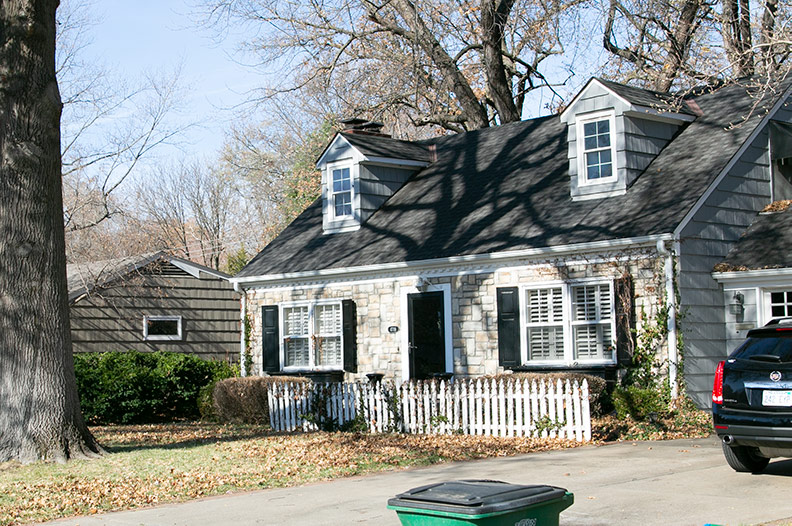
Two years after Prairie Village’s housing debate was effectively put to rest, a new state law is forcing the city to delve back into housing discussions.
Senate Bill 418, known as the by-right housing bill and signed into law earlier this year, removes barriers to home building that might slow down the process or increase costs for home builders.
The goal of SB 418, spearheaded by Kansas Sen. TJ Rose, Republican, of Olathe, is to bring back “starter homes.”
SB 418 eliminates some administrative steps in the home building process, opens up the definition of what qualifies as a single-family home and removes some notification requirements on single-family developments.
Under the new law, townhomes, duplexes and other types of housing traditionally considered to be multifamily could go next to single-family homes, potentially without a city having to rezone a property.
While several cities in Johnson County, including a cohort of cities in the northeast portion, opposed the bill, the city of Overland Park supported it — and is in the process of incorporating some of the new pieces of the law into the city’s development codes.
The idea of including housing types like accessory dwelling units under the single-family umbrella or getting creative with zoning codes isn’t new for some of northeastern Johnson County, though.
In 2022 and 2023, Prairie Village’s housing debate centered largely around resident pushback on any changes to single-family zoning districts, including accessory dwelling units. Things got so heated in city hall that a grassroots movement tried to uproot the city’s form of government; that effort ultimately fizzled out last year in the 2025 general election.
As conversations begin about how SB 418 impacts Johnson County, Prairie Village isn’t alone this time around.
“Every city is going through some kind of a process, or choosing not to at this point,” Deputy City Administrator Nickie Lee told the Prairie Village Planning Commission at its Aug. 4 meeting.
Officials in Roeland Park, a city that opposed SB 418 alongside Prairie Village earlier this year, are adjusting their own city codes to comply with the by-right housing bill.
Here’s a look at how Prairie Village and other northeastern Johnson County cities are addressing compliance with SB 418.
Prairie Village’s housing discussion history
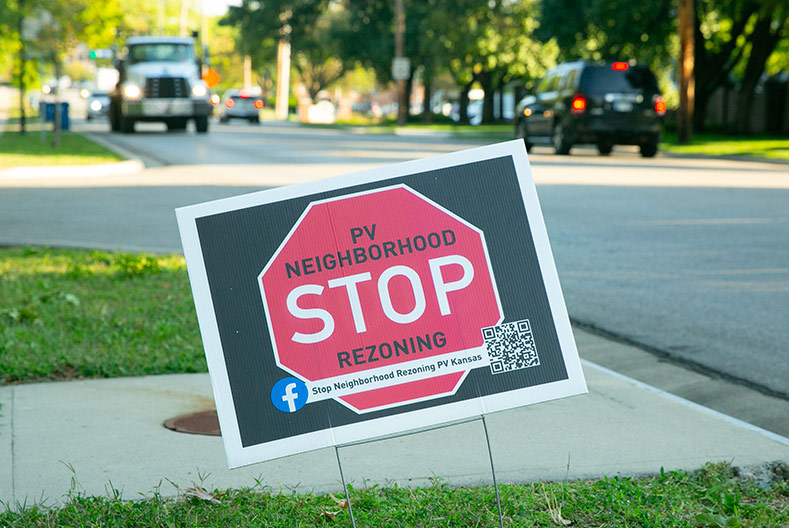
The city of Prairie Village spent much of 2022 and 2023 embroiled in a heated debate over a housing discussion.
Now, the new state law is requiring cities to allow for some of the same types of housing in single-family residential zoning districts that would have potentially been allowed under a set of recommendations Prairie Village mulled a few years ago.
Those recommendations, formed by a city housing committee in 2021 to develop possible solutions for creating attainable housing in Prairie Village, earned intense pushback from grassroots group of residents in summer 2022.
The pushback largely focused on one specific recommendation that would allow for accessory dwelling units, courtyard patterns or rowhouses to be built in more zoning districts.
But any effort to make changes to the zoning code were largely tampered out as a result of the pushback.
Several residents rallied against some of those housing types, ultimately accusing the city of trying to rezone single-family districts or allowing large-scale multifamily housing in single-family districts, which were never part of the housing recommendations.
Still, the housing conversation quickly devolved into a hot-button issue with, at times, personal conflict between a resident group and the city.
It also led to calls to uproot the city’s form of government, several failed attempts to recall the mayor and spilled over into the city’s plans to build upgraded municipal facilities.
Planning commissioners kick off SB 418 talks

On Aug. 4, Prairie Village’s planning commission started early conversations about which types of housing SB 418 may impact and the zoning ordinances that deal with those specific types of housing.
That conversation loosely touched on potential options the city has to comply with SB 418, though no specific changes or options have been approved at this time.
City Planner Chris Brewster, who is also a contractor with MultiStudio, told the planning commission that staff is “starting to formulate professional opinions and recommendations on what” SB 418 means for Prairie Village.
Brewster said the by-right housing law effectively means that certain types of housing should not be subject to discretionary review, like coming before the planning commission to plead their case.
Still, Brewster said builders and homeowners need to adhere to standards set by cities.
There are clear impacts from the bill like the removal of protest petitions for rezoning to single-family districts, Brewster said.
Other impacts from the bill are still unclear, Brewster said, or they may require some direction from the planning commission. This includes whether duplexes and townhouses are allowed in any district where a detached home is allowed, he said.
Planning commissioners briefly discussed some concerns surrounding SB 418, such as potential infrastructure impacts on some single-family zoning districts, how the city is getting questions about the bill answered and whether any litigation has come forward against the bill.
No action was taken by the planning commission earlier this month, as it was a preliminary discussion.
In the meantime, Prairie Village has just begun discussions about SB 418 and what it means for the city’s housing stock.
Lee told the planning commission on Aug. 4 that future discussions will come back before the planning commission and, eventually, go to the city council.
The planning commission’s entire discussion can be watched online here starting at 37:08.
How other NEJC cities are entering the conversation
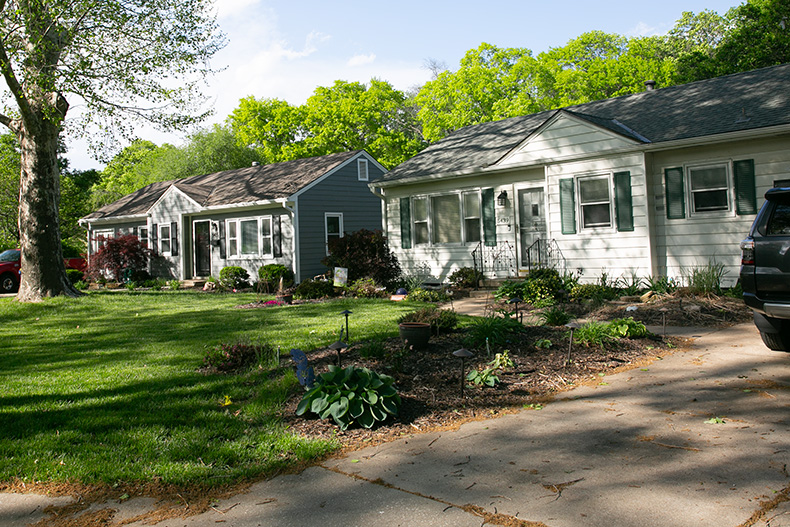
Other northeastern Johnson County cities are also entering conversations about SB 418.
In a joint letter to legislators, several northeastern Johnson County cities — Prairie Village, Mission, Merriam, Roeland Park and Westwood Hills — opposed SB 418. The letter cites concerns about the bill being a “one-size-fits-all mandate.”
An attorney representing the city of Mission Hills also gave testimony opposing SB 418 as well.
Still, SB 418 is a statewide law that requires compliance from cities.
For example, the city of Roeland Park on Monday, Aug. 17, approved updates to its zoning code that reflect the specific changes included in SB 418.
This included “permitting all residential zoning to allow single family housing” and “allowing accessory dwelling units by-right” instead of via special use permit, according to city documents.
The Roeland Park City Council voted 6-0 to approve those changes with no discussion. Councilmembers Tom Madigan and Harold Morales were absent.
In June, the Westwood City Council approved residential construction under 2,500 square feet using 2018 building codes, to keep the city in compliance with SB 418.
City Administrator Katherine Carttar told the Post in a July email that the city was mostly in compliance with the rest of SB 418.
Keep reading housing news: Overland Park commission backs 47-unit multifamily project on old SMSD office site
 Thanks for reading! If you value having an independent news outlet keeping tabs on local government, schools and taxes, we're asking you to contribute to our Education Reporting Fund.