Johnson County commissioners earlier this month considered vetoing a tax increment financing plan for a De Soto assisted living facility, with most saying they were upset that there was no plan by the city to help the county recover the cost of emergency calls the project would generate.
Commissioners said they were troubled that the potential costs of emergency responders, which the county provides, were left unaddressed in the TIF plan, prompting a last-minute agenda item at their regular Thursday meeting on Aug. 13.
Some commissioners even called out county management staff and De Soto officials.
Ultimately, commissioners reached an impasse, neither supporting nor vetoing the TIF, but vowing to set a policy that would better define the conditions in which they’d veto a future tax incentive plan.
Because they did not act, Kansas law allows the project to go forward.
Why this TIF discussion was unusual
It was a rare discussion for the commission, which has for years resisted using its veto power over projects proposed by other jurisdictions. Up to this point, most tax incentives from cities have been routinely read into the record without substantial discussion from commissioners.
Most tax increment financing proposals happen within city jurisdictions and are governed by city councils. But since the county and school districts would also be affected (meaning they’d also have to forego some future tax revenues generated by developments), Kansas law allows them to disapprove of such tax incentive plans under consideration.
The commission’s discussion earlier this month was made more urgent by the deadline to exercise that veto power. Their discussion took place two days before the deadline expired.
Projet details
At issue was a proposed 34,000-square-foot, 53-unit assisted living and memory care facility by De Soto Storage, LLC, which would be run by Midwest Health of Topeka.
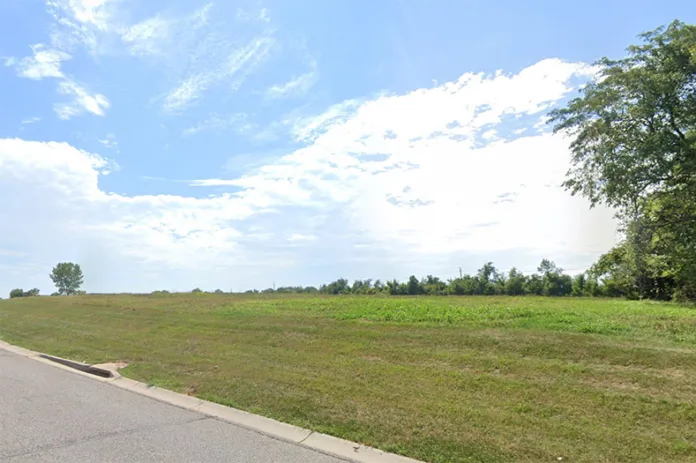
The infill project on three acres would be at 8870 Commerce Drive.
The tax incentive plan captures 50% of the property tax increment in the development district for 20 years. That makes about $3.3 million available for eligible development costs.
Industrial revenue bonds for sales tax exemptions on construction materials amounting to about $400,000 were also part of the incentive package.
Assistant County Manager Adam Norris told commissioners the total estimated county property tax increment would be about $500,000 over 20 years, half of which would go to project costs under the TIF plan.
What was at issue?
The main sticking point was that De Soto’s financial analysis didn’t include how the new facility would impact the ambulance service.
Med-Act has struggled recently to keep up with an ever-increasing call volume as the population grows and ages. The service recently added more staff and increased user fees.
Lacking a financial impact analysis for emergency calls, county staff did its own, based on 2025 call-volume data of four comparable facilities in the county. They estimated that the county’s unreimbursed cost in 2027 dollars could range from $830,200 to $1,119,000 over the 20-year lifespan of the TIF.
When that is adjusted to account for increases in assessed value brought about by the project, the net costs were estimated at $652,000 to $941,000 over the same timespan.
Senior care is needed, officials say
Some Commissioners found themselves torn because of the need for senior care facilities, especially in that area of the county. Jennifer Sourk, general counsel for Midwest Health, said there was no memory or assisted living care within a 15-mile radius of the proposed project.
The private health care agency also regularly accepts Medicaid patients, Sourk said.
Commissioner Becky Fast said, “Our senior population is skyrocketing in Johnson County. So this project to me is going to be a huge need,” that provides a community benefit.
But on the other hand, she noted that the rural fire district chiefs were due at the commission in the afternoon to talk about their budget needs.
County staff also noted the benefit of the project in its analysis, saying Midwest Health said it would invest $15 million in the project and create 40 new jobs.
Commissioner Shirley Allenbrand expressed frustration with city and county staff that the issue hadn’t been worked out ahead of the meeting.
“I feel like this is a good program,” she said.
On questioning from the commissioners, Sourk said she expects the facility to be successful. But “we can’t make the project go without the TIF.”
Frustration with city of De Soto
Commissioner Jeff Meyers and others lamented the lack of guidance in the statute as to what kind of “adverse effect” they should consider actionable. He and Commissioner Michael Ashcraft said they were disappointed that the De Soto and county staffers had not worked out some solution.
Ashcraft said the spirit of partnership between the two governments was lacking in this case.
“If it had been (present) the impact on the county could have been mitigated or eliminated, even,” he said.
Meyers said he’d hoped someone from the city would have come in to talk about the issue and offer reassurances the county would be made whole.
“Maybe they were just thinking, well, the county is going to rubber stamp this TIF because they okay every other TIF,” he said.
The Post reached out to De Soto City Administrator Mike Brungardt, but he has so far not responded.
Other commissioners said that since the state doesn’t do it, it would be good to set their own guidelines about the type of “adverse effect” that could trigger their disapproval.
“Whatever the outcome today, we are putting the cities on notice that we are paying attention,” said Commissioner Janeé Hanzlick.
TIF still moves forward
Commissioners had the option to disapprove of the tax incentive plan, to advise the staff to continue negotiating cost recovery or to take no action.
Ashcraft moved to disapprove of the TIF, saying developers could bring it forward again after working out the cost recovery to the county. He argued that would put some teeth in the county’s request. But his motion died for lack of a second.
Another motion by Allenbrand that would have approved the project also did not get a second.
Commissioners were split evenly on Meyers’ motion to pass on their chance to veto while urging more negotiations. Voting yes were Fast, Meyers, and Allenbrand. No votes were Julie Brewer, Ashcraft and Hanzlick. Chair Mike Kelly, a lawyer, had recused himself “out of an abundance of caution.”
Since the commission was deadlocked, the TIF moved forward.
Afterwards, they unanimously voted to convene a committee of the whole to work out guidelines for considering TIFs in the future. Kelly, who was by then unrecused, also voted in favor.