Now, I’m not a doctor, so I’m not recommending or not recommending weight loss drugs, period. That’s a conversation between you and your doctor.
But here’s one thing you have to consider before you start taking one: what happens after you stop.
At BridgeFit, we’ve worked with a lot of members and talked to a lot of people who are taking or considering GLP-1 medications. In our experience, we’ve heard a lot of people have real success with them. But for most people, the goal isn’t to be on it forever, whether that’s because of the cost, insurance stops covering it, or something else entirely.
Research has shown (click here to see the research) that up to half of people stop taking these medications within a year. So the real question worth considering is what happens when you’re done taking it.
Turns out, there’s an answer. And it comes down to one thing most people aren’t thinking about: making fitness a habit.
What the research shows
A year-long study, conducted by researchers at the University of Copenhagen (click here to see the research), found the answer. Adults who paired exercise with a GLP-1 medication regained about 8 pounds a year after stopping both. Adults who took the same medication without exercising regained about 20 pounds, roughly 60% more.
You may be thinking, “I’ll just go back on it”
Early research has also shown (click here to see the research) that each time you stop and restart these medications, they may work a little less than before. Part of the reason: GLP-1 medications cause caloric restriction, which puts you at risk of losing muscle. And if you lose muscle, that impacts your basal metabolic rate, which may make the drug less effective the next time around. One more reason to make fitness a habit.
Here’s what I’d tell you to do
Here are five things to focus on, whether you’re on a GLP-1 right now or getting ready to come off one:
-
Get enough protein
-
Aim for 10,000 steps a day
-
Strength train 2 to 3 days a week
-
Get a coach or a friend for accountability
-
Track your workouts
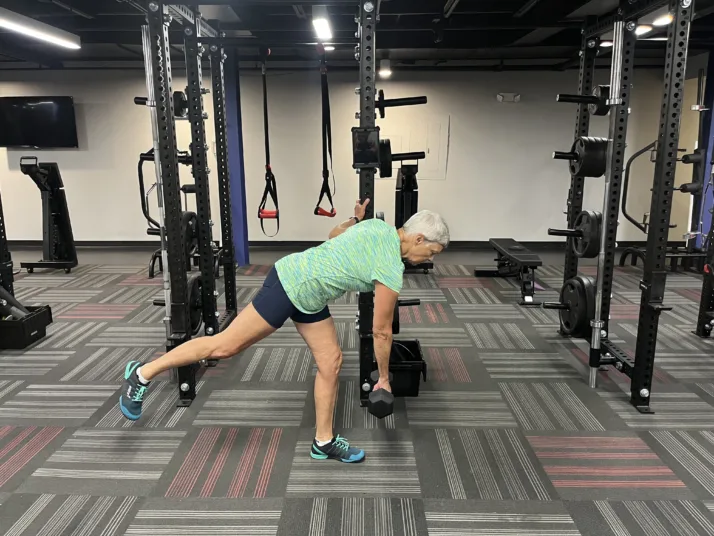
Tracking matters more than people think. It’s easier to make fitness a habit when you can see your progress, and doing a little more each time is one of the biggest drivers behind keeping and building muscle.
Not all strength training is created equal. To get the most out of it without wasting your time, click here for an article I wrote on the key things to focus on.
Whatever you decide about the medication itself, that’s a conversation for you and your doctor. If you’re interested in experiencing a personal plan that meets you where you are and takes your specific needs into account, we are celebrating 4 years running as Best Personal Training in the Johnson County Post. Click here for a chance to win 4 FREE WEEKS OF PERSONAL TRAINING (5 Spots Available).
This article summarizes published research and is not medical advice. Talk to your healthcare provider before starting or stopping any medication.
Dustin Yantzi
Owner, BridgeFit Personal Training