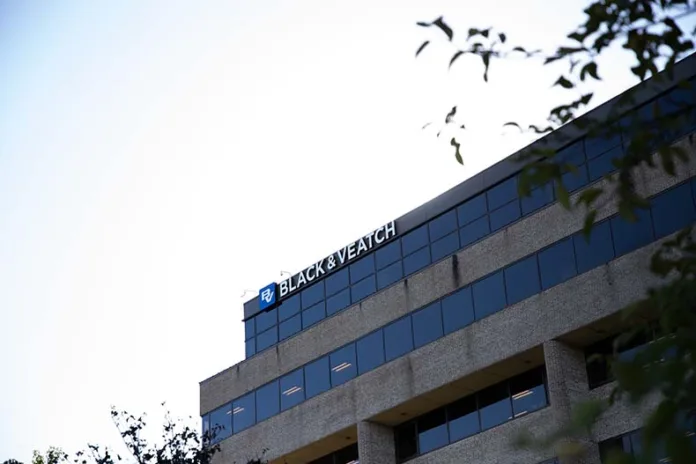
Overland Park could pull in millions of dollars for projects around its future city hall under the recently approved Black & Veatch redevelopment incentive deal.
The entire package — one of the largest in Overland Park’s history — is tied to Black & Veatch’s billion-dollar redevelopment project that will bring housing, commercial space and more to the firm’s headquarters campus at the heart of Overland Park.
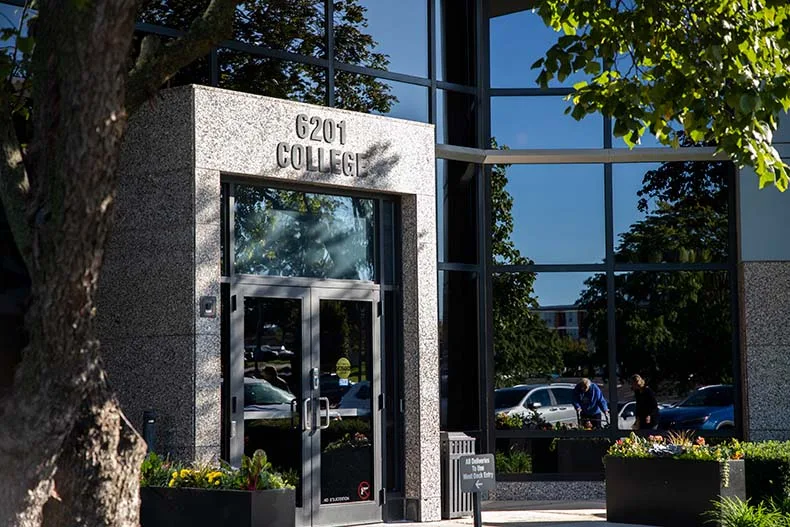
Nearby, the city has also plotted out its own investments, with a new city hall planned nearby on College Boulevard.
Taken together, it could significantly change a corridor that’s long served as a key economic hub for the city. Jack Messer, assistant city manager, said it could also help bring to life a long-term vision to reinvent this area.
Earlier this week, the Overland Park City Council took a series of unanimous votes that cleared the way for Black & Veatch’s world headquarters mixed-use redevelopment. Among the five separate votes was the approval of a 22-year special sales tax district around College Boulevard and Lamar Avenue.
“We are going to see this corridor just explode with proper development, with housing, with retail,” said Councilmember Chris Newlin. “I really can see a City Center-type scenario with shopping and gathering.”
Shared Overland Park and Black & Veatch sales tax to generate $40M
The city of Overland Park and Black & Veatch are both beneficiaries of a Community Improvement District, which will gather an estimated $40 million in revenue over its 22-year life.
A CID works by imposing a special sales tax on a defined area for a set amount of time. The revenue is then turned over to reimburse eligible development costs.
In the case of the recently approved OP Central CID, the revenue will be divided between the city and Black & Veatch. Black & Veatch’s share is capped at $11.6 million in reimbursement.
The sales tax will start in 2034 at 1.5% and apply to all purchases made in the district located around College and Lamar. Then, in 2049, the sales tax will go up to 2%.
It is rare, though not unheard of, for Johnson County cities to become partial beneficiaries of incentive districts.
Shawnee established a conservation Tax Increment Financing district spanning more than 1,500 acres in the city’s southwest corner. Called the Hickok Zarah conservation TIF, the revenue from increased property value goes to the city to pay for road and other infrastructure work, which could serve future development in the area.
Prairie Village set up something similar at the former Meadowbrook Country Club that has seen a boom in redevelopment activity.
Overland Park intends to use its share of the estimated $40 million in reimbursement revenue from the sales tax to pay for a slate of corridor improvements around its future city hall and add complete streets throughout.
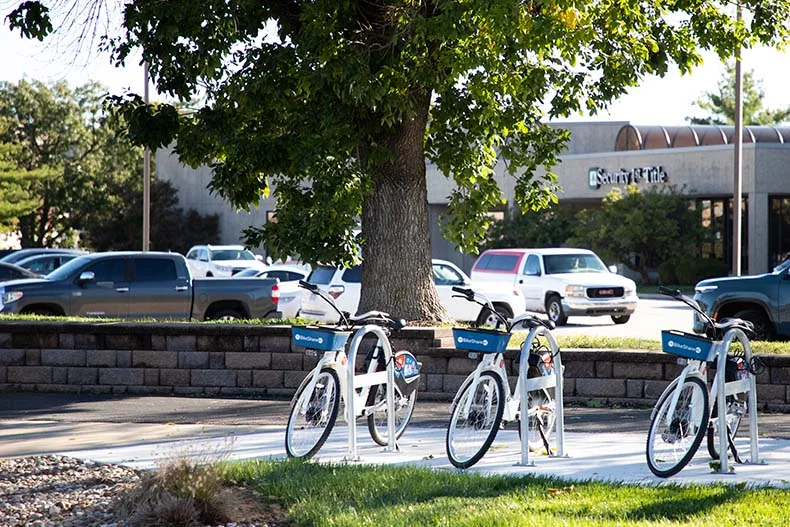
Complete streets are part of a transportation philosophy that encourages the development of roadways that are safe to travel on, whether you’re on foot, on a bike, using a wheelchair, riding the bus or in a car. In action, it can include things like buffered bike lanes, protected shared use paths and signalized crosswalks.
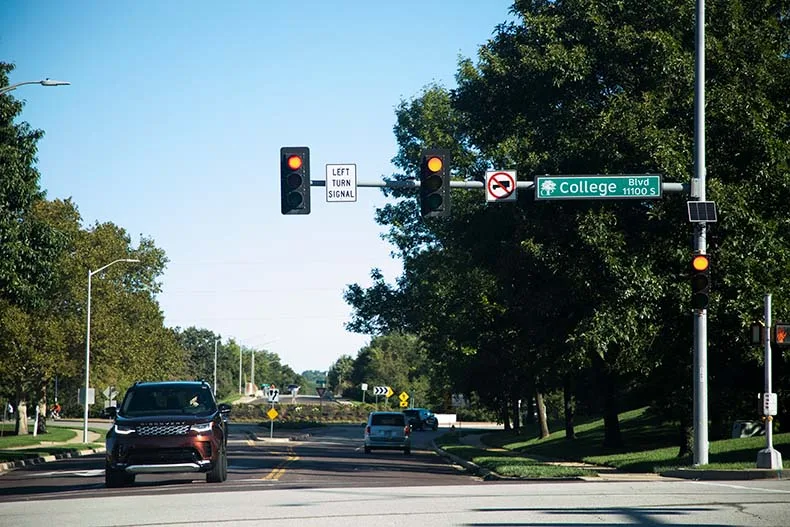
The idea, Messer said, is to upgrade the road network in the College corridor and add “more forms of mobility.” Some potential projects include an overhaul of College Boulevard, improvements for Lowell Avenue, Lamar, as well as 110th and 115th streets and enhancements to multiple intersections.
City Manager Lori Curtis Luther said all of those projects and other investments could help create a unique corridor for the center of Overland Park, one that could rival but not exactly mimic the downtown Overland Park “vibe.”
“Places to work, places to eat, places to live,” she said, referencing a Framework OP priority. “Our initiative moving forward was to create more places like that, not to duplicate what Overland Park downtown has to offer, but to create new spaces with their own identities.”
Black & Veatch’s total redevelopment to cost more than $1 billion
In addition to the $11.6 million Black & Veatch could get through the CID for its headquarters redevelopment, the firm can also receive up to $253 million in reimbursement through a TIF district.
In a TIF district, some of the tax revenues generated by increased property values are remitted to a third party as property values rise, to cover or reimburse costs incurred in a defined development area over a set period.
Critics of TIFs decry their use, saying they take dollars away from public use, including local public schools. That said, in Kansas, a large portion of the mill levy charged for schools is exempt from TIF increment diversion, and Overland Park’s internal data generally shows that TIF districts have worked as intended in the city.
In addition to the TIF and CID tax incentives, Black & Veatch will also receive a sales tax exemption on building materials and construction costs, delivered through economic development revenue bonds.
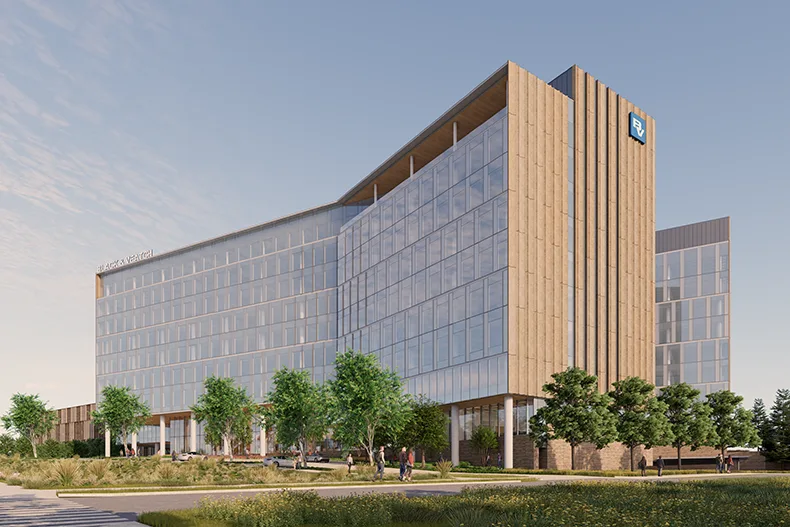
All of this will help pay for the $1.34 billion Overland Park Plaza II redevelopment that seeks to remake Black & Veatch’s central Overland Park campus into a place to live, work and spend time, complete with housing, retail, dining, office and green space.
Full reimbursement under the TIF and CID is contingent upon Black & Veatch delivering all five phases and the development raising the estimated revenue. Additionally, Black & Veatch is expected to contribute $4 million to the city to help fund the development of a community gathering space at the new city hall.
There’s likely more to come
In addition to the CID, Overland Park city officials want to establish another special sales tax district in the area called a Transportation Development District, or TDD.
That would function similarly to the CID, in that it would impose a limited sales tax on the area. Messer said the city council will be asked to vote on that petition at a later date, though he did not specify when. Those revenues could also contribute to College corridor upgrades.
The proposed rate for the TDD is .5%. It would overlap with the CID shared with Overland Park and Black & Veatch, a separate 1.5% CID over the Galleria 115 development area and some of the surrounding area.
Keep reading: Black & Veatch’s request for tax incentives for $1.34B HQ makeover just got bigger
 Thanks for reading! If you value having an independent news outlet keeping tabs on local government, schools and taxes, we're asking you to contribute to our Education Reporting Fund.