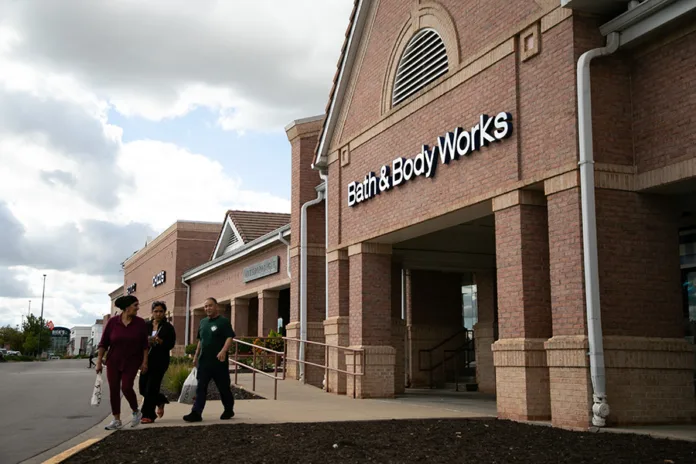
The new owners of Town Center Plaza and Town Center Crossing are asking Leawood City Council members to approve a special sales tax district to help them with the cost of an exterior makeover.
Representatives of Federal Realty Investment Trust made their pitch during a special work session before the city council’s regular Monday meeting. Their proposal calls for a 1% sales tax for up to 22 years in the shopping area that would pay for a general freshening up of the shopping centers.
The two shopping areas, located across the street from one another, have been “visibly aging” in the 30 years they have been in existence, said Federal Vice President Bob Franz and Geoff Sharpe, Federal’s vice president of development.
Under the proposal, about 60% of the $59.8 million redevelopment project — or $35.6 million — would be paid for by funds from the Community Improvement District sales tax, which the developer would pay back over time. The rest would be financed by Federal Realty.
According to their presentation, much of the work would focus on streetscaping and diversifying the facades of the storefronts, with attention to planting trees along sidewalks, creating gathering spaces conducive to events and opening up the building facades so that businesses can be differentiated with each other with signs that can be clearly seen.
Freshening up the look of the centers is necessary because their design is “about 30 years out of date,” said Sharpe.
Leawood’s history with public financing
The first ever TIF district for Leawood was Hallbrook North, just last year. Town Center Crossing had a transportation development district sales tax of 1% for transportation-related expenses that ran from 2009 to 2018. Additionally, the city approved a CID in April for Houlihans’ replacement for a project by Drake Development. Generally, Community Improvement Districts cannot overlap, so these would be separate.
As for Federal Realty, the plans would emphasize entry points off 119th Street at Rosewood and Cedar streets, with more streetscaping.
The developers also said they’d like to make the north side of Town Center Plaza — considered by many to be the “back side” — more interesting with the addition of a 6,000-square-foot free-standing store with a tenant yet to be determined. Two plazas are also outlined in the master plan near the building.
They also said they want to open up some of the exterior visually by changing architectural features that can block signs from view and allowing more diversity of the exterior building material.
“When we invest in properties and have great design, folks who live near and work near shop at our properties, spend more time there,” Sharpe said.
Some city leaders were skeptical
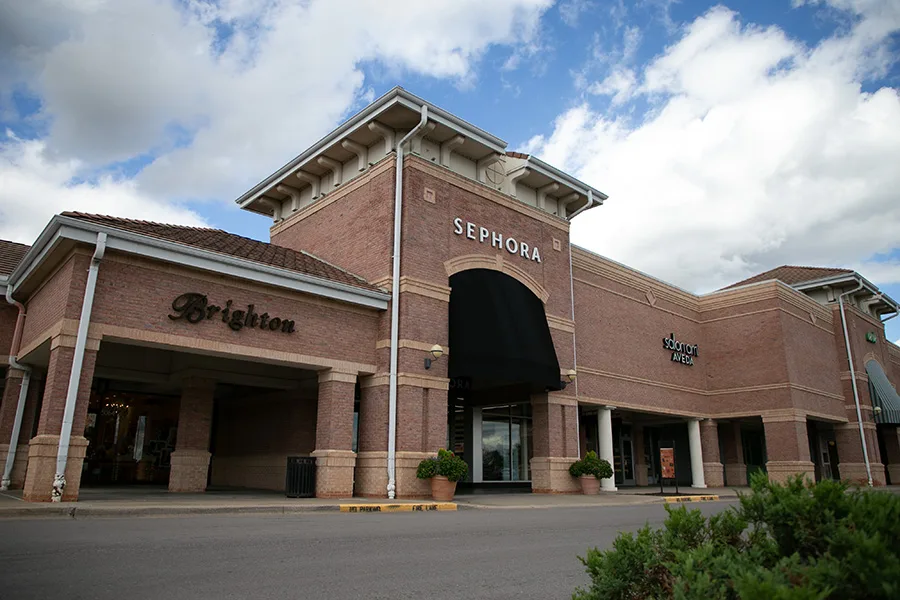
The Community Improvement District sales tax was proposed because developers said they could not make the project work without it.
Several councilmembers agreed that updating is needed at the shopping districts, which account for about 30% of Leawood’s sales tax base. But they also had questions.
Councilmember Rachel Rubin questioned the need for sales tax money to finance the development. She pointed out that Federal Realty has a revolving line of credit of $1.4 billion to fund its projects, and noted that Federal’s past projects involving tax support have been relatively rare.
“I’m just concerned about how that looks when we ask our taxpayers to provide a free subsidy. So, what the 1% sales tax is is a free subsidy. It’s free money,” she said. While Rubin said she liked the looks of the project, “We have to protect the taxpayers.”
Councilmember Lisa Harrison recalled the work done at Ranch Mart North, noting that businesses suffered from the months of construction and traffic restrictions. That project ultimately resulted in some small businesses being forced to move to less desirable spots, she said.
“I worry that might happen here,” Harrison said.
Councilmembers discussed but did not vote after the presentation.
The full city council is expected to discuss the final development plan as early as its Oct. 6 meeting. According to a company timeline, construction could start in the first quarter of 2027.
Federal has owned the shopping areas near 119th Street and Roe Avenue since July 1.