Overland Park may have found a workaround to get money to several nonprofits that face a funding gap after changes to a federal grant program.
The service organizations had previously received federal money from the city through the federal Community Development Block Grant program. Collectively, grants to the nonprofits totaled hundreds of thousands of dollars annually.
Now, Overland Park officials are weighing whether to use a “unique” city rule and pull from excess Special Alcohol Control funds generated through a state by-the-drink tax to replace the CDBG funding for the groups.
Sara Prem, chair of the city’s soon-to-be-dissolved CDBG advisory committee, which has helped allocate CDBG funds in the past, says the plan to use special alcohol funds instead is the right move.
“I do think it was a positive outcome,” she said. “Money’s money, and if that’s how we can help this population, then let’s do it.”
How did we get here?
The city recently ended its long-time practice of allocating CDBG money to the nonprofits focused on things like housing and utility assistance following changes to federal regulations.
New rules instituted by the Trump administration require the immigration status of individuals who receive any support from the CDBG program to be collected and reported.
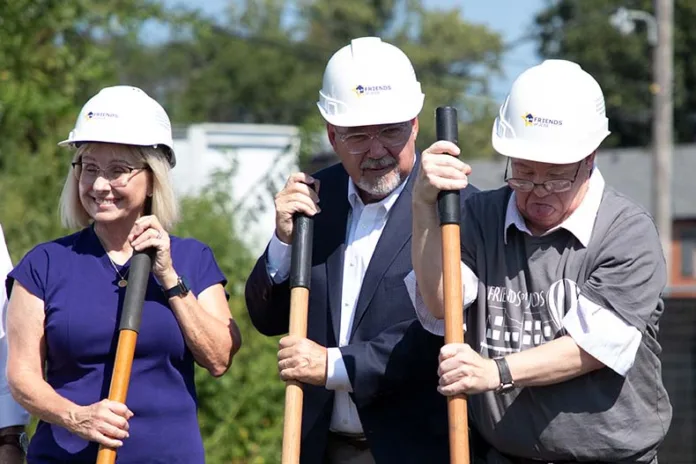
Instead of agreeing to collect such information, Overland Park stopped its direct CDBG grant program to the groups, including Friends of JCDS, a nonprofit that builds and repurposes housing for adults with developmental and intellectual disabilities.
The city is now using the city’s federal CDBG funds for parks and public works projects.
The move was unfortunate but necessary, city officials have said. However, it left some members of the city’s Community Development Block Grant Advisory Committee that helped the city decide how to spend its CDBG money worried about a gap in funding for organizations that support low- and moderate-income families.
The idea to use alcohol tax funds to replace the reallocated CDBG money was first floated last week at a Community Development Committee meeting.
Why can Overland Park use alcohol tax funds like this?
State law is pretty specific about how special alcohol funds can be used.
Adopted in the 1970s, a third of the revenue that goes to a city from the tax should be used for treatment, prevention and other interventions related to alcohol and substance abuse. Another third goes toward a special parks and recreation fund, and the final third goes into the general fund.
Overland Park and several other Johnson County cities have given portions of their annual allocations to United Community Services of Johnson County to administer through its Drug and Alcoholism Council.
In the past couple of years, Overland Park has received about $2 million for its Special Alcohol Control Fund, and according to the 2027 budget, the city gives about $1.3 million to UCS annually.
But because of a “unique” city code, Overland Park could use reserve special alcohol funds for other uses not typically allowed under the state law, said Michael Koss, city attorney.
In 2018, Overland Park adopted a charter ordinance that expanded how the alcohol tax money can be used, adding additional acceptable uses, like domestic violence prevention, mental health care and other supportive programming. The idea, at the time, was to address “problematic issues that cause substance abuse,” Koss said.
He told the committee last week that this step could open the door for the city to distribute money from the Special Alcohol Control Fund reserve to nonprofits and other organizations that previously got money from the CDBG program.
As of Jan. 1, Overland Park’s Special Alcohol Control Fund had close to $3.9 million in carryover money, per city budget documents.
Koss said the money in that “healthy” reserve could be used to establish a program that could run parallel to the UCS Drug and Alcoholism Council with a focus on providing services that ostensibly prevent substance abuse while also supporting low- and moderate-income households.
Some kind of advisory group would also be established to oversee the fund allocation, similar to how the Community Development Block Grant Advisory Committee functioned in the past. However, the CDBG advisory board is set to be eliminated, and its last two scheduled meetings were canceled.
City officials previously said CDBG money could not be replaced
After Overland Park made changes to its CDBG plans, the city used other funds as a stop-gap measure to replace CDBG money nonprofits had been expecting.
Members of the advisory committee urged the city to continue doing that each year. But for months, city staff insisted that would not be possible.
Now, Overland Park appears to be changing course, choosing now to fill the funding gap with excess alcohol tax money.
“The City has continued to investigate potential funding sources for these groups, and we anticipate presenting funding recommendations for nonprofits that previously received CDBG funding to the [City] Council later this year,” said Meg Ralph, strategic communications director for Overland Park, in a prepared statement.
At the Community Development Committee meeting last week, Koss did not specify exactly how much money could be made available through the proposed shift, but he did say it would be comparable to the amount of money allocated to community groups over the years through the CDBG program.
Though the exact amount of money granted to nonprofits in Overland Park varied from year to year, Overland Park had planned to distribute $425,000 in CDBG funds to those organizations in 2025 and distributed about $300,000 in 2024.
Nonprofit leader, advisory committee chair are cautiously optimistic
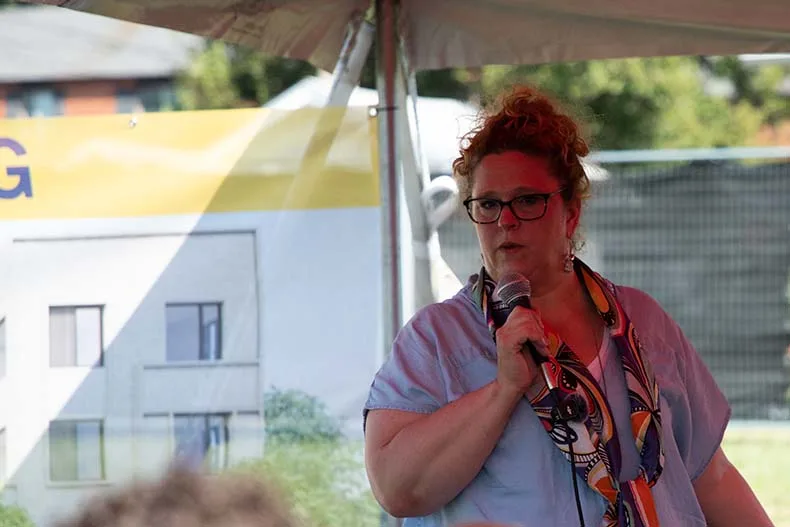
For Janel Bowers, the executive director of Friends of JCDS, using special alcohol funds to replace CDBG money could be a good thing, just maybe not for her organization, which provides affordable housing for adults who have intellectual and developmental disabilities in Johnson County.
In the past, Friends of JCDS had received around $100,000 in CDBG money from Overland Park each fiscal year to support its work, and it helped pay for a series of construction, repair and renovation projects.
But Bowers is not sure if the alcohol control money can be used in the same way Friends of JCDS had used CDBG funds, primarily for capital projects.
“Based on the conversation [I had], I think it would be very helpful for organizations that do a lot of programming,” she said. “It’s not something I could use to replace a driveway.”
Still, she’s happy to see Overland Park pursuing an alternative funding avenue.
“I appreciate the city of Overland Park really taking a look at what they can do to help,” Bowers said. “Whether it helps us or not, they’re helping somebody, and I certainly think that’s pretty great.”
Prem, the CDBG advisory committee chair, likes the move but still has questions about some of the details and wants to see the terms of the program before she’s completely on board.
“They have a viable idea of how to make up this gap [in] funding, and that was my concern from the very beginning,” Prem continued. “We still want to make sure that this happens and becomes a sustainable part of the budget.”
What happens now?
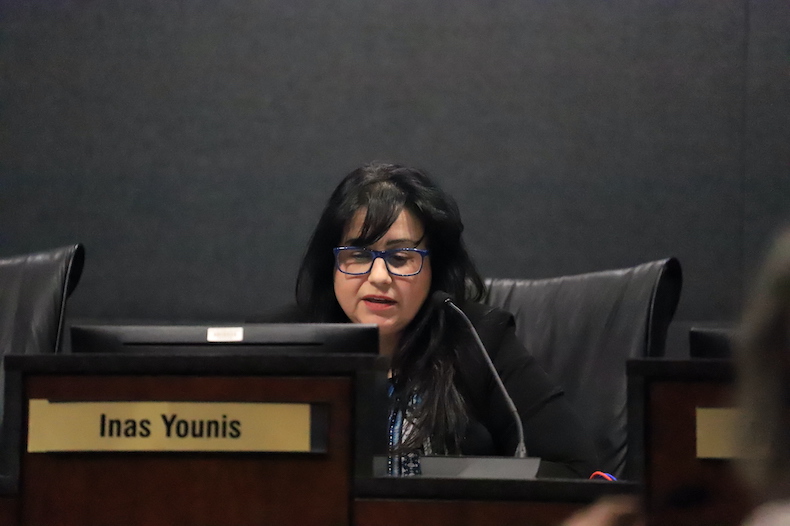
Last week, the Community Development Committee voted 4-2 to advance an amended CDBG Citizen Participation Plan that dissolves the Community Development Block Grant Advisory Committee.
Councilmember Inas Younis, who previously served on the CDBG Advisory Committee before her time on the city council, said last Wednesday that she felt “relieved” that Overland Park was pursuing a new funding option for nonprofits and public service organizations.
“I’m grateful that we are still finding creative ways to ensure that they are supported and that we demonstrate how much we value their continued efforts in providing the services that they do,” she said.
Council President Melissa Cheatham and Councilmember Amy Scrivner voted no due to some lingering concerns.
Now, the amended plan goes to the Overland Park City Council for approval, following a public hearing on Nov. 16.
Down the line, Overland Park will also have set the terms of the proposed program to allocate Special Alcohol Control funds in place of CDBG money for nonprofits and community service organizations.
While several details are still unclear, Koss said that could happen later this year after review from the Overland Park Finance, Administration and Economic Development Committee. At the same time, the city council could approve funds for the nonprofits to be distributed in 2027.
Looking back: ‘Traumatic’ — Overland Park cuts off nonprofits from federal grant money over new immigration rules
 Thanks for reading! If you value having an independent news outlet keeping tabs on local government, schools and taxes, we're asking you to contribute to our Education Reporting Fund.