
Five years ago, Environmental Protection Agency officials reported that the groundwater cleanup of a former chemical facility in Olathe wasn’t working.
Now, a September report by the EPA shows that mitigation efforts are “not currently protective of human health and the environment.”
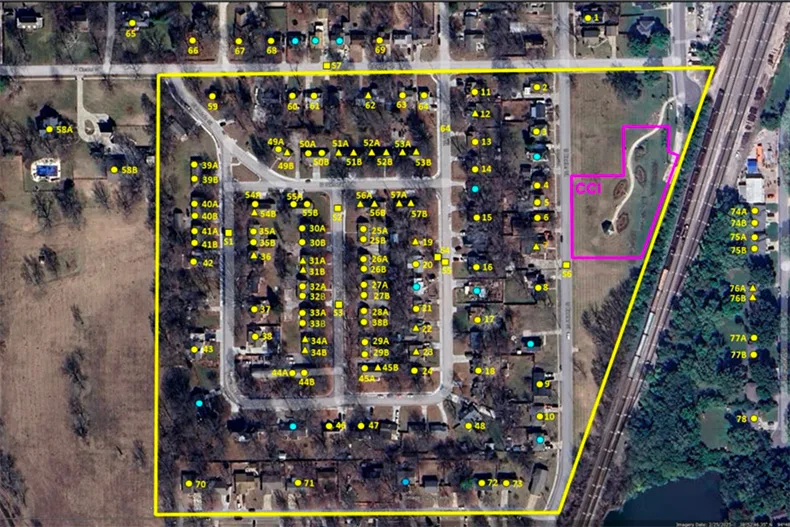
Since 2021, 22 homes near the site have been exposed to contaminated air.
Chemicals left behind from the Chemical Commodities site at 320 S. Blake St. have continued to contaminate water underground and move beneath neighboring homes. Fumes from that water can seep into homes.
Chemical Commodities handled, stored and repackaged chemicals from 1951 to 1989. That site is now the Pollinator Prairie and sits in the middle of several neighborhoods.
What’s causing the problem
Cleanup work conducted after Chemical Commodities closed removed contaminated soil and placed a protective cover over the pollution that was left. According to the EPA report, that cover is in good condition and protects people from direct contact with contaminated soil.
But the chemicals beneath the cover continue to pollute the groundwater. That water has gone on to contaminate under the surface of nearby homes.
One chemical in particular, called trichloroethylene, or TCE, releases fumes that can enter homes through cracks.
The EPA report states that the TCE contamination isn’t “adequately controlled” and has polluted indoor air. The agency has already addressed some of the factors contributing to the contamination and is determining next steps.
According to the Centers for Disease Control and Prevention, high exposure to TCE can damage the liver, kidneys and nervous system. The health risk depends on how much someone is exposed to and for how long.
Repeated warnings
The EPA has been attempting to mitigate chemical contamination in the neighborhood for decades.
The agency oversees the cleanup, while the companies identified as responsible for the contamination have conducted some of the work.
After finding chemical concentrations in crawl spaces and indoor air in 2002, the EPA, with help from responsible companies, which include Boeing, installed home ventilation systems.
EPA took over the systems’ maintenance in 2008.
In the 2021 report, the EPA considered the home ventilation systems effective enough in the short-term. The report warned that without better groundwater cleanup, however, the fumes could affect more homes or reach higher indoor levels.
“The groundwater remedy does not appear to be functioning as intended,” the agency wrote then.
Things have worsened since 2021.
The EPA began contacting nearby homes last year. Of the 156 homes they contacted, they were given access to 107.
They found 15 ventilation systems needing critical repairs and eight homes without systems that need them.
What now?

The original plan anticipated groundwater cleanup would take about 100 years. New estimates suggest it could take hundreds.
This is because chemicals trapped in rocks are slowly leaking back into the water.
The EPA said they will continue testing and complete a study to find other cleanup options by October of 2028.
Until then, residents are told to keep their home ventilation systems running.
 Thanks for reading! If you value having an independent news outlet keeping tabs on local government, schools and taxes, we're asking you to contribute to our Education Reporting Fund.