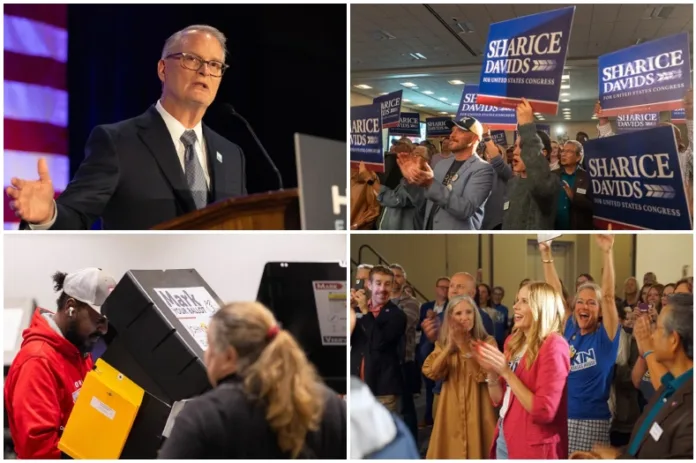
Unless you’re a journalist or an election junkie, you likely didn’t stay up late enough Tuesday night to see all the returns come in.
It turned out to be a historic night that saw Kansas send a Democrat to the U.S. Senate for the first time in nearly a century, the power balance in the statehouse shift notably to the left and a taut contest to see who would succeed Gov. Laura Kelly.
Johnson County was at the center of all that action and also had some more local contests.
And the counting isn’t finished.
Several key races, including governor, secretary of state and attorney general, are undergoing “close race” audits required by law because their margins were within 1% after Tuesday. Plus, the counting of mail-in and provisional ballots continues through Friday.
Here are six takeaways from the 2026 midterm election in Johnson County:
Hamilton’s historic victory
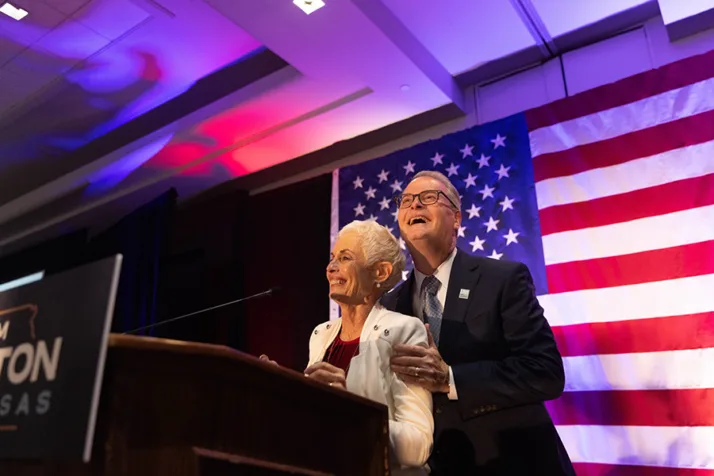
There are plenty of numbers to choose from when thinking about how to contextualize Adam Hamilton’s Senate victory on Tuesday.
Let’s start with 94. That’s the number of years it’s been since Kansans elected a Democrat to the U.S. Senate. If you can’t do the math, it was 1932, nearly 20 years before Hamilton’s hometown of Prairie Village was incorporated.
Or there’s 16%. That’s the percentage-point swing, roughly, that Hamilton engineered on Tuesday in beating Sen. Roger Marshall by nearly 5%. Marshall took the seat in 2020 by a comfortable 11%, beating another Johnson Countian, Barbara Bollier, at the time.
Or there’s 400,000. That’s the gap, roughly, between registered Democrats in Kansas (about 500,000) and registered Republicans (about 900,000), making Democratic statewide victories a tricky math problem.
In maximizing his vote share — garnering more than 556,000 votes total, the most of any single candidate on Tuesday — Hamilton went well beyond his Democratic base to convince enough Republicans and Independents to cast their ballots for him and deny Marshall a new term.
Hamilton nodded to that reality on Tuesday in his acceptance speech, saying, “We are better together, Republicans and Democrats. Thoughtful Republicans and thoughtful Democrats coming together to solve problems.”
Holscher neck-and-neck in governor’s race

Hamilton wasn’t the only candidate from Johnson County to take a run at historical trends on Tuesday.
Democrat Cindy Holscher, a state senator from Overland Park, stood on the precipice of winning the governor’s race after election night totals came in.
The Associated Press has yet to officially declare a winner, but on Wednesday Holscher claimed victory and said it was a “great honor” to be chosen Gov. Laura Kelly’s successor. For his part, Republican Ty Masterson has not yet conceded and said vote totals needed “another look.”
Secretary of State Scott Schwab on Wednesday announced that the governor’s race was one of six contests subject to an automatic “close-race” audit mandated by state law because their margins were within 1%.
If the result holds, it would be the second time this year Holscher has bucked conventional wisdom.
She shocked the political establishment in August by winning an all-Johnson County primary for governor, topping Sen. Ethan Corson, who had Gov. Kelly’s endorsement, and Overland Park Mayor Curt Skoog.
Kelly is now fully in Holscher’s camp, congratulating “governor-elect” Holscher on Wednesday and pointing out how this was the first time in Kansas history a Democrat would follow a Democrat in the governor’s mansion.
But first, let’s see how the audit and the counting of mail-in and provisional ballots go this week.
Sharice Davids’ quiet reelection rout
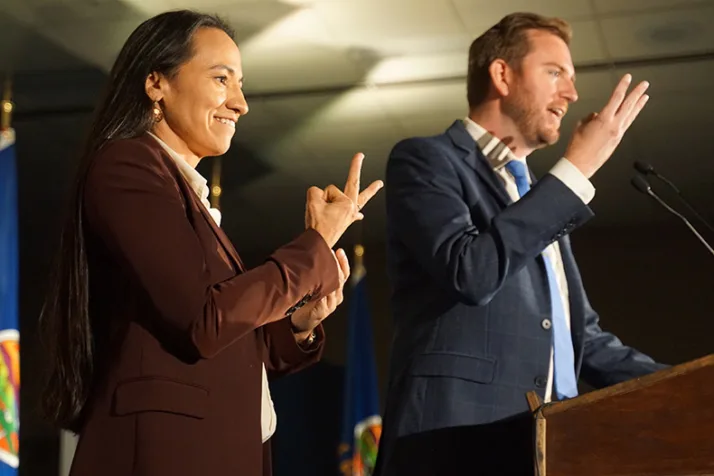
On the Sunday before Election Day, Rep. Sharice Davids spent her time campaigning … in Iowa.
It was a sign of just how comfortable the now-five-term Democrat felt holding on to her seat in Kansas’ Third Congressional District.
That sentiment was borne out on election night, with Davids cruising to victory with 60% of the vote, her highest vote-share in all of her five Congressional races thus far.
Davids outraised Republican Eric Jenkins, a former Shawnee city councilmember, $3.7 million to $19,000, a factor of 194 to 1.
With all the attention paid to the U.S. Senate and gubernatorial contests, Johnson County’s Congressional race got very little air time. There was a notable paucity of ads and mailers for either Davids or Jenkins, a sign, perhaps, not only of Davids’ ease but of Republicans’ reticence for spending in an increasingly blue district.
Davids entered Congress in the 2018 “blue wave” of President Donald Trump’s first term. She will return to Washington, D.C., next year, cresting a potentially bigger tide as Democrats control the U.S. House and Senate now.
Kansas House supermajority ends
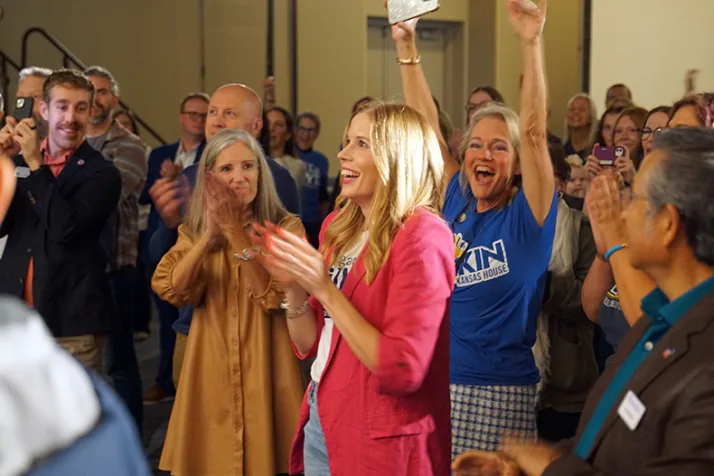
Two years ago, Democrats were frustrated on election night as they once again saw their hopes of breaking Republicans’ Topeka supermajorities go up in smoke. Republicans in Johnson County that year, riding the energy of President Trump’s political comeback, picked off two blue seats and enhanced their strength in the statehouse.
The vibes are different this year
Democrats needed to net five Kansas House seats to break the supermajority the GOP has enjoyed in that chamber since 2010.
The Democratic Legislative Campaign Committee targeted seven seats — five in Johnson County — as key to making that happen. They won them all, and then some.
As of this writing, Democrats are poised to flip up to 11 Kansas House districts in Johnson County alone, many of them in previously reliable red areas around De Soto, Gardner, Olathe, southern Overland Park and Spring Hill.
Two of these Johnson County House contests are among those getting “close-race” audits, so results could change. Still, the gains took even some Democrats by surprise.
“I’m kind of speechless,” Rep. Nikki McDonald of Olathe said Tuesday night, “because I was optimistic coming into tonight, but I didn’t ever dream Kansans were going to rise up in this way and speak with such a profound, united voice.”
It wasn’t just in Johnson County. Statewide projections show Democrats will have at least 57 seats in the Kansas House next year, compared to 68 Republicans. Still a minority, but far from the super-minority status they have had to manage the past 15-plus years.
Conservatives claim a few victories
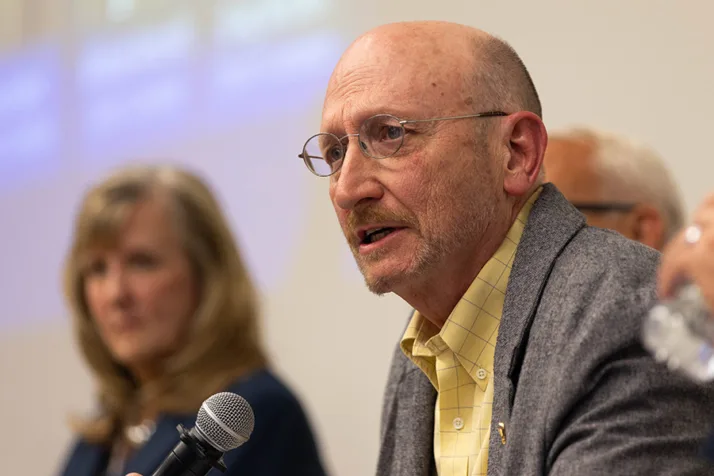
It wasn’t an across-the-board sweep for Democrats, and there was a notable statewide victory for conservatives.
A Republican-backed constitutional amendment clarifying that only American citizens can vote in elections won a resounding victory on Tuesday, by a margin of 64% to 36%.
Critics of the measure, many of them Democrats, pointed out the state constitution already bars non-citizens from voting and claimed the amendment could open the door to the state once again trying to require proof of citizenship for voting. Supporters portrayed it as a common-sense check to ensure that only citizens can go to the polls.
We’ll still need time to fully unpack what fed into this result, but it was a decisive victory for a conservative cause when so many other high-profile contests did not go as Republicans may have hoped.
Republicans also held leads in races for several statewide contests, including Secretary of State, State Treasurer and Insurance Commissioner (though, notably, not for Attorney General, where Democrat Chris Mann led Kris Kobach).
More locally, Michael Ashcraft, a self-described “consistent conservative voice” on the Johnson County commission and frequently the commission’s lone dissenter, won reelection over Greg Mitchell, retaining his seat — and his conservative views — on an increasingly left-leaning board.
Is Prairie Village “healing?”
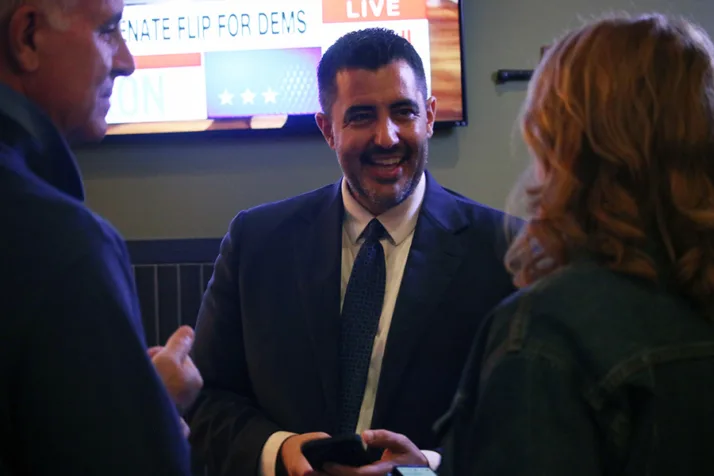
Elections in Prairie Village in recent years have been emotionally fraught affairs, with fights over housing and zoning and a new city hall coloring city council contests in 2023 and 2025.
For some, this year’s mayoral contest between Councilmembers Cole Robinson and Inga Selders was an extension of those past fights, with players from both sides of previous electoral battles weighing in for this race.
It ended up going Robinson’s way. He defeated his city council colleague Inga Selders, by a 59%-41% margin.
Robinson had the backing of nine of 12 city councilmembers and outgoing Mayor Eric Mikkelson. Meanwhile, citizen group PV United, an active force in the past two council elections, sent out mailers in support of Selders, though she said she wasn’t endorsed by the group.
On Tuesday, both looked forward and called for unity, with Robinson saying he wanted Prairie Village to “keep healing” and Selders encouraging him to govern “with the goal of bringing our city together.”
Another good turnout election
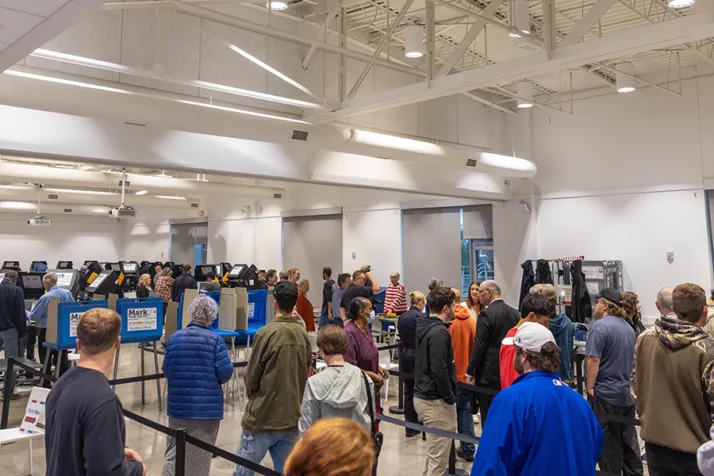
There were fears that the Johnson County Election Office’s decision to shutter 8 early voting sites could suppress turnout.
No one knows what turnout might have been had those sites stayed open, but Johnson Countians again turned out in droves for this election.
The Johnson County Election Office reported overall turnout after Tuesday of 62%, with more than 297,000 ballots cast. (About two-thirds of those votes were cast in the early voting period.)
That’s the third-highest number of raw votes counted in Johnson County ever, Election Commissioner Connie Schmidt said, trailing only the presidential election years of 2020 and 2024.
Turnout surpasses the last presidential mid-term election of 2022, which came in at nearly 57% and is approaching the turnout of 2018, which clocked in at nearly 65%.
As Schmidt said on social media on Wednesday, “Great job Johnson County voters!!!!”
 Thanks for reading! If you value having an independent news outlet keeping tabs on local government, schools and taxes, we're asking you to contribute to our Education Reporting Fund.