Last week, Rep. Sharice Davids and a fellow member of Congress uplifted the voices and experiences of Native American survivors of federal Indian boarding schools, including one in Fairway, in a “National Week of Remembrance.”
Introduced by Davids, a Democrat representing Kansas’ Third Congressional District, and U.S. Rep. Tom Cole, a Republican representing Oklahoma’s Fourth Congressional District, the new federal resolution seeks to designate the week of Sept. 27 to Oct. 3 as Indian Boarding School “National Week of Remembrance,” according to a Sept. 24 press release.
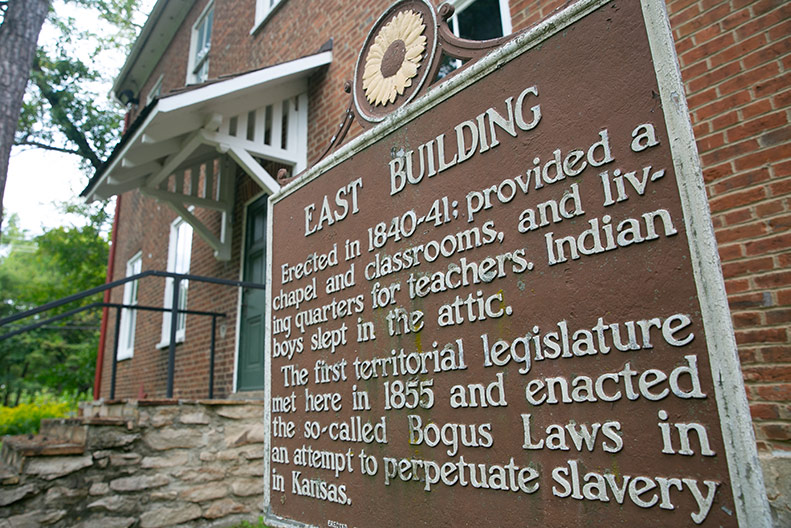
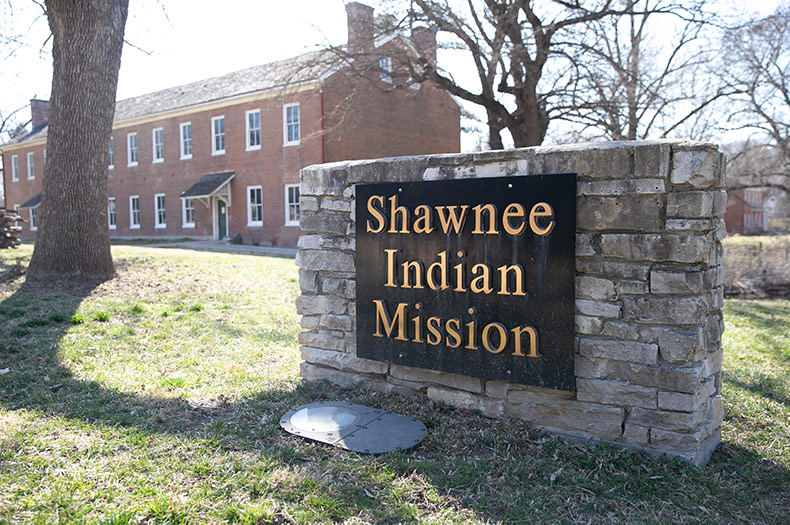
In the U.S., “more than 526 government-funded” Indian boarding schools existed in the 19th and 20th centuries, according to The National Native American Boarding School Healing Coalition. This includes the Shawnee Indian Manual Labor School, now known as the Shawnee Indian Mission, in Fairway, according to a national List of Federal Indian Boarding Schools.
Government officials “forcibly abducted” American Indian children to take them to the typically church-run boarding schools where the children were “beaten, starved, or otherwise when they spoke their Native languages,” according to The National Native American Boarding School Healing Coalition.
As co-chairs of the Congressional Native American Caucus, Davids and Cole want to honor those who were forcibly sent to Indian boarding schools and “to recognize the experience of Indian boarding school victims and survivors,” according to the resolution.
“I would not be here today if not for the strength and resilience of my ancestors, including my grandparents who survived federal Indian boarding schools,” Davids, a member of the Wisconsin Ho-Chunk Nation, said in the press release.
While the press release notes there were 14 federally Indian boarding schools in Kansas, and another 76 in Oklahoma, it specifically names the Shawnee Indian Manual Labor School.
From the 1830s to the 1860s, the Mission — which has been in a debate over land ownership for years — was an Indian boarding school on 2,000 acres of Shawnee Tribe land.
It wasn’t a federally mandated boarding school, but the Shawnee Indian Manual Labor School was operated by Methodist missionaries, including Rev. Thomas Johnson, the county’s namesake and an enslaver from the South who brought some enslaved peoples with him to the Mission.
Firsthand accounts from survivors and their descendants have proven difficult to track down at the Shawnee Indian Mission, so not much is known or can be said about what Native children’s experiences were like while the school was active in the mid-19th century.
In a Friday afternoon statement to the Post, Fairway City Administrator Nathan Nogelmeier said that like other “on-reservation Christian Mission schools” in what is present-day Kansas, the Shawnee Indian Manual Labor School “sought assimilation while keeping families intact when educating Indigenous youth.”
“At the Shawnee Indian Mission, we honor and remember the loss of culture, freedom and identity experienced by Indigenous peoples,” Nogelmeier said.
A look at the 10-page resolution
The 10-page resolution immediately addresses the Indian Boarding School Policies, stating the policies “were adopted by the United States Government to strip” children of their Indigenous identities.
The goal of those policies, the resolution states, was “to assimilate (Indigenous children) into non-Native culture through federally funded and controlled Christian-run schools.”
It goes on to detail how, under the Indian Civilization Fund Act of 1819, “hundreds of thousands of American Indian and Alaska Native children as young as 3 years old” were forcibly removed to one of the 526 or more Indian boarding schools, which were funded by the federal government and operated by churches.
David Wallace Adams, a Cleveland State University professor emeritus of history and education, estimates “nearly 83% of American Indian and Alaska Native school-age children were enrolled in Indian boarding schools in the” U.S. by 1926, according to the resolution.
“The full extent of the Indian Boarding School Policies has yet to be fully examined by, (1) the Federal government or the churches who ran those schools; or (2) other entities who profited from the existence of those schools,” the resolution reads.
The resolution then outlines the “longstanding intended consequences and ramifications of the treatment” of Native children and their communities because of Indian boarding schools.
This includes how, in some states, more than “50% of foster care children” are American Indian, Alaska Native or Native Hawaiian.
A full version of the resolution is embedded in the document below.
 Loading...

 Reload document
  Open in new tab
 “Committing to healing”
For Davids and Cole, the resolution is about highlighting the history of Indian boarding schools and the individuals who survived them.
In a press release, Davids said the boarding schools across the U.S. “were explicitly designed to strip Indigenous children of their languages, cultures and identities.”
The impacts of that harm are seen in Native communities today, Davids said.
“Designating this week isn’t just about acknowledging a darker chapter in our history; it is about honoring the survivors, remembering the children who never returned home and committing to healing for future generations,” Davids said.
For his part, Cole, a member of the Chickasaw Nation of Oklahoma, said in the press release that the history of Indian boarding schools is often overlooked in curriculum today. The resolution he and Davids introduced aims to change that, he added.
Similar to Davids and Cole, Nikki Santos, chief executive officer of the National Native American Boarding School Healing Coalition, said in the press release that the “Remembrance Week calls on all of us to ensure that the experiences of Native children and families are never again forgotten or erased.”
“We honor those who were taken from their families, survivors who carried the weight of the boarding school experience throughout their lives, and, with reverence, those who never returned to their homes,” Santos said. “We honor the children. Their lives matter, and their stories and their truth belong in the history of this nation.”
For the present-day Shawnee Indian Mission’s part, in a statement to the Post, Nogelmeier distinguished the Shawnee Indian Manual Labor School from the federally mandated, off-reservation Indian boarding schools like Carlisle Indian Industrial School in Pennsylvania.
Nogelmeier said that when Carlisle opened in 1879, 12 years after the Shawnee Indian Manual Labor School closed, it “sadly became the national template for a massive, military-style, off-reservation federal network.”
Still, Nogelmeier said the “National Week of Remembrance” is needed for what was a “horrific chapter” in U.S. history — during which “federally mandated residential schools, representing a system of forced cultural assimilation, targeting Indigenous youth.”
“The victims and survivors of residential schools deserve recognition of this traumatic chapter of history,” Nogelmeier said. “National Orange Shirt Day is the first step in growing awareness and recognition at the national scale.”
Shawnee Indian Mission’s recent time in the spotlight
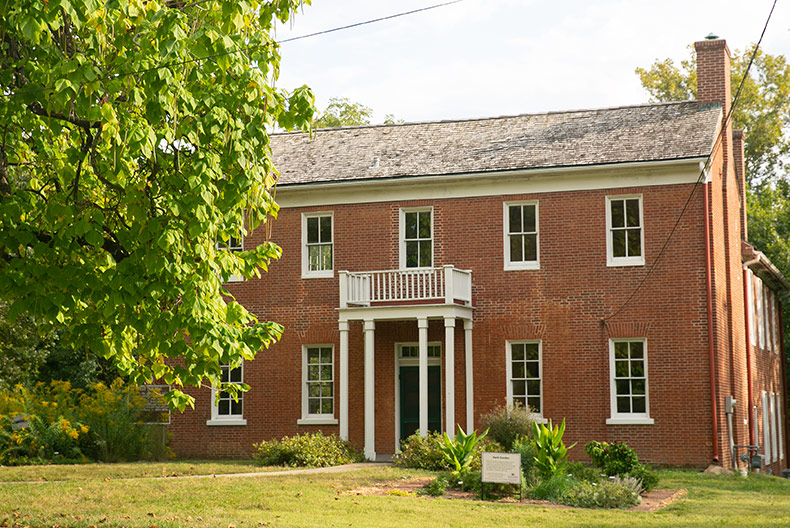
Over the past several years, Shawnee Indian Mission has remained in the spotlight as a former partnership with the Shawnee Tribe turned into a rift over who should own the remaining 12-acre piece of land.
While the city of Fairway, which manages the Shawnee Indian Mission State Historic Site, and the Shawnee Tribe first considered searching for unmarked graves through a ground penetrating study as part of a partnership, the idea came to an abrupt halt.
That abrupt halt devolved into the Shawnee Tribe introducing bills to the Kansas Legislature to take ownership of the 12-acre site. City and state officials testified against that idea, noting the site’s impact on Kansas history.
The effort to convey the land from the state of Kansas to the Shawnee Tribe switched up in spring 2026, with a bill that would make the Prairie Band Potawatomi Nation the owner of the Shawnee Indian Mission land.
Senate Bill 518 died in committee earlier this year.
Keep reading: A different tribe would get ownership of Shawnee Indian Mission with new bill in Topeka