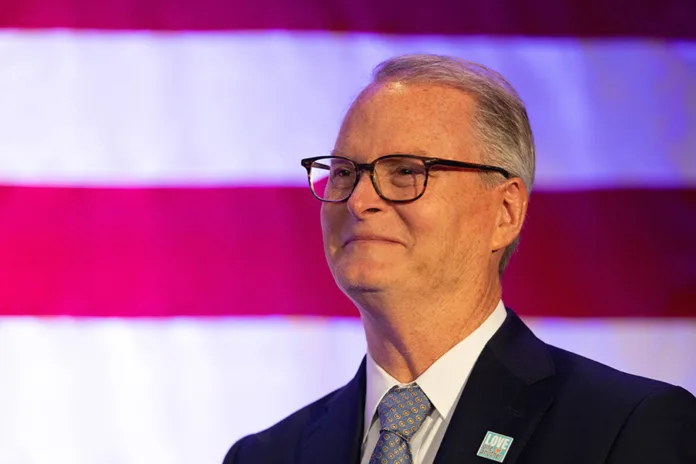
On Nov. 3, Kansas did something it hadn’t done since 1932: It elected a Democrat to the U.S. Senate. And he is a Johnson Countian.
Adam Hamilton — born in Prairie Village, a graduate of Blue Valley High School — was most well known before this election as the pastor who founded Church of the Resurrection in Leawood.
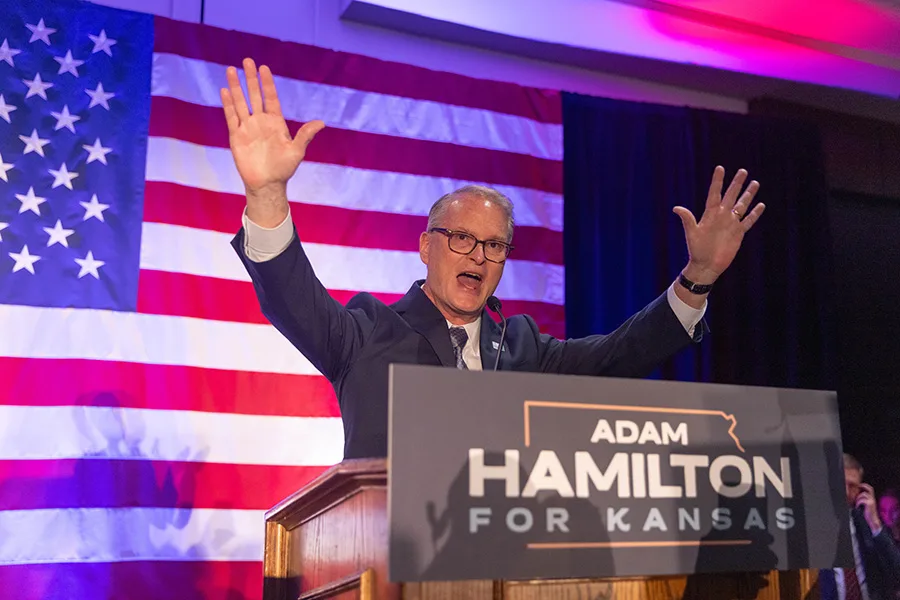
In the midterms, he unseated Republican Sen. Roger Marshall, carrying a state that went for Donald Trump comfortably for the past three presidential elections.
Now, he’s getting ready to move to Washington, part of a freshman class of lawmakers who have remade the partisan balance in Congress and given Democrats hopes of advancing long-held policy priorities and more forcefully confronting the White House during President Trump’s final two years in office.
Hamilton will be officially sworn in on Jan. 3. He joined Post editor Kyle Palmer for an interview recorded on Zoom on Tuesday, Nov. 17.
Watch the full interview
Read the highlights
This transcript was edited for length, clarity and grammar.
Post: You cobbled together a pretty unique coalition. About one in eight Kansas Republicans voted for you, according to post-election surveys, and in Johnson County you garnered more than 63% of the vote. What do you owe those Republicans who crossed party lines to vote for you, and how do you balance that with the demands of the Democratic base that also propelled you to victory?
Hamilton: My campaign was about helping people living paycheck to paycheck. I don’t care whether they’re Republicans or Democrats. That means getting out of a war that’s left us with high fertilizer and fuel prices, addressing the hidden tax of tariffs and restoring health care. I’m willing to work with anybody in Washington if what they’re proposing is good for Kansas. I also committed to bringing Republicans and Democrats together to solve our problems, and to fighting for decency: loving our neighbor, whether that’s our allies, our trading partners or the immigrants in our midst. Those aren’t Republican or Democratic things.
Post: One of the first votes you will take will be in secret: picking the new Senate Majority Leader. During the campaign, you said you would not support current Minority Leader Chuck Schumer for that position. Since then, Chris Van Hollen of Maryland has come out challenging Schumer. I believe the vote is on Dec. 1. It will be behind closed doors, but you’ve been public about where you stand. How do you plan to vote?
Hamilton: There are a couple more meetings between now and then, and I want to know more about Sen. Van Hollen and what he stands for. I’m just one vote, but what I really care about is having somebody in leadership who can bring people together, lead from the center and help us get things done. If Sen. Van Hollen can do that, that sounds great. If somebody else might do a better job, I’m open to that too. I haven’t made a final decision yet.
Post: Are you committing to not voting for Chuck Schumer?
Hamilton: Yes, I committed to that already. I’m not voting for Chuck Schumer. I’ve never been through this process before, and I don’t know if somebody else might surface. But we’ll be asking questions to make sure that whoever I vote for as our next majority leader is somebody who can bring people together.
Post: Do you plan to tell Kansans how you voted, even though it doesn’t have to be made public?
Hamilton: I don’t know. I hadn’t thought about that yet.
Post: You said in your first answer that if a party-line vote isn’t right for Kansas, you will be a no. “A hard no,” I believe, is the term you’ve used. What’s a specific issue where you can see yourself breaking with the Democratic Party?
Hamilton: That’s a good question, and to tell you the truth, I’m not really sure right now. I’m anxious to see where things come out on certain issues. What’s being talked about right now are things I agree with: getting out of the war as quickly as possible, restoring tax credits for people who can’t afford health insurance on the exchanges and restoring coverage for those who lost it through Medicaid. Those are all good for Kansas, so I’m anxious to see what comes up that might not be.
Post: Since the election, you’ve said you would be disappointed if Democrats spend the next two years investigating the Trump administration and potentially bringing impeachment proceedings. If Senate Democrats do launch those investigations, would you push back publicly?
Hamilton: I really want to focus on meeting the needs of people in Kansas. I do believe it’s important to set up guardrails. Things have happened in Washington that are not OK and not normal, and we need to make sure they no longer happen. If investigations happen, I’ll certainly participate, but my inclination is to say, let’s not focus on retribution, and let’s not spend the next two years on trials. I want to focus on solving problems for the American people, and most people I’ve talked to have said the same thing.
Post: Do you think Democrats risk losing the coalition they built in this past election if they go too hard at trying to, in your words, enact “retribution,” voting for impeachment and trying to convict the president while he’s still in office?
Hamilton: I think we’ve got to heal our country right now, and that does not look like having more trials like in the first Trump administration that never went anywhere. Are there people who need to be impeached? Maybe. But my focus is figuring out what’s good for the people of Kansas and bringing people together, as opposed to focusing on trials and retribution. That’s not what I got into this for. I got into this to solve problems for people in Kansas and across the country.
Post: Health care open enrollment is happening right now. Thousands of Johnson County families on the federal Affordable Care Act marketplace have seen their premiums jump. We’ve also had stories in the Kansas City metro about families fearing their plans would not be covered at Children’s Mercy, though that situation has since changed. Realistically, when could residents see relief from rising premiums? What can a Democratic-led Congress do, and what would you be willing to trade for Republican votes if it comes to that?
Hamilton: I don’t know what I’d be willing to trade. But now that we’re past the midterms and they have a lame-duck president, I think some Republicans will be less fearful of supporting what they believe is right, like restoring the ACA tax credits. We need to do that as quickly as we can, and bring back people who lost Medicaid coverage. But those are short-term solutions. Long-term, we need to bring providers, hospitals, insurers and experts from both parties together on a lasting solution, one that isn’t unwound two, four or six years from now.
Post: You said two of your top priorities are ending the war in Iran and ending the tariff policy. Neither can go very far without the president’s cooperation. What leverage does a Democratic-led Congress have over this president on those two issues, and how would you exert that pressure?
Hamilton: One is the power of the purse, through appropriations. There are also resolutions that could accomplish something. Those haven’t passed yet, but I think they can. I believe Republicans will join Democrats in saying it’s time to get out of the war. A lot of people who feel this war shouldn’t have happened aren’t just Democrats. We want to support our troops, but we want to get out of this war as quickly as possible. When a majority that includes some Republicans joins in, that makes a statement. I think we can get to 60 votes for sure.
Post: When you went to Washington for orientation after Election Day, pictures popped up of you with the other freshman Democratic senators walking through the halls of Congress, conversing with Michigan Senator-elect Abdul El-Sayed. What did you talk about?
Hamilton: I had great conversations with the new senators, Democrats and Republicans. When Abdul and I were speaking, we talked about our faith. He described how important his faith is to him. I think he prays five times a day. He expressed his appreciation that my faith is so central to my life. One night, KU was playing Kentucky in basketball, and I intentionally went to watch the game with Andy Barr, an incoming Republican senator from Kentucky, as a way of saying, “I want to build bridges. What can we do together?” Fortunately, KU won.
Post: During your acceptance speech, you said you wanted to become Jerry Moran’s best friend. He’s the other senator from Kansas, and he’s a Republican. Has that process started? What will building that bridge look like?
Hamilton: I met with him during orientation and said I’d really love for us to work together. We’re both United Methodist, and I’d love for us to build a real relationship. I think we agree on a lot, especially that we want to do what’s good for the people of Kansas. I asked him to mentor me and help me know what’s working and what the critical issues are. I think we can model for the rest of the country what it looks like when a Democrat and a Republican from the same state both try to do what’s best for their people. We’ll disagree on some things, but we’ll agree on a lot.
 Thanks for reading! If you value having an independent news outlet keeping tabs on local government, schools and taxes, we're asking you to contribute to our Education Reporting Fund.