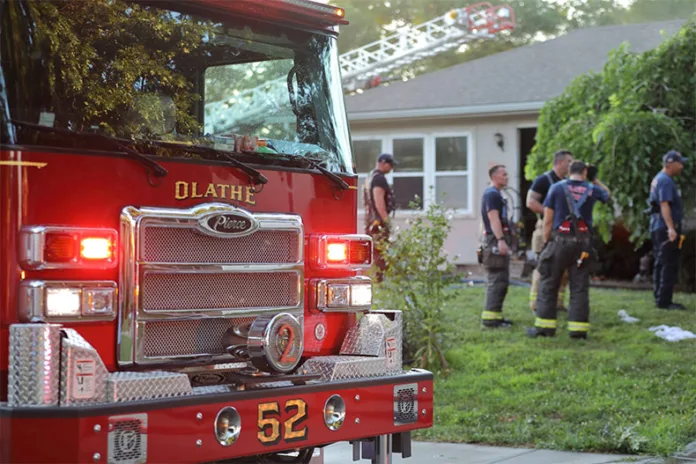
The Olathe Fire Department has paused its Community Emergency Response Team program, which offers training and community education for residents, following financial challenges. The department now turns its attention to reimagining the program next year.
This pause has no impact on emergency response in Olathe, said Mike Hall, the Olathe Fire Captain in charge of the training program. He equates the CERT academy to receiving CPR or fire extinguisher training.
“CERT has no impact on the handling of emergencies,” Hall said. “It is an education program about disaster planning, preparedness and survival at home or work. This community education course is modeled after FEMA’s CERT program. And, the name is a bit misleading as it involves no emergency response.”
Olathe’s CERT program first started in 2001 to help prepare residents for potential disasters. It teaches first aid, basic fire suppression and about disasters that could threaten the community — like tornadoes or terrorism. Additionally, participants learn about the search and rescue process and emergency team organization.
The academy is run annually, with about 20 residents on average in attendance, Hall said. Since its inception, an estimated 500 residents have participated in the program. Its instructors are firefighters who get paid overtime for the work.
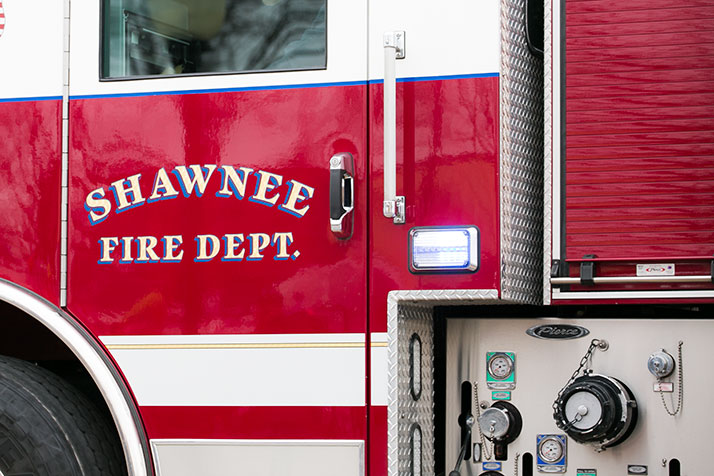
Shawnee freshened up its own CERT program in 2016
Olathe plans to rethink the program for 2026, Hall said, following in the footsteps of nearby communities, like Shawnee, which freshened up its program in 2016.
“The reimagining process allows us to bring a fresh perspective and more strategic thinking to better identify areas for improvement, explore new possibilities and ultimately enhance local disaster preparedness education in Olathe,” Hall said.
When disaster strikes, communities and government agencies often come together for things like reunification centers or donation drop off locations, but when first responders are spread thin, having emergency trained residents is beneficial to the community, said Matt Epperson, Division Chief of Emergency Management for the Shawnee Fire Department.
“Ultimately, what we did when we reimagined our program is to essentially brand it as a community support team,” Epperson said. “Ideally, they are here as volunteers to support the fire department and the city as a whole in, what I would call, non-emergency situations.”
The Shawnee Fire Department has about 50 volunteers on its roster to help spread information about emergency preparedness. At community events, volunteers can often be found at a booth with information about the city’s CERT program, emergency preparedness and the department itself.
In addition to Olathe and Shawnee, Johnson County has two other CERT programs, according to the county website:
- Johnson County Fire District #1 in southwest Johnson County.
- Overland Park
While Epperson and Hall both agreed CERT is good for a community, they gave similar sentiments of reassurance: It would take a massive disaster for the departments to be overwhelmed. Even if disaster struck in one community, nearby departments in the county are happy to step in and help if needed, Epperson said.
“Ninty-eight percent of the time, we are able to handle pretty significant events with little outside resources because we work so well together,” Epperson said. “We’ll call on Olathe, we’ll call on Lenexa, Overland Park fire departments and we all essentially operate as one county department.”
Regardless, having CERT-trained residents is good in any community — but for Hall, it’s especially good for Olathe.
“People who have disaster preparedness information — tailored to the community — help make Olathe a more resilient place to live, learn and work,” Hall said.