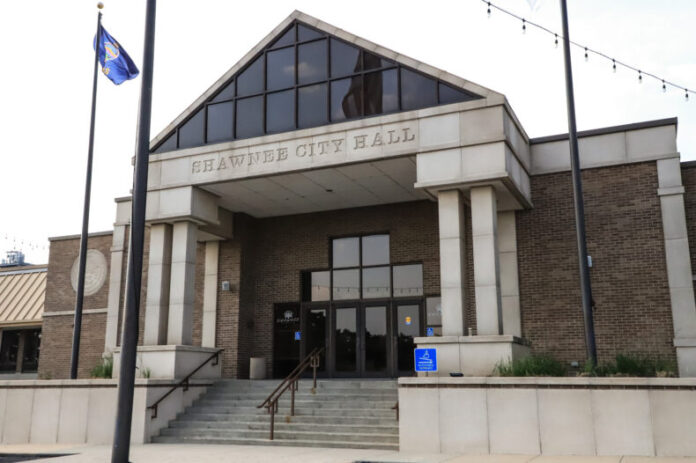
Shawnee city leaders had mixed emotions late last month as a majority of them approved its 2026 annual budget that includes a flat mill levy rate.
On Aug. 25, the Shawnee City Council voted 5-3 to adopt the city’s 2026 budget. Councilmembers Tony Gillette, Jacklynn Walters and Mike Kemmling were in dissent. Angela Stiens was absent.
The adopted budget includes a flat mill levy rate, with 23.249 mills that is expected to generate property taxes of about $34.16 million, according to city documents.
What do “mills” actually mean?
• One mill is equivalent to $1 for every $1,000 of assessed property value.
• Assessed property values are 11.5% of appraised, or market, values for residential properties. (So, a home appraised at $300,000 has an assessed value of $34,500.)
• So, divide your home’s assessed value by $1,000 and multiply that by a taxing jurisdiction’s mill rate to figure out how much in annual property taxes you will owe for that jurisdiction’s share of your annual tax bill.
Home value appraisals ticking up means more property taxes
A city’s property tax rate, called the mill levy, decides how much a property owner owes in taxes to the city based on their property’s assessed value.
In Shawnee, the average home appraisal is $422,527, up about 5% from last year.
Based on the average appraised value of a home in Shawnee provided by the Johnson County Appraiser’s Office, the average homeowner can expect to pay an additional $52.28 for the year compared to 2025, or $4.36 per month, Doug Donahoo, city spokesperson said in a email to the Johnson County Post.
“That is only representative of the City’s property tax. Each individual homeowner’s total property tax will also include the school district in which they reside, Johnson County, the County Library system, and JCCC,” he said
What is the revenue neutral rate?
The revenue neutral rate is the tax rate that generates the same amount of revenue as the previous budget year using the current-year assessed valuation.
A Kansas law passed in 2021 requires taxing jurisdictions like Shawnee to host public hearings if they plan to exceed their revenue neutral rate by bringing in more in tax revenue than the previous year.
Exceeding the revenue neutral rate allows the city to take in more revenue than it did the previous year.
This is the second year in a row that the city council has passed a flat mill levy rate.

The general fund is running on a deficit
The 2026 budget projects about $76.465 million in general revenues and about $80.4 million in general fund expenditures.
The general fund budget will be operating with an estimated $3.918 million deficit. That includes a one-time $1.5 million spending from the General Fund Reserve Reduction Plan.
While City Manager Paul Kramer had previously hoped that sales tax revenues would bounce back after the 2025 city budget, which also operated on a deficit, that didn’t happen.
“Sales tax revenues are down. Sales tax growth is down. And so we take that into consideration when forming the budget,” he said.
Staffing remains a majority of big expenses
About 70% of the general fund expenses go to paying city staff’s salaries and benefits. Of those expenses dedicated to city staff salaries and benefits, 63% covers positions for public safety.
Meanwhile, public safety expenses are increasing about 9.5%, due to factors like competitive salaries with other Johnson County cities and increases in state pension requirements.
While those costs are going up, the city is still looking at ways to provide services to residents without increases.
After a successful first year, Shawnee’s Parks and Recreation Summer Camp will transition a part-time employee into a full-time position using revenues from the camp. It also plans on adding 25 campers for a total of 100 in 2026.
The city is also adding one new full-time dispatcher at the Shawnee Police Department.
The city also plans on doubling the money allocated to its Property Tax Rebate Program, upping it by $50,000 to a total of $100,000.
“We want every dollar allocated … to be used by those who need that property tax relief,” Kramer said.
The city is tapping into its reserves
In 2025, the city’s general fund reserves are about $39.292 million. Over the next 18 months, it plans on spending about $4.329 million on services like $2.5 on stormwater infrastructure and $1.5 million on a new fire truck.
One of the big events that triggered the need to tap into the reserves for stormwater repairs was a July 16 rain event that caused damage across the city, including opening up a sinkhole near Mill Valley High School.
“These are projects in all council wards,” Kramer said. “We’re working on stream bank erosion, sinkholes across the city, and funding that with stormwater reserves.”
Residents have mixed feelings
During the public hearing portion of the meeting, residents expressed a mixture of emotions, from supporting a flat mill levy rate to fears of taxes continuously increasing.
Alex Welch Blatner voiced her support for the city council keeping the mill levy rate flat.
“A mill levy decrease is, in my opinion, a one-size-fits-all solution that benefits large businesses and wealthy homeowners much more than it benefits those who need help the most, and it risks leaving the city unable to address our crumbling stormwater and street infrastructure,” she said. “I personally am more than happy to pay $6 a month in exchange for being able to walk and drive around on streets that work.”
A Shawnee resident for more than 30 years, Virginia Taylor Schultz said she feels like she’s being taxed out of the city.
“We do have our retirement, but it is now to a point where we’re having to use our retirement just to meet the demands of the increased costs and limiting ourselves … our way of life,” she said.
Some of the budget woes means the city needs to tighten up, resident Fred Neuer said.
“What percent of the folks in Shawnee are retired? I mean, they cannot continue to take a 2,3,4% increase every year. So what I’m saying to you is we have to have a mindset change in that we have to do more with less. And that’s an American tradition,” he said.

Councilmembers also had mixed feelings
Several councilmembers, including Sierra Whitted, Jeanie Murphy and Laurel Burchfield expressed their support for the budget and keeping the mill levy flat.
“I’m not in favor of lowering the mill,” Murphy said. “We don’t know what’s coming with federal funding for a lot of programs being cut, which then affects the state funding which comes to the county, which affects the county’s money that comes to the city. So as each of these areas gets cut and the funding gets less, it puts more responsibility on the city budget to take care of our public safety and our citizens.”
Although he previously supported lowering the mill levy in past city budget votes, Councilmember Kurt Knappen expressed the need to keep it flat this year.
“I voted for three tax decreases was the fact that we had so much in our reserve fund. Why would we keep taxing residents when we had so much in reserves?” he said. “But our city manager has now put a plan in place to utilize those funds and bring our reserve fund back to the industry standard with that reserve spending-down plan going forward, with all extra funds going to stormwater repairs, basic infrastructure. It’s not ‘Nice to haves.’ It’s ‘Have to haves.'”
Dissenting councilmembers on the vote, like Kemmling, Walters and Gillette felt there was enough room in the budget to lower the mill levy rate.
“We took in about $1.3 million more dollars in revenue than projected. There’s a difference between actuals and projections when it comes to budget season, and that’s great government talk, but at the end of the day, we did take in more dollars, and so we need to return a portion of that back to you, but still keep Shawnee a great place to live, work and raise your family,” Gillette said.
While Gillette proposed a .949 decrease in the mill levy rate, it failed with a 3-5 vote with Councilmembers Murphy, Whitted, Kurt Knappen, Burchfield and Mayor Mickey Sandifer in dissent.
After that vote, the council voted to approved the city staff’s proposed budget.
Other Shawnee news: Shawnee hosting Olympic athletes in first-ever volleyball showdown next month
 Thanks for reading! If you value having an independent news outlet keeping tabs on local government, schools and taxes, we're asking you to contribute to our Education Reporting Fund.