
Earlier this summer, the Post asked our readers what issues you wanted to hear candidates running for Johnson County Community College Board of Trustees to address leading up to the Nov. 4 election.
Based on that feedback, we developed a five-item questionnaire centering the issues most important to Johnson County residents.
Each day this week, we’re publishing the candidates’ responses to one question.
Today, we’re publishing candidates’ responses to the following question:
Academic freedom: Freedom of expression has long been a bedrock tenant of higher education, but many in academia fear that freedom of speech on campus is threatened in today’s hyperpartisan climate. The JCCC Faculty Association on its webpage decries “a nationwide wave of administrative disciplinary actions taken against individual college professors for matters pertaining to their research and teaching, or for statements made on matters of public concern.” If you are elected to the board, what would be your stance in support of faculty’s academic freedom? Are there any limits to academic freedom or individuals’ expression on campus that you would support? Why or why not?
Below are the answers the Post received from candidates on this issue:
 Carlton Abner
I believe whole-heartedly in the need for academic freedom. Properly implemented, it allows educators and researchers to contribute to the advancement of society without undue restriction or interference. It is consistently supported and protected by the Supreme Court who recognized academic freedom as “essential to democracy.”
I agree with the American Association of University Professors (AAUP) that restrictions to academic freedom “should remain rare and no broader than necessary.” Any activity that infringes on the rights of others, overtly disrupts the education of others, or does not advance scholarly rigor are examples of activities that should not be included under the protections of academic freedom. These are examples of activities that represent the limits of academic freedom. In evaluating and responding to those limits, we should do so with the intent to preserve the integrity and value that education provides versus seeking to suppress ideas.
 Chad Carroll
JCCC has clear guidelines regarding academic freedom, the JCCC Statement on Academic Freedom says “The office of the Chief Academic Officer of Johnson County Community College hereby endorses the American Association of University Professors (AAUP) 1940 Statement of Principles on Academic Freedom, and will use such as guidance in matters affecting academic branch governance, protection of classroom integrity, and discipline of faculty who fail to act within said tenets”. Regarding freedom of speech I believe that everyone is entitled to this as afforded to them by the First Amendment. JCCC’s Political Activity statement says “Faculty, and staff may engage freely in comment on political issues or public policy as individual citizens, provided they clearly identify that the opinions expressed are their own and do not represent the official position of JCCC”.
Jerry Charlton
Did not provide the Post with a response.
 Lee Cross (incumbent)
JCCC has a statement on academic freedom (found here). Faculty are expected to teach the content in their classrooms consistent with their academic area and accreditation requirements. We treat our faculty as the experts and professionals that they are and trust them to use solid judgement in designing and maintaining the appropriate course materials and rigor.
JCCC also has a political activity statement (found here) that places limits on employees’ political activity at JCCC. Finally, the college has an expressive activity operating procedure (found here) that ensures the opportunity for free exchange of intellectual exchanges while maintaining a culture of civil discourse.
Mark Hamill (incumbent)
Did not provide the Post with a response.
 Geoff Holton
I am for academic freedom, however, it would be foolish for me to express that there is not ANYTHING I may disagree with. That being said, just as in any organization, it is important that leaders express the culture and mission of the college. All things – curriculum, policy… – should be built with that as the North Star and leaders should be responsible for ensuring this is a reality. When I think about education, here is my high level approach: public schools are not solely institutions that teach students to read, write, develop a trade…but they are also essential to assisting students with developing thoughts and skills to be constructive and active participants in our democracy which prides itself on diverse perspectives and citizen participation in the decision-making process. Schools should always strive to improve at equipping people to engage effectively by also focusing on discussions of history, arts and culture/society. I believe Maxine Greene expresses this very eloquently in “Releasing the Imagination: Essays on Education, the Arts, and Social Change:”
“We want our classrooms to be just and caring, full of various conceptions of the good. We want them to articulate, with the dialogue involving as many persons as possible, opening to one another, opening to the world. And we want our children (students) to be concerned for one another, as we learn to be concerned for them. We want them to achieve friendships among one another, as each one moves to a heightened sense of craft and wide-awakeness, to a renewed consciousness of worth and possibility.”
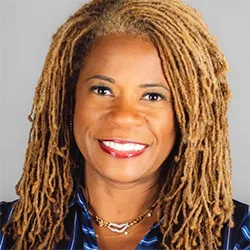 Dawn Rattan (incumbent)
I support academic freedom. Academic freedom has always been a part of public higher education in America and should remain. Academic freedom allows us to attract and retain great faculty. The JCCC faculty cares about it’s students! With academic freedom, instructors are able to stay in touch with industry and ensure that their content stays relevant.
The school is producing critical thinkers. Here, students’ minds are expanded as they are introduced to diverse ideas and perspectives.
As they learn, they will question, evaluate and form their own conclusions. As long as people are being respectful, multiple and varied perspectives should be welcomed.
Kenneth Stokes
Did not provide the Post with a response.