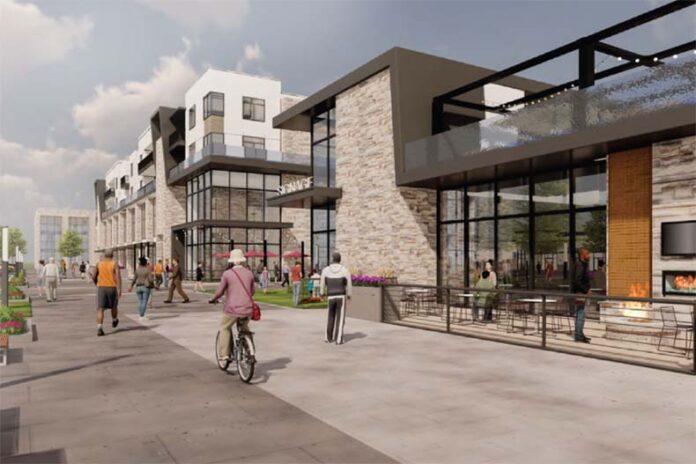
A consultant urged Leawood planners and city councilmembers to be cautious as they consider residential and retail projects along 135th Street, because of the danger of building too many of the wrong type of buildings for the market.
“If we build too much too fast and it’s the wrong format, you can never recover it,” Sharon Woods, consultant with LandUse USA, told a recent joint meeting of the city council and planning commission. “So please, go cautiously.”
Woods presented a market and retail study of the development potential of a swath of 135th Street that is largely undeveloped.
She generally discouraged large apartment complexes and multiple, widely spread retail centers along the stretch, saying the market of people likely to move into that area would not support that type of housing or shopping.
Councilmembers and planning commissioners are trying to draw up an overarching plan for what type of development should happen along that stretch, from roughly Nall Avenue to the state line.
The consultant is working with Olsson Planning and Design to provide background data. No decisions were made at the Feb. 16 meeting, and city leaders are expected to resume the discussion in future meetings.
Here’s the link to the handout on housing that Leawood city leaders reviewed at the meeting.
And here’s the link to a similar handout on retail.
“I just want to save you from regret”
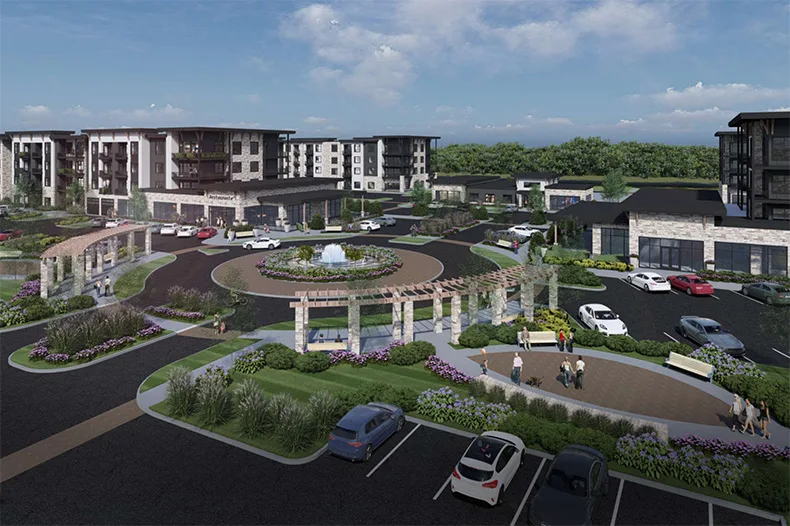
Developers have shown interest in the area, and have brought several projects to planners for various combinations of housing and retail. Progress has not always gone smoothly.
Councilmembers have struggled with requests for large apartment buildings in particular.
A proposal for mixed-use development Mission West at Mission Road and 135th Street that included four-story apartment buildings and over 334 units was recently turned down by both the council and planning commission.
Oxford Promenade, at 135th and Mission Road, was approved but construction has been delayed.
Other developers have come back with adjustments to their mixes of twin villas — a cousin to duplexes — and single-family homes.
During last week’s discussion, some councilmembers wondered about the direction they should take.
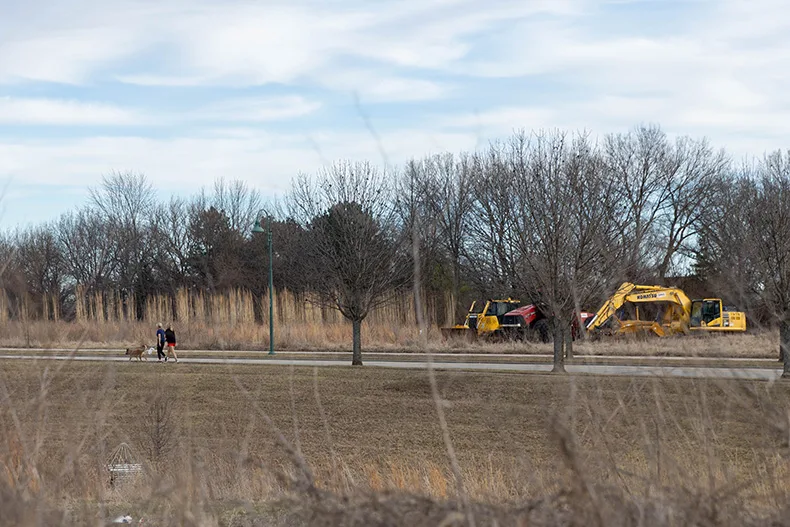
Councilmember Lisa Harrison noted that very little development has happened in the corridor in the past 10 years, but now the council is beginning to feel the pressure to build.
“We have a lot of developers right now trying to build along 135th for housing. None of them are finished. Many of them have started, stopped and changed their plans and started and stopped and changed their plans,” she said.
She wondered if the city could “tap the brakes” to see if some of the new projects get filled before more are approved.
Woods, the consultant, said she would rather see an approach where builders fill their properties than prematurely forge ahead with more.
“My fear is that we might end up building things that we’re just going to regret. I just want to save you from regret on building formats and too much retail space on the wrong kind of housing formats,” she told councilmembers.
At the Feb. 16 meeting, Woods presented a glimpse of what her study says is the target market along the corridor.
Leawood’s demographics
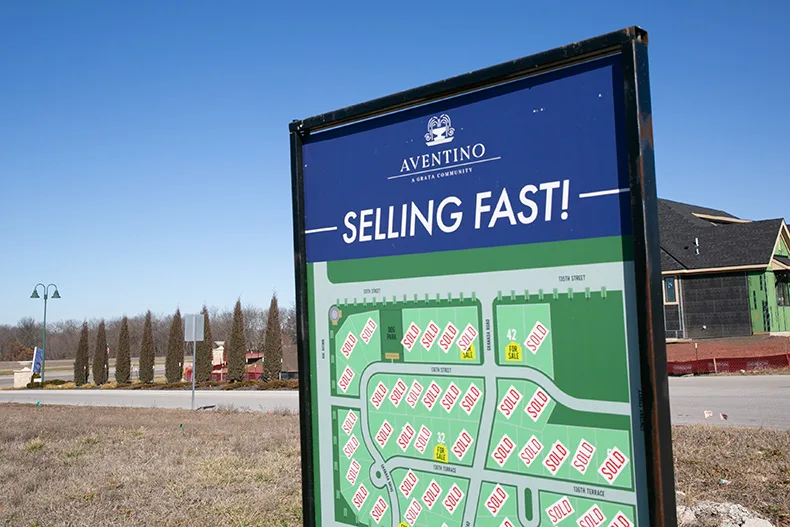
The overwhelming majority of Leawood households own rather than rent, Woods said. According to 2025 numbers, there were 12,630 households of homeowners compared with 1,210 households of renters in the city.
The owner households had a yearly income of $230,000 (the national average is $75,000) Woods said, and the renter households came in at $95,000 yearly, which is about twice the national average for renters. A household could include more than one wage earner, she said.
Woods further categorized Leawood’s population in the area adjacent to the 135th Street corridor, based on statistics from the credit reporting company Experian.
According to those statistics, the biggest “lifestyle cluster” within the corridor area was “American Royalty,” a cohort of 775 high-income households whose name drew chuckles from those in attendance at the council meeting. (The “lifestyle cluster” names were Experian’s, Woods said.)
The second largest group was 365 households dubbed “Silver Sophisticates,” a cohort that has disposable income but may be interested in downsizing without leaving Leawood, she said.
More toward the middle was the “Wired for Success” group, which tends to move frequently and prefer leasing rather than buying a home, she said.
Those groups have different expectations of what they’ll pay. For instance, “American Royalty” looking to own could tolerate a $2 million price point, “Silver Sophisticates” a $1.2 million price and “Wired for Success” $850,000, she said.
The same groups would also have different ideas about how much they’d pay to rent. “American Royalty” could accept $4,000 a month, “Silver Sophisticates” around $3,800 and “Wired for Success” $3,200.
Woods emphasized that large apartment blocks with lots of units are not appealing even to income groups further down the ladder. Instead, the Leawood market of potential renters prefers to lease a loft, duplex or townhouse, she said.
“Striving Singles,” another “lifestyle cluster” group identifed in the report, could accept a monthly rent of $1,950.
The “Striving Singles” are made up of college-educated young professionals, who are the group that Woods believes the developers are aiming for when they propose large apartment projects because that group is more inclined to choose larger buildings.
But that group is not a big presence in Leawood yet, she said, and judging by her experience in other cities, “They don’t really want to be warehoused in apartment complexes.”
In any case, that group isn’t large enough in Leawood to justify apartment complexes, she added.
Retail and office notes
Woods also offered some thoughts about the future of retail and office buildings along the corridor.
She said planners should beware of too much retail spread too thinly over the area. Every development doesn’t need its own retail, she said.
Big box store owners tend to look for high-visibility intersections with lots of other retail nearby, she said. Those types of intersections don’t exist along the corridor.
But there are some retail gaps. She said a hardware store, grocery or specialty food store could also fit into some type of development along 135th Street.
She also recommended small office spaces. Large office complexes tend to seek out the same kind of intersections as big box retail, she said.
Woods also said there is an opportunity for niche retail connected to events, florists and party planning, for example.
But she cautioned that no more than 100,000 square feet of retail space should be built in the corridor for the foreseeable future.