Overland Park city leaders are floating the possibility of a new parks-focused sales tax, even as the city finalizes its ambitious, long-range parks and recreation master plan.
The draft parks and rec plan, dubbed Playbook OP, envisions dozens of new parks, recreation and aquatic projects as well as park revitalization efforts around the city over the next decade.
That expansion of the city’s parks and pool offerings would cost an estimated $385 million, possibly more.
It’s with that price tag in mind that the most recent draft of Playbook OP suggests taking a parks-specific sales tax measure to a public vote, as other Johnson County cities have done over the years, and enacting other funding recommendations.
Overland Park has yet to formally adopt Playbook OP, which has been in the works since 2023, and city leadership has signaled that more discussions will occur as some details need to be figured out — particularly when it comes to the pools part of the plan.
At the same time, during a discussion about the next steps for the parks and recreation plan last week at a Committee of the Whole meeting, some members of the Overland Park City Council seemed skeptical that the 1/8-cent rate discussed so far would be enough to fund the full range of projects Playbook OP proposes.
(Read the latest Playbook OP draft here.)
How would a parks sales tax work in Overland Park?
Overland Park — the city with the lowest property tax rate in Johnson County — has historically funded the majority of its parks projects from its general fund, supported by property taxes and regular sales tax collection.
To enact a new sales tax, Overland Park would need to get approval from the city’s voters either during a regularly scheduled election or through a special ballot measure.
If ultimately put to a vote and adopted, a parks sales tax would operate similarly to the 3/8-cent OP Moves sales tax and carve out an earmarked revenue stream. That means the revenues generated from the tax would be specifically set aside for parks, trails, recreation and aquatics projects, and could not be used for other purposes.
If a 1/8-cent parks sales tax is approved, it would make the sales tax rate in Overland Park 9.475%, which includes a mix of state and county sales taxes, as well as the general city sales tax and the city’s infrastructure sales tax. (The sales tax rate may be higher in certain areas that fall within Community Improvement or Transportation Development Districts.)
Playbook OP draft proposes other funding sources, too
A new parks sales tax isn’t the only mechanism Playbook OP ponders to increase revenues for parks and recreation projects.
For one thing, another suggestion is to raise the city’s general sales tax to increase revenues more broadly, which would free up more money for park projects. However, Playbook does not specify by how much that tax would need to be raised, and like a parks-only sales tax, it would require approval from voters.
A 1/8-cent sales tax would generate about one cent on a $10 purchase.
Other funding proposals include increasing fees for things like rentals and events and decreasing city subsidization of attractions like Deanna Rose Children’s Farmstead and the Overland Park Arboretum. Those facilities do make some revenue through ticket and other sales, and have philanthropic foundations attached to them, but do not break even.
Beyond city revenues, Playbook OP suggests pursuing more sponsorships, like what’s in place with the Scheels Overland Park Soccer Complex, or seeking out more grant funding opportunities and private contributions from individuals and businesses.
Pools have become a particular focus in Playbook OP process

During the Playbook OP development process, some members of the public have paid particular attention to the pools and aquatics side of things as the city has continued to close its smaller-scale neighborhood-style community pools in line with the regional aquatics approach prescribed in the city’s old parks plan.
That plan would have seen the closure of all small community pools: Roe Pool, Marty Pool, Bluejacket Pool, and eventually Stonegate Pool. It also called for the renovation of Young’s Pool and the Tomahawk Ridge Aquatic Center, as well as the addition of a regional pool in the southern third of the city.
However, Playbook OP, when adopted, is likely to change that approach under amended recommendations from the plan’s steering committee, driven in part by public feedback.
The latest public draft of the plan, dated in February 2026, suggests investing in existing regional pools, while also having two smaller community pools north of Interstate 435, possibly at the sites of the former Bluejacket Pool and potentially Stonegate Pool, when it reaches the end of its useful life in the next decade or so.
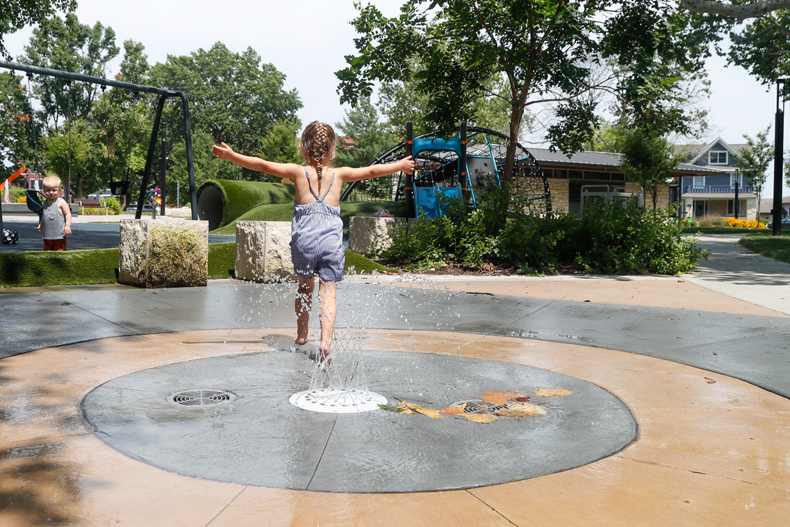
It also suggests having three total spraygrounds or splash pads in parks around the city, and eliminates any current plans to build a regional pool in the southern portion of the city.
Would a parks sales tax be enough?
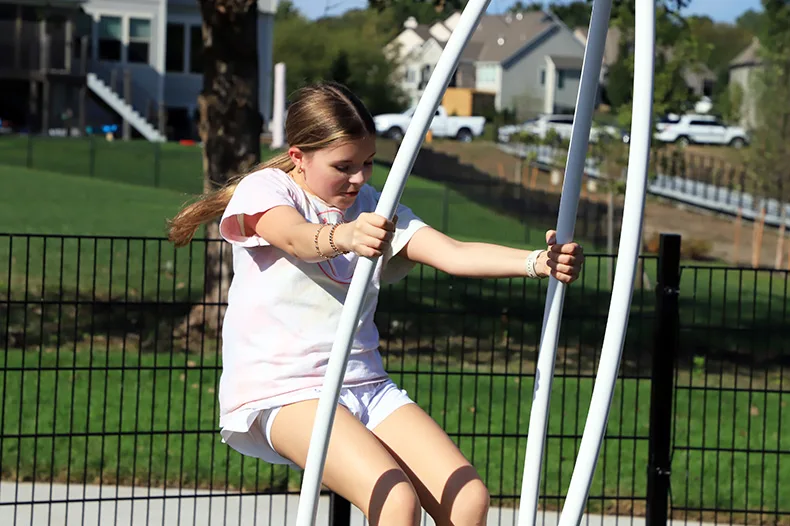
Playbook OP doesn’t estimate how much money a parks and recreation sales tax might generate in Overland Park, but some members of the city council have raised concerns that a 1/8-cent sales tax wouldn’t be enough to fund the full slate of projects pondered in the plan, valued at $385 million.
The vast majority of that cost, around $260 million, would go to park additions and development. Another $125 million would be spent on existing park management and maintenance as well as renovation or refresh projects.
Mayor Curt Skoog said that even “with that 1/8-cent sales tax, delivering this plan” would be “a challenge,” even before factoring in aquatics projects.
He wasn’t alone. City Manager Lori Curtis Luther said she was unable to say “with certainty” that she knew how a lot of those projects would be funded without further direction from the city council on which of Playbook OP’s funding proposals to enact.
Councilmember Logan Heley went so far as to say a larger sales tax might be required, like a 3/8-cent tax. He also said the city would probably need to utilize some of the other funding sources Playbook proposes as well, like more grants or other options.
However, Skoog and city staff have stressed that the city intends to fully realize the parks and recreation projects pondered in Playbook OP.
“I just want us all to keep in mind that this plan is our ambitions for the future,” he said.
Other Johnson County cities have parks sales taxes
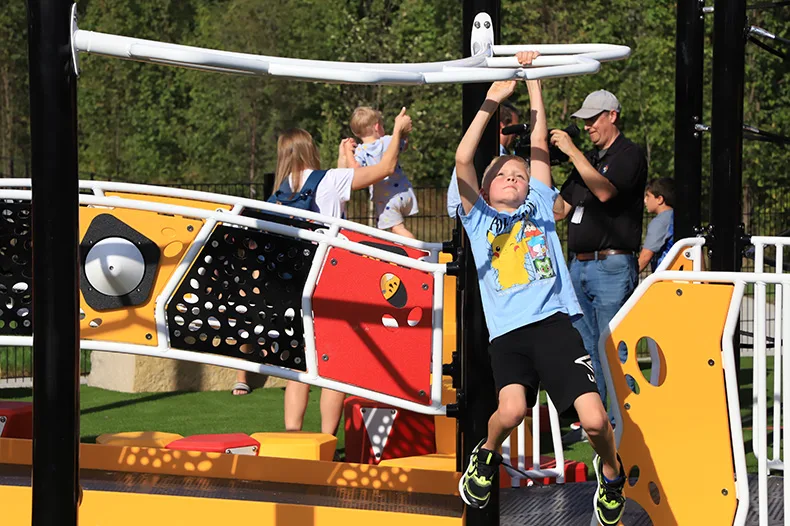
Overland Park isn’t the only Johnson County city to look at a sales tax to help support park projects and maintenance funding.
Olathe, Johnson County’s second largest city, has had a 1/8-cent parks sales tax since 1999. The public has renewed it multiple times over the years, most recently in 2023.
Lenexa has a 3/8-cent sales tax that pays for a myriad of things, including parks and recreation. Last spring, city voters approved a 20-year extension to the sales tax, keeping it in effect at least through 2048.
Additionally, Shawnee has a 1/8-cent sales tax, dubbed Parks and Pipes, that pays for, as the name suggests, parks and recreation as well as stormwater drainage projects.
What’s next for Playbook OP?
- The city still has yet to formally adopt Playbook OP, and there isn’t a firm timeline as to when a city council vote might occur at this point.
- The conversations in the Committee of the Whole meeting last week seemed to suggest that more discussions would be required before a final draft would go forward for adoption.
- After the city adopts the plan, it won’t necessarily promise that any or all of the projects as pondered will go ahead unless they can get funding and individual approval from the city council.
Looking back: Overland Park rethinks long-term pools plan. Could Bluejacket Pool be saved?