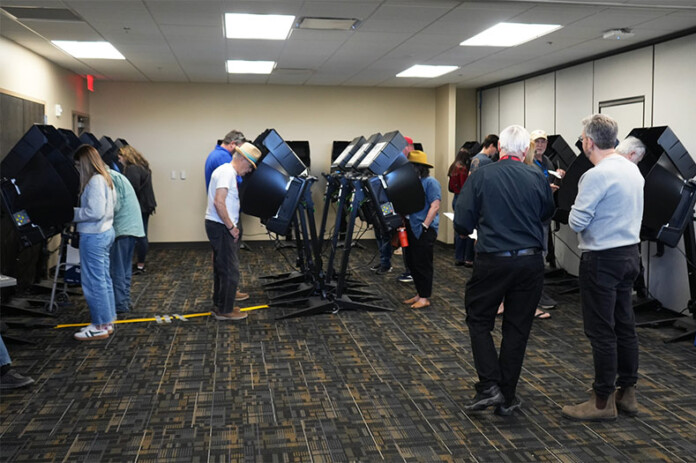
County election officials in Kansas should offer more options, including advance voting sites and longer hours, to encourage a higher turnout, according to a study released last week by the American Civil Liberties Union of Kansas.
“The ease that Kansas voters have getting to the polls is dependent on a wide range of factors outside of their control, from the hours their polling place is open to how long the lines are when they get there,” Logan DeMond, director of policy and research for the ACLU of Kansas, said in a press release.
“These are factors largely determined by their local election officials. Whether someone can cast a ballot shouldn’t be a crap shoot—and Kansas voters can and should expect better from their local election officials.”
You can scan the ACLU’s full report below:
 Loading...

 Reload document
  Open in new tab
 Weeks before the Aug. 4 primary in Kansas, the ACLU report looks at turnout statistics in every Kansas county and compares them with administrative policies on such things as advance in-person voting and locations, hours open outside of the typical work day, language and physical accessibility.
It concluded that local election officers could be doing more within the law to make voting more convenient. Advance voting starts on July 18 in Johnson County.
Report calls out recent JoCo early voting site closures
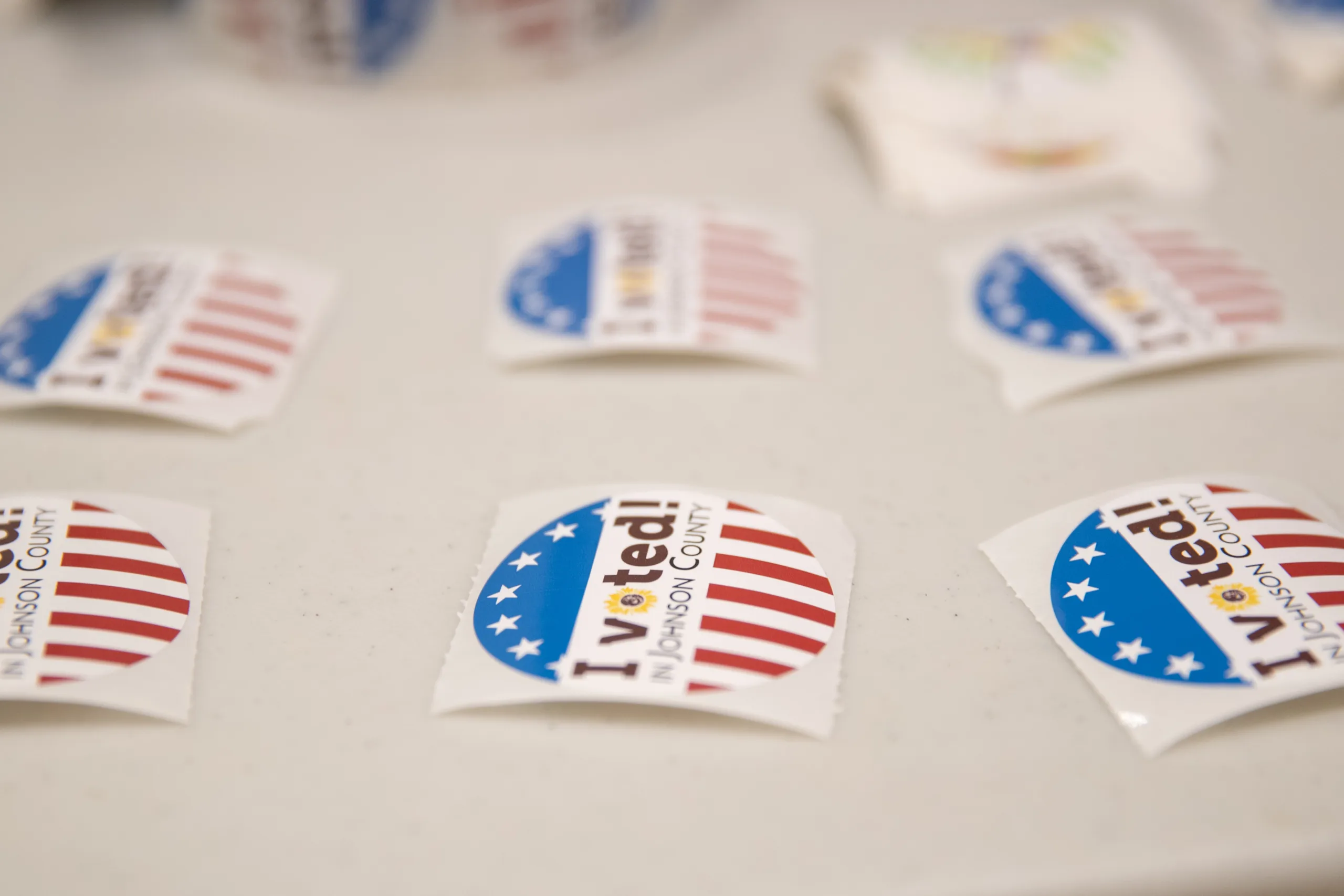
Offering a variety of sites for advance voting was one of the ACLU’s main suggestions.
The study specifically called out the recent decision by Johnson County Election Commissioner Connie Schmidt to reduce the number of advance voting sites that had been available in 2024 from 18 to 12 by closing eight in the denser middle part of the county and opening two new ones in Spring Hill and De Soto.
Having advance voting sites is “not just a matter of convenience for some, but for voters working multiple jobs who rely on public transportation or who have care-giving responsibilities, early voting may be the only way they can cast a ballot at all,” the report reads.
According to the study, counties that invest heavily in increasing the number of early voting locations had higher turnouts. Johnson County was among four counties with at least seven early voting sites, with those counties averaging 70.4% turnout.
The study spotlighted Johnson County for the recent closure of advance voting sites, calling the decision not to offer eight sites that were available two years ago “last minute” and noting that the county commission had budgeted for expanded locations.
The ACLU also noted that the sites not offered this year were in lower-income neighborhoods predominantly populated by people of color.
Schmidt has defended her decision, saying this election’s early voting sites are spread more evenly throughout the county and that the two new sites in De Soto and Spring Hill will add advance voting options in an area in southern Johnson County that had been underserved.
Election office officials had not responded to the ACLU’s new study as of the July 4 holiday weekend.
This year’s ACLU report builds on similar studies from 2018 and 2023 that suggest local election officials’ decisions can have an outsized effect on voter turnout.
More Kansans voted in 2024 than in any election in modern history, but although some counties have made improvements in access, many were unprepared, the report concluded.
“More than ever, local election officials have both the power and clear justification to ensure their continued improvements to election administration are proportional to the growing number of voters in Kansas,” the report said.
Fewer voting sites depress turnout, study says
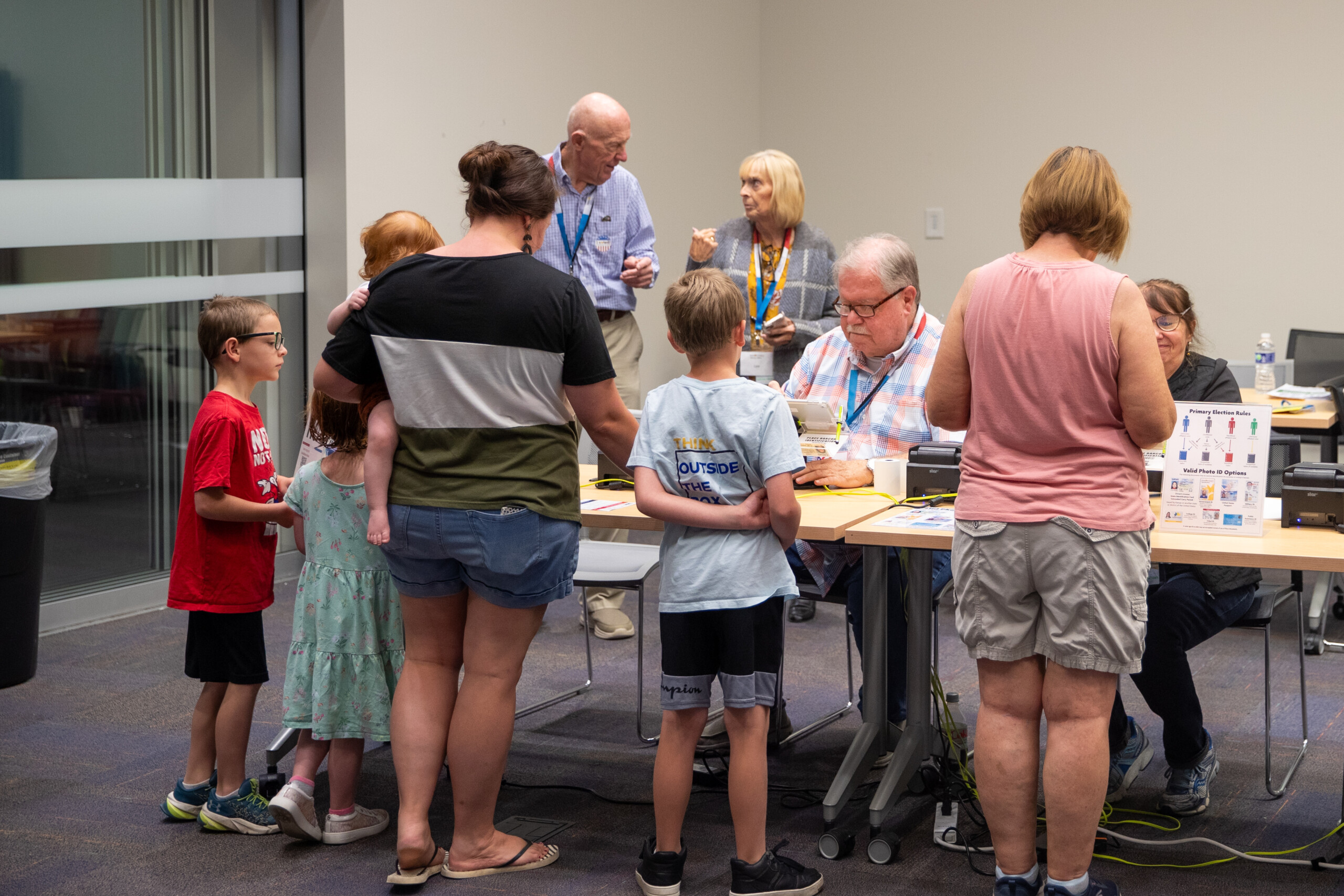
The results were gathered from an October 2025 digital survey sent to all 105 Kansas counties. Information from Jewell, Osage, Woodson and Stafford counties was not included because they did not respond to the survey or to open records requests, per the ACLU report.
The analysis showed several findings. Key among them was that turnout tends to decrease with each 1,000 voters added to a poll site. For every additional 1,000 voters per polling place, turnout drops 1.3%, the report said.
The study recommended county officials do more to offer physically accessible voting such as curbside voting, language translations and vote-from-jail options for incarcerated people who are still eligible.
Offering mail-in voting and more hours and sites for advance in-person voting was a big focus for increasing voter participation.
Long lines and long commutes to polling places on Election Day also tend to discourage turnout, but that could be counteracted by making advance voting easier, the report said.
More than half of ballots cast in Kansas in 2024 were early and in-person or mailed, but election administrators could still do better, according to the analysis.
JoCo offers more advance voting than many other KS counties
Kansas law allows 20 days for advance voting, but the ACLU report shows that no county offers that many, and most don’t offer advance in-person voting on weekends or outside of the typical 9-to-5 work hours.
In Johnson County, early in-person voting will be available every day except for Sundays, starting July 18. Polling sites will be open from 9 a.m. to 7 p.m., except for the Monday before Election Day, when they will be open 8 a.m. to noon.
The analysis noted a correlation between expanded early voting access and turnout. It said counties offering 15 or more days of early voting saw an average turnout of 68.5%, which is 2.5 percentage points above the state average.
Having at least 15 early advance voting days at more than seven locations and with more than 24 hours offered outside the normal working day correlates with more voter participation, the analysis said.
Johnson County ticks all those boxes.
But the location also mattered, per the survey. Many counties offer fewer than seven early voting locations. Johnson County will have 12.
Concerns over mail-in voting in Kansas
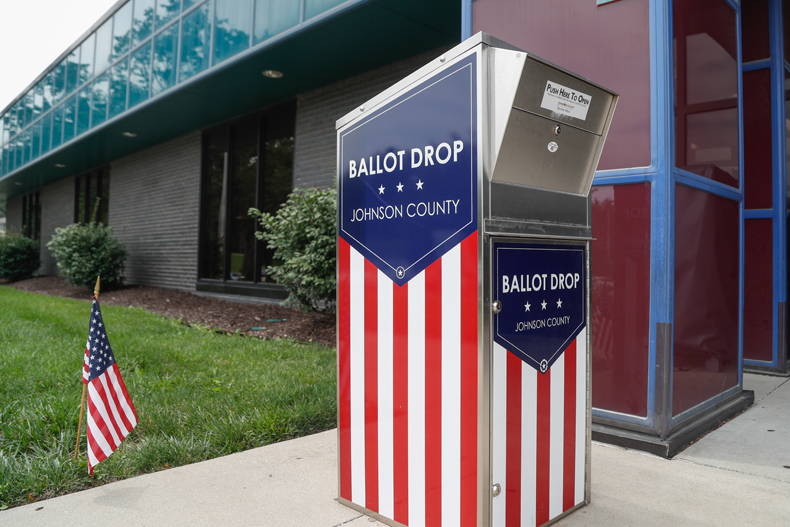
Authors of the study also focused on mail-in voting, saying the method has been under attack by Kansas lawmakers.
Changes in Kansas’ voting law have eliminated the grace period that had been previously extended to count ballots postmarked by Election Day that arrived late by as much as three days. (That law will stay in place. A recent U.S. Supreme Court ruling only impacts states that allow late-arriving ballots to be counted.)
“This policy change will ultimately impact certain Kansas voters disproportionately, with rural communities at an increased risk of experiencing longer mail delivery times due to less centralized postal infrastructure,” the ACLU study’s authors said.
A March 2026 special election in Johnson County was cited as an example of the dangers of closing that window.
In school bond issue elections in Olathe and De Soto and a special sales tax vote in Edgerton, 1,008 ballots were rejected as arriving too late to be counted.
Those elections were by mailed ballots only. The Edgerton issue passed by only a nine-vote margin.
Schmidt has noted that this year’s election plan, while using fewer in-person early voting sites, doubles the number of drop boxes for mail-in ballots and makes their location at county libraries easy to remember.
The report listed general recommendations for all Kansas counties, including:
- more polling places on Election Day,
- more non-English translations,
- programs helping eligible inmates vote from jail,
- more education on voting rights,
- a push for a return to the three-day grace period on mailed ballots
- and an increase in early voting sites and hours.