Earlier this summer, the Post asked our readers what issues you wanted to hear candidates in contested races address leading up to the Aug. 4 primary election.
Based on that feedback, we developed a five-item questionnaire centering the issues most important to residents across Johnson County.
Each day this week, we’ll publish the candidates’ responses to one question. So far, we’ve published responses on property taxes and cost of living, and public schools, special education and vouchers.
Today, we’re publishing candidates’ responses to the following question:
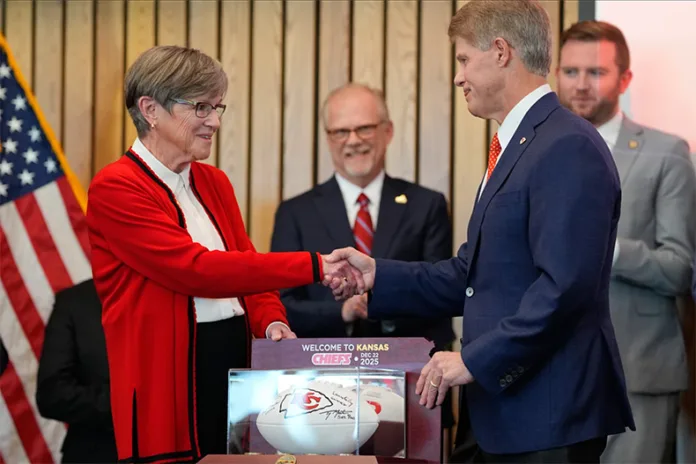
Readers want candidates pressed on the Chiefs stadium incentives — the cost to taxpayers, the promises about jobs created and the secrecy of negotiations conducted under non-disclosure agreements. Do you support using state incentives to draw the team and other big companies to Kansas? How would you weigh the taxpayer cost against the promised benefits, and what transparency would you require for such deals?
Below are the answers the Post received from candidates on the issue:
Nick Reinecker / Katy Reinecker (Republican)
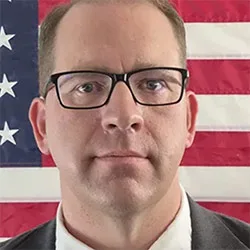 I am not a fan of the state picking winners and losers in what should be a free market. I will stick with constitutionally conservative principles and let the people decide supply and demand issues using their natural abilities and motivation in a free market system.
Stacy Rogers / Michael Smith (Republican)
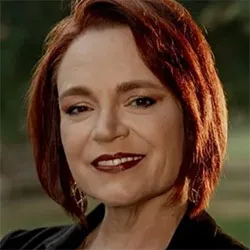 This was a gross abuse of power by just a few members of our legislature (from both sides) and our Governor. The checks and balances that were supposed to be in place with the LCC (Legislative Coordinating Council) were used to create a deal that took the people of this state out of the equation as well as most legislators.
This was not transparent, it does not serve Kansans and its not a good deal, no matter what way you look at it. NDA’s should not be allowed when utilizing tax payer money.
Philip Sarnecki / Joy Eakins (Republican)
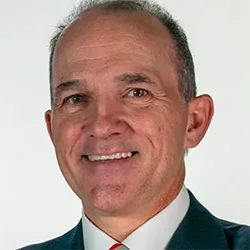 Two things can be true at the same time. I can be happy that the Chiefs are coming to Kansas while also having big concerns for Kansas taxpayers. This deal is the largest subsidy for a sports stadium in the history of the United States by far. This is what happens when you have career politicians negotiating business deals when they haven’t negotiated a business deal in their life.
The reality is that the deal is done, and we have to make it work. My question to voters is this: do you want a career politician to try to make it work or someone with 30+ years of successful business experience. I believe the choice is clear. I have been building businesses and creating jobs all over the state of Kansas for decades.
The career politicians have been handing out tax abatements like candy for years. That is not economic development. That is corporate welfare. Instead of giving out tax exemptions to giant corporations, green energy, wind farms, etc… we should create an environment where businesses want to do business. We have to lower taxes. We have to cut regulations. We have to make Kansas a desirable place so we can attract business. This will create the economic development that we need to create jobs and lower taxes for working families. It’s time to end the corporate welfare, and it’s time to deliver real relief to the working people in Kansas.
Vicki Schmidt / Joe Newland (Republican)
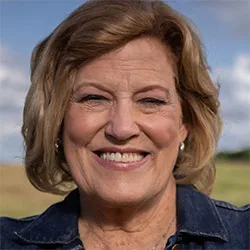 I love the Chiefs. I’m as excited as anybody, but we need more transparency. The people who have made this deal owe Kansans more transparency. Kansans deserve to know what they are on the hook for and what the benefits will be.
Scott Schwab / Ken Rahjes (Republican)
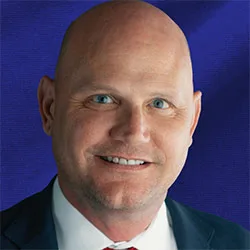 The Department of Commerce needs to focus more on helping small businesses thrive in our state. I support the Chiefs coming to Kansas and the general goal of recruiting top economic drivers to our state but we need to make these decisions in the most transparent and fiscally responsible manner possible. Any incentive requiring a legislative vote should not require NDAs to get done. Legislators must be able to consult with their constituents with the available facts before voting on such matters.
Ty Masterson / Jeffrey Klemp (Republican)
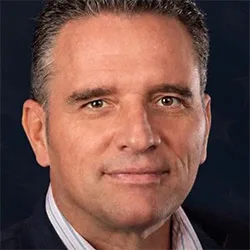 I have always believed that incentives should be used judiciously and with no risk to the taxpayers, and that the best way to achieve long-term economic growth is by maintaining an economic and regulatory climate that attracts employers to Kansas.
Attracting the Kansas City Chiefs to our state represents a generational opportunity that will bring unprecedented economic activity to northeast Kansas. The world-class domed stadium in Wyandotte County will host not only NFL football but numerous other large-scale events. Along with the new headquarters and training facilities in Olathe and the surrounding growth that will follow, this project is exactly what the STAR Bonds law was designed to achieve.
The project imposes zero new taxes and does not divert existing state revenue. STAR Bonds are repaid exclusively through new sales tax revenues generated by the project itself and surrounding development—not current taxpayer dollars. This pay-as-you-grow mechanism ensures no impact on essential services and carries no risk to taxpayers.
Meanwhile, it will deliver thousands of construction jobs, long-term employment opportunities, and billions in economic growth for Kansas, along with tens of millions in new income tax revenue from stadium activity such as player salaries.
As governor, I will be open to these types of large-scale opportunities while keeping our overall focus on lowering taxes, reducing regulations, and removing all other barriers to economic growth in Kansas.
Charlotte O’Hara / Michelle Dombrosky (Republican)
 Stop corporate welfare from the $3 billion Chiefs’ Steal, to the $1 billion Panasonic, to the 30 cents a sq ft. deal Cnano, a Chinese Company, in our New Century AirCenter, to the $152 million Van Trust deal for Lockton at College and state line, to the $267 million the Black and Veatch Deal, to the $154 million to Fiserv from Milwaukee, etc. etc. etc. These deals are bleeding us dry. The free market works
Curt Skoog / Jennifer Bacani McKenney (Democratic)
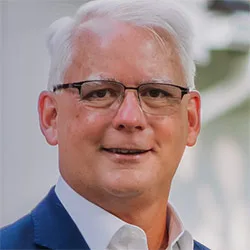 I am excited to have the Chiefs in Kansas, and now that the deal is done, the job is making sure it stays a good deal. I was not a party to the Chiefs negotiations, and not in the Legislature that approved the deal or the process. I am glad Mayor Watson of Kansas City, Kansas and Mayor Bacon of Olathe, where the training facility will be built, sit as voting members of the Kansas Sports Authority. As Governor I will work with those local leaders to make sure this deal delivers for Wyandotte and Johnson Counties, and for the whole state.
On state incentives more broadly, I am open to using them, but only as a disciplined tool with real guardrails, not a blank check. Too often these deals grant decades-long abatements, promise jobs that never fully arrive, and drain revenue from the schools and cities left holding the bag. Before I commit the state to any major incentive, I will require three things: an independent, public cost-benefit analysis before approval, not after; enforceable clawbacks, so if the promised jobs and investment do not materialize, taxpayers are made whole; and an end to deals negotiated entirely behind non-disclosure agreements. When public money is at stake, the public has a right to see the terms. My test is simple: the benefit to Kansas families must clearly outweigh what taxpayers give up, and we should be able to prove it in the open.
Ethan Corson / Renee Duxler (Democratic)
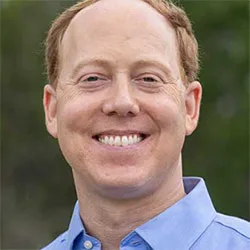 When I have a chance to create 21,000 construction jobs in our state, I’m going to take the opportunity. That’s what the Chiefs deal offers. We need to bolster high-skilled, high-wage construction work, and my commitment is underscored by the over 20 labor unions supporting my campaign. This deal saw bipartisan support because new business, tourism, and visibility will boost our economy by an estimated $1 billion annually and create 4,000 permanent Kansas jobs. I understand from my time at the Department of Commerce what goes into seeing deals like this to completion. As governor, I will hold the Chiefs accountable to fulfill their obligations to ensure it maximizes benefits for Kansans. I am the only candidate in the primary who supported the Sports Authority legislation that gives the mayors of Wyandotte and Olathe a seat at the table and ensures local concerns are uplifted in managing this project.
Cindy Holscher / KC Ohaebosim (Democratic)
 Kansas should absolutely compete for jobs and investment, but not by making everyday families foot the bill while new developments provide nothing to local economies. I did vote to use incentives to explore a potential deal in 2024. The deal that resulted is a raw deal and I couldn’t support it. I am the only Democrat in this race that opposed the Chiefs stadium financing plan because it asked taxpayers to shoulder billions of dollars in long-term risks while negotiations happened largely behind closed doors. Kansans deserve transparency before public dollars are committed, not after the deal is already done.
Economic development should prioritize investments that create lasting opportunities for Kansas families, strengthen our workforce, and support local businesses, not simply write blank checks to billionaires or massive corporations.
As governor, I’ll require greater transparency, public accountability, and independent economic analysis before any major development can move forward. Every proposal should be able to clearly demonstrate its long-term benefits for everyday Kansans, not wealthy donors and billionaire club owners.
Coming up:
Tomorrow we will publish the candidates’ responses to the following question:
Readers repeatedly raised questions about large data centers proposed across Johnson County and tied them to concerns about their impact on local water and energy use. Currently, Kansas offers large data center operators sales tax exemptions in exchange for commitments on water conservation and energy grid preservation. But some readers are calling for a statewide moratorium on data centers. What is your stance on a statewide moratorium? Do you support incentivizing data centers to come to Kansas?
 Thanks for reading! If you value having an independent news outlet keeping tabs on local government, schools and taxes, we're asking you to contribute to our Education Reporting Fund.