
Earlier this summer, the Post asked our readers what issues you wanted to hear candidates in contested races address leading up to the Aug. 4 primary election.
Based on that feedback, we developed a five-item questionnaire centering the issues most important to residents across Johnson County.
Each day this week, we’ll publish the candidates’ responses to one question. So far, we’ve published responses on cost of living and immigration.
Today, we’re publishing candidates’ responses to the following question:
Several readers directed questions about the future solvency of Social Security and Medicare to federal candidates, citing projections that Social Security’s trust fund could run short within a decade. What is your plan to protect Social Security and Medicare, and also to address health care affordability?
Below are the answers the Post received from candidates on the issue:
Chase LaPorte (Republican)
 There is trillions of taxpayer dollars that have been wasted on unnecessary budget bills of the past. Starting with their removal from future bills will lead to Social Security and Medicare solvency and affordable healthcare for all income classes.
Eric Jenkins (Republican)
Did not provide the Post with a response.
Sharice Davids (Democratic)
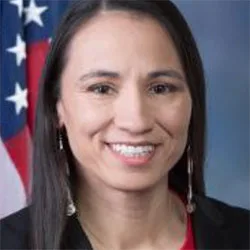 Social Security and Medicare are promises — not “scams” — that Kansans on a fixed income like my mom have earned through a lifetime of hard work. Protecting them is a bipartisan responsibility. We cannot allow political games, misinformation, or inaction to put these benefits at risk. Congress should strengthen Social Security’s finances, protect hard earned benefits, and ensure taxpayer dollars are used responsibly. I voted for the bipartisan Social Security Fairness Act to repeal outdated rules that cut savings for millions of retirees, including teachers, firefighters, and police officers. More work is needed immediately.
We also must address the rising cost of healthcare, which is one of the biggest concerns I hear from Kansans. I voted against an extreme Republican budget that is raising healthcare costs and making it harder for people to access coverage. I’m also fighting to extend the Affordable Care Act tax credits that have helped Kansans afford insurance — because after Congress failed to act, 15,000 people in Kansas’ Third District are losing their coverage and rural hospitals are closing due to financial pressure.
We have made real progress in recent years, and I’m proud to have supported commonsense solutions that are already helping Kansans. We allowed Medicare to negotiate lower prescription drug prices — helping 74,000 Kansans save on medications — capped insulin costs at $35 a month for seniors, and protected patients from surprise emergency room bills. These are practical steps toward a healthcare system that works better for patients, families, providers, and taxpayers alike.
Sarah Preu (Democratic)
 Social Security is our crown jewel in terms of what tax dollars can do for regular working people. Unfortunately, as such, the trust fund has been a target for conservative Congresses for decades. We must first eliminate the cap on social security payments. Right now, with $189,000 as the salary cap for those who pay in, a billionaire stops contributing to social security within days of the first of the year, while middle-income Kansans pay all year long. That same billionaire will be able to take back out of the program regardless of his net worth in a decade or two. The extremely wealthy can either start paying in based on their actual income, or we can remove benefits from higher value asset holders – but we can’t continue to do neither and still have a social safety net for older Americans and disabled folks.
Medicare is another successful program that continues to fight gutting under a GOP-led Congress. Speaker Johnson calls it an ‘entitlement program’ – which I agree with if he means we paid for it so we are entitled to it. When it’s $5T dollar hole in the budget for tax breaks for billionaires, it’s “an investment”; when it’s working people getting a reasonable retirement age and healthcare we paid for already, it’s “an entitlement”.
But it doesn’t have to be this way. When we put our congress people in, we expect them to deliver us programs in exchange for our tax dollars. Using the model that has worked for generations: we leverage the critical mass of buying power of the federal government to negotiate benefits and prices to make affordable what is now almost universally unaffordable, healthcare coverage. After the gutting of the ACA, we now have nearly 4 million more uninsured folks walking around in danger of losing their life to a system designed for profit, not care. And most of those 4 million people are middle income people who could just barely get coverage when the ACA subsidies were fully funded but, now, they don’t stand a chance of paying for insurance out of pocket. We must restore ACA funding first and codify its rates of subsidy to protect those dollars while we enact a plan for transitioning to Medicare for All. While there are multiple viable plans to a single payer system that I would support, it’s really the delivery timeline for me that will guide the approach. Working families can’t wait another 15 years for relief from crushing medical debt, premiums and co-pays.
Coming up:
Tomorrow we will publish the candidates’ responses to the following question:
Readers raised concerns about the federal government “coming down on our local school districts for DEI compliance” and worried about protecting district funding. As a House member, how would you protect federal education funding for local schools in Johnson County? What is your view of the federal government’s actions towards some local schools over their policies regarding transgender students?