Earlier this summer, the Post asked our readers what issues you wanted to hear candidates in contested races address leading up to the Aug. 4 primary election.
Based on that feedback, we developed a five-item questionnaire centering the issues most important to residents across Johnson County.
Each day this week, we’ll publish the candidates’ responses to one question. So far, we’ve published responses on cost of living and immigration.
Today, we’re publishing candidates’ responses to the following question:
Among readers who raised elections as a concern, the mood ran strongly one way: distrust of President Trump’s continued false assertions that he won the 2020 election and fear that voting is being made harder to access. One reader wanted to know whether a candidate is “a 2020 election denier.” Another asked if you will “wimp out” when pressed on “who legitimately won the 2020 Presidential election.” Many tied their concerns over elections to ballot access, objecting to anything that would “make voting more difficult.” Do you accept that President Trump lost the 2020 election, and will you commit to accepting and certifying future results, including any your party loses? What, if anything, would you do to protect Kansans’ access to the ballot?
Below are the answers the Post received from candidates on the issue:
Jason Hart (Democratic)
 Without equivocation, I fully agree that Trump lost the 2020 election. Over my years of experience as a prosecutor, I have seen nothing to suggest that our elections are prone to fraud, so I feel confident in saying I would accept and certify future results even if my party loses. I believe the proposed SAVE Act and the recent decision on the Voting Rights Act both serve to disenfranchise people, make voting harder. I endorse passage of the Freedom to Vote Act, which would codify many of the features that keep voting secure but make it easier (like expanded advanced voting). We also need to have automatic registration, and require public education for young voters about the voting process. We need to overturn Citizens United, have substantial campaign finance reform, and ideally create publicly-funded elections which remove the money (and parties) from politics altogether. On the slightly less policy-oriented side, I think creating a national holiday for voting would encourage more voting.
Kevin Latz (Democratic)
 Mr Trump lost the 2020 Presidential election. Our administration and our supreme court is making it harder to vote and is waging a war against the right to vote.
We need to make it easier rather than harder to vote. Mail in ballots, early voting and ideally making voting day a national holiday would help our dismal record with re: to voter turnout.
I will accept the results of the 2026 and 2028 election although we need to be on guard and vigilant to the ongoing voter suppression of the current administration.
Erik Murray (Democratic)
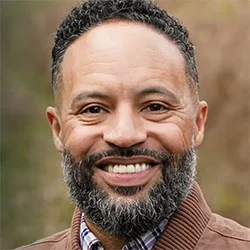 The data overwhelmingly shows that our elections are fair and safe. Former President Joe Biden won the 2020 election, President Donald Trump won the 2024 election, and those results should not be in dispute. The bizarre irony is that even with this administration effectively controlling all three branches of government it is still complaining about election fraud—in elections it won. This governance by grievance only further divides us, creates more mistrust in government, and seems to be another intentional, chaotic distraction as the most corrupt administration in history lines its pockets. Protecting Kansans’ access to the ballot starts with rejecting any attempts to disenfranchise any voters. Efforts to limit access for women and poorer communities by mandating U.S. passports should be considered an unconstitutional poll tax must be rejected. Efforts to erode voting rights for communities of color through targeted gerrymandering must be rejected. Allowing access to Americans’ most sensitive social security and voter roll information to be given to trillionaires for any number of potential ulterior motives must be rejected. We have to do everything in our power to protect the most fundamental principle of our representative democracy by ensuring that all Americans have unfettered access to the most fundamental of our rights, which is voting.
Anne Parelkar (Democratic)
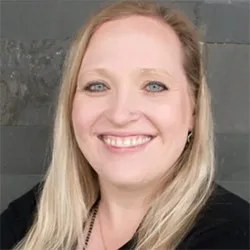 As an attorney, I renew my oath to our Constitution every year when I renew my law licenses. I believe in the rule of law, and my loyalty is to our Constitution and the people of Kansas. I will always support and facilitate the peaceful transfer of power. So there is no concern that I would not certify an election even if “my party” loses.
Right now, many people have a growing distrust of our government, political parties, and our election system. Politicians whose loyalty is to themselves or their parties over the People they are sent to serve use misinformation to sow fear and division among the public. We see it in this issue as well, with the false claims about the 2020 election.
No one is against secure elections. We are against voter disenfranchisement under the guise of securing elections. We’ve already seen Roger Marshall admit that there is no widespread voter fraud and the SAVE America Act is meant to preempt the same – in other words an admission to us that they have lied to the public about these claims. If they were serious about protecting fair elections, all they’d have to do is address the concerns of voter suppression and unequal access to the ballot box in the same bill. Put the onus on the government to ensure every eligible voter has the documentation needed to vote, at the government’s expense. Make voting day a public holiday so it is easier for working families to participate.
Additionally, we must return to publicly funded elections to eliminate the financial influence of billionaires and tech lords to sway elections.
Noah Taylor (Democratic)
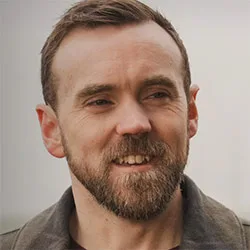 I accept the results of the 2020 election and would vote to certify future election results, regardless of the winner. We must continue to defend the integrity of our elections from those who seek to sow distrust and perpetuate lies about cheating and stolen elections. I believe mail voting and ballot boxes help expand access in Kansas, especially for active duty service members, seniors, people with disabilities, and rural communities, and they should be protected.
We all agree voter fraud is wrong. It’s already illegal, should be prosecuted to the maximum extent of the law, and is extremely rare as it is. I believe every eligible American should have the freedom to cast their ballot – one of the very freedoms I fought for in Afghanistan.
Christy Davis (Democratic)
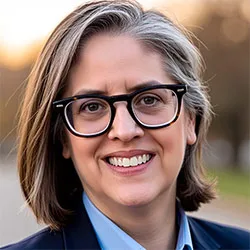 Yes. Joe Biden won the 2020 election. That is a fact unchanged by any refusal to tell the truth. Roger Marshall did serious harm to the reputation of Kansas and our standing in the US Senate when he made his first act to play the fool to Trump’s lies about election conspiracies.
I’ve had enough of politicians who undermine our elections because they don’t like the outcome. Roger Marshall was perfectly fine with his result and the dozens of others that gave seats to his political friends but strangely if you were a Democrat the only explanation was it must be fraud. He is flat out wrong and what’s worse is I think he knows it and lies anyway.
I will always accept and defend the certified results of free and fair elections, whether my party wins or loses. That’s not courage. That’s the minimum requirement of holding public office.
Every eligible Kansan should be able to vote without unnecessary barriers to appease a party that will never accept a result where they lose. I’ll fight to protect early voting, vote by mail, same-day voter registration, and accessible polling places while maintaining secure elections that we already have in Kansas. I also support making Election Day a national holiday because no American should have to choose between earning a paycheck and exercising their constitutional right to vote. We don’t strengthen democracy by making it harder to vote or by lying about results because we can’t handle the truth.
Adam Hamilton (Democratic)
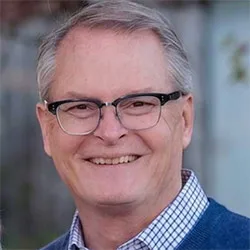 The 2020 election was legitimate. That was decided by the voters, certified by the states, and tested in the courts, where the challenges went nowhere. And yes, I will accept and certify the results of any future election, including ones my party loses. That ought to be the easiest commitment a candidate ever makes.
My opponent’s record is different. When the mob had been cleared out of the Capitol on January 6, 2021, and the Senate came back into session that night, Roger Marshall voted twice to throw out electoral votes that Arizona and Pennsylvania had already certified. He was one of only five senators who did. Before that, in December of 2020, he put his name on a brief at the Supreme Court asking the justices to overturn the certified results in four states. And when the Senate later had the chance to authorize an independent, bipartisan investigation into what happened that day, he voted to block it.
I think Kansans are entitled to hear him explain that.
On access, my view is simple. If you’re eligible to vote in Kansas, the state’s job is to make that easy, not to put obstacles in front of you. We shouldn’t disenfranchise farmers, night-shift workers, or older folks who vote by mail because getting to a polling place on a Tuesday isn’t realistic. I’d support federal protections that keep the ballot within reach of them.
Michael Soetaert (Democratic)
Did not provide the Post with a response.
Sandy Spidel Neumann (Democratic)
Did not provide the Post with a response.
Damon Anderson (Democratic)
Did not provide the Post with a response.
Patrick C. Schmidt (Democratic)
Did not provide the Post with a response.
Roger Marshall (Republican, incumbent)
Did not provide the Post with a response.
Pond Naramore (Republican)
Did not provide the Post with a response.
Coming up:
Tomorrow we will publish the candidates’ responses to the following question:
Readers asked federal candidates pointedly about the looming shortfalls in Social Security and Medicare. One, in particular, cited projections that Social Security’s trust fund could be depleted by the early 2030s. Readers are also worried about the costs of health care. What is your concrete plan to keep Social Security and Medicare solvent and to also address health care affordability?