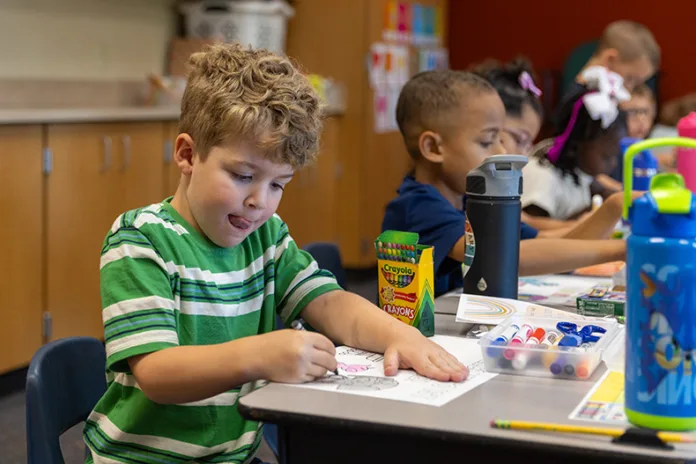
Nearly 100,000 students are enrolled in Johnson County public schools — that’s 100,000 young lives being shaped right now, learning and gaining experiences that will affect the rest of their lives.
And in a time where information is abundant, sometimes overwhelming and constantly at our fingertips, it can be hard to navigate the complex systems that govern how and what children are learning.
Similarly, K-12 education systems are large employers, making decisions that affect thousands of adults living and working in our communities.
As the Post continues to expand, it’s crucial to dedicate more resources to covering such an important topic. Time and time again, we’ve heard from readers that they’d like to see consistent education coverage. Now, through Report for America, we’re able to deliver that coverage.
As the reporter filling that role, I’m excited to help the Post highlight the complexities and nuances of K-12 education. Having grown up in Shawnee, my experiences in Johnson County schools greatly affected my career path and how I ended up in journalism (shoutout to Kathy Habiger).
Many concerns my own parents had about my education continue to be concerns among parents today, such as boundary changes, curriculum expectations and how state decisions determine local policy.
I remember transferring from Riverview to Clear Creek Elementary between my second and third grade years. I remember the implementation of Common Core and what it was like, as a student, to experience a change in curriculum.
Of course, K-12 education has changed since I was a student. I didn’t experience 1:1 devices or the expansion of career and technical education programs. Despite the changes, I believe my experiences growing up in this community will be an asset to my work, and my curiosity will help fill the gap.
Schools are vital structures — they help drive local economy, community and culture. These systems are large and complicated, and can be difficult to understand. As one reporter covering six school districts and occasionally local private schools, I’ll have no shortage of stories.
Below are some of the topics and school-based issues I’ll have my eyes on as we start the new school year next month.
Building a district

Like any governing body, districts have large budgets with many factors that can affect it and change year to year — think staffing, enrollment, state funding, etc. However, because budgets are often complex, understanding them can be difficult.
One of the Post’s goals is to publish explainer-type articles that address myriad topics, including how budgets work.
School district finance reporting will touch upon things like special education funding, bond referendums, teacher pay structures and different tax agreements and their impact on districts, as well as how tax credits that offer parents school choice affect the public schools where their kids live.
Also in line with how districts function is the need for teachers. However, national trends and local trends show challenges with teacher shortages, morale and retention. We’d like to take a deeper look at how districts are combating shortages, what’s worked and what hasn’t, and what teachers themselves would like to see change.
Technology in classrooms

Technological advancements have fundamentally changed our world. Information is often accessible with just a few clicks. It can be a great tool, but it can also affect development and how people think.
Across the nation, we’re seeing bell-to-bell cellphone bans. Kansas is no different.
The state legislature passed a bell-to-bell personal electronic device ban to take effect beginning this school year. Districts might see some growing pains as students adjust, but proponents of the bill hope to reduce distractions in the classroom, thereby improving focus and connection.
In the same vein, artificial intelligence is rapidly evolving. While many schools discourage its use among students for assignments, they also encourage or even expect teachers to implement its use. At the same time, many districts are faced with the same question: How do you effectively create a policy and monitor student use of a technology that can be both a tool to students, and detrimental to their development?
Student life and more

It is clear that people care deeply about their students’ day-to-day life, interactions and education.
Student life is a wonderfully broad category — it covers everything from test scores and achievement, to student free speech issues, parents’ rights, types of learning and mental health, and certainly includes the cool things students do in our communities.
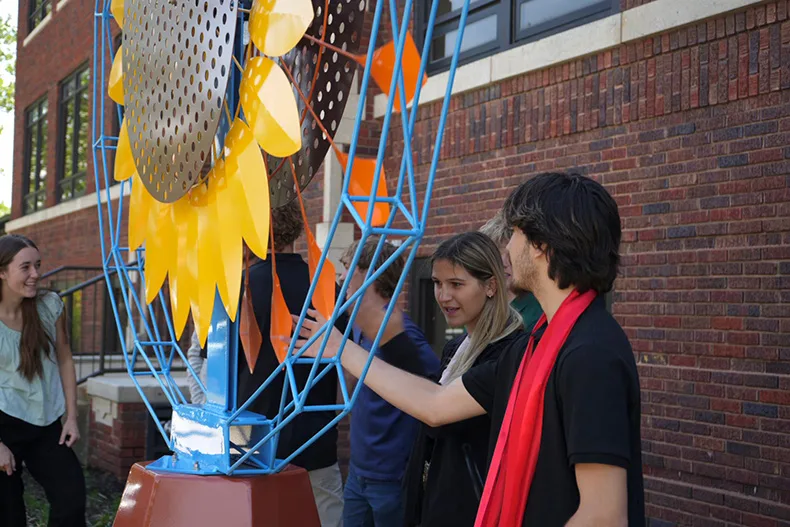
As the Post expands its education coverage, we hope to strike a balance between hard news, like the ongoing federal investigations into two school districts for their policies relating to transgender students, and slice-of-life features, like the new kinetic sculpture in front of De Soto City Hall built by students.
How you can help us
As much as students learn from adults, there’s plenty we can learn from our students, teachers, families and the tax payers who make learning possible.
What else are we missing? We’d like to hear from you about what K-12 education topics are important to you. Do you have questions about your own school district? Reach out to us by leaving a comment at the bottom of this story or emailing us at [email protected].
 Thanks for reading! If you value having an independent news outlet keeping tabs on local government, schools and taxes, we're asking you to contribute to our Education Reporting Fund.