
Cases of Cyclosporiasis, the parasitic stomach bug known for causing explosive diarrhea, continue to increase across Johnson County, with the confirmed case count hitting 143 on Wednesday.
That’s about a third of the total cases in the entire state of Kansas, according to the most recent numbers from the Kansas Department of Health and Environment, and public health officials have warned it could be an undercount.
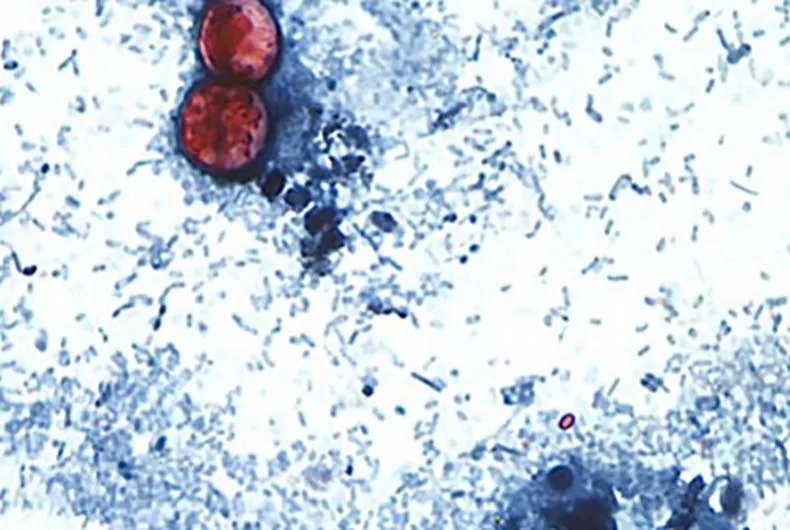
The illness, caused by the parasite Cyclospora, is spreading in a multistate outbreak throughout the United States.
Overall, more than 6,700 people across the U.S. have had confirmed cases of the illness, according to the Centers for Disease Control and Prevention, including 461 cases in Kansas.
In an interview with the Post, Dr. Dana Hawkinson, an infectious disease specialist for KU Health System, called it “quite concerning.”
Talk to your doctor if you think you have Cyclosporiasis
Hawkinson encouraged anyone who thinks they have Cyclosporiasis to contact their doctor about getting tested and treated.
Most people won’t require hospitalization for the illness, and there are treatments that can help manage symptoms and reduce the amount of time you’re sick.
For instance, there’s a generic antibiotic called Bactrim. You need a prescription for it, but Hawkinson said it’s part of the “standard treatment” for Cyclosporiasis.
Due to the nature of the illness and how it primarily causes diarrhea, those who suffer from it run the risk of getting dehydrated or seeing abnormalities in their electrolytes from fluid loss.
Hawkinson said KU Health has seen an increase in positive tests for the illness across the KU system, but he suspects most of those are coming in through primary care offices, emergency rooms and urgent care clinics.
Doctor says gutted public health infrastructure contributing to problem
Cyclospora isn’t totally unheard of in Kansas. In fact, the state tends to see a handful of cases every year.
However, the scale of this outbreak is much bigger than normal, Hawkinson said, and it’s still growing.
“We are still kind of in that outbreak scenario, with cases just increasing now,” he said.
The CDC says, in addition to the roughly 6,700 confirmed cases nationwide, it is aware of 11,500 additional cases that are not laboratory confirmed and need additional monitoring.
The highest incidence of cases is in Michigan and Ohio.
Though the symptoms of the illness can be persistent and unpleasant, the CDC has not linked any deaths to this Cyclospora outbreak.
Hawkinson said this particular outbreak has been much worse for several reasons.
“It wasn’t one thing that has led to it or that has led to the continued numbers and lack of being able to identify and stop it,” he said.
For one thing, backlash from the COVID-19 pandemic has led several public health experts to leave the profession. At the same time, investments in public health infrastructure have contracted, and efforts to track some foodborne illnesses, such as Cyclosporiasis, in the U.S. have shrunk as well.
All of those are “the correct steps” that can make an outbreak like this one worse and harder to get on top of.
“We are working from behind as far as public health infrastructure and workers and investigators to help find the source and keep us safe,” Hawkinson said.
Charlie Hunt, director of the Johnson County Department of Health and Environment, said earlier this month that he sees this outbreak as a reminder that public health investment matters.
“This does highlight the importance of having a really robust public health system, from the federal to the state to the local levels,” he told the Post.
The nature of the parasite also comes into play; even in a small outbreak, the source can be hard to identify through routine epidemiological practices, such as interviews and investigations. Food testing is also not always going to definitively nail down the source, either.
Avoiding the parasite is your best bet
Hawkinson said the best way to not get Cyclosporiasis is to avoid foods that are identified as potential exposure risks altogether, since washing produce won’t get rid of the parasite.
“It is just about keeping up with the news, understanding what the potential source could be, and trying to avoid those foods,” he said.
So far, lettuce has been identified as a source in this particular Cyclospora outbreak, particularly products coming from Taylor Farms de Mexico and that company’s farms in Guanajuato, Mexico.
This week, a Houston-based food safety law firm announced it was representing a Hutchinson, Kansas, woman who planned to sue Taco Bell after she said she contracted Cyclosporiasis and became “extremely ill” after eating at one of the fast food chain’s restaurants.
At the end of the day, though, any produce that’s been contaminated with the parasite will need to be removed from the food chain to stop the outbreak.
“That is why it is so vitally important to figure out where the source for sources is, get those out of the food chain, get those out of the market so people aren’t being exposed to them,” Hawkinson said.
Keep reading: How exactly did Cyclospora infiltrate our food supply? We still don’t know