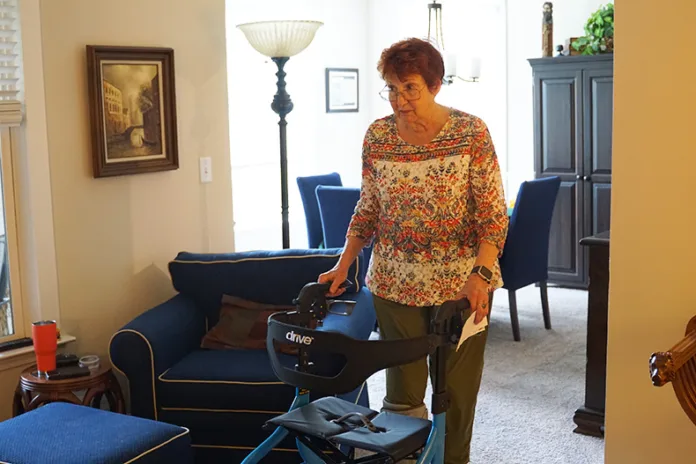
At her apartment in Olathe, Sally Betta is able to remain independent, like she has for several decades, thanks to a program that a local interfaith group is trying to bring back to Johnson County.
Betta is one of 14 people in Johnson County who received help from the CAPABLE: Community Aging in Place — Advancing Better Living for Elders program, which helps older adults continue to live in their home by identifying and fixing physical challenges in their environment and checking in on their needs.
The pilot program lasted one year, from the state committing money to the program in May 2025 to when it stopped taking new patients in April 2026.
It was funded by a $250,000 state grant, using leftover COVID-19 relief funding, provided to the Kansas Department for Aging and Disability Services (KDADS) and Olathe-based Midland Care, a licensed CAPABLE provider, administered the program’s services in Johnson County.
The program only used about $50,000 of the allotted money, or about $3,500 to $5,000 per patient, which came in the form of reimbursements to Midland Care from the state. After, the unused money remained in the state’s leftover COVID-19 funding. The grant expired after one year and the program ended.
“I finished somebody up … and I heard a comment on my survey (that) was like, ‘I really wish this program would not end. It can help so many people,'” said Kay Findlay, a now-former CAPABLE clinical specialist who helped implement the program in Johnson County.
That sentiment is likely to be shared by others in Johnson County, as its aging population of people 65 and older is expected to increase from about 95,000 in 2020 to 148,344 by 2029 and to 230,455 by 2049, according to the Johnson County government.
“We don’t have sufficient facilities or workforce to really manage that level of demand for service, and so, any of these preventative programs like CAPABLE, that will help reduce that burden on the state, I think are going to be … critically important for the long-term care of individuals here in Kansas,” Andy Brown, deputy secretary of programs with the Kansas Department for Aging and Disability Services.
It’s why it’s the mission of the interfaith county-based nonprofit Good Faith Network to launch a similar, new 12-to-18-month pilot program with the hopes that a local or national Managed Care Organization, like the Lenexa-based Sunflower Health Plan and UnitedHealthcare, will pay for it to help older adults age in place, rather than a facility like a nursing home.
“Instead of giving seniors a little help to live independently in their homes when they need it, we institutionalize them. And to be clear, this isn’t what people want, and it costs all of us a lot more money,” Vicki Love, a member of The Good Faith Network, said at the organization’s annual Nehemiah Summit earlier this year.
Sunflower Health did not return a request for comment from the Johnson County Post.
CAPABLE helps older adults stay in their homes
In fall 2024, The Good Faith Network and its interfaith communities conducted a series of 80 small group meetings where attendees were asked an open-ended question: “What keeps you up at night worrying?”
A repeated concern was pressures involving aging populations in Johnson County. This prompted the organization to form The Eldercare Action Committee, a group of volunteers from its various congregations, to define a significant problem related to eldercare, viable solutions, and specific goals that it could present at the organization’s Nehemiah Action Assembly in May 2025.
At that conference last year, Brown announced they would disburse the $250,000 state grant to Midland Care to administer the program. Jeremy Witz, vice president of strategic initiatives for Midland Care, oversaw it.
From that announcement to organizing and hiring people to administer the program, it took about six months for CAPABLE get off the ground in Johnson County. That meant Midland Care had a window of about four months to help people before it closed, causing about $200,000 to go unspent.
From December 2025 to June 2026, Findlay visited homes and apartments in Johnson County to talk with older adults about their needs and did an inspection of their living space to identify obstacles that would prevent them from living on their own.
“It’s very client-driven, so they come up with their goals and they tell me what’s important to them, and then I help them get there,” she said.
The program is all-encompassing. It includes a collaboration of:
- An occupational therapist who sets goals, creates an action and teaches exercises and skills
- A registered nurse who reviews the client’s medical history and conducts a medication review
- A handyperson who installs accessibility equipment and makes targeted home modifications
“In traditional health care, you have (occupational therapists), you have nurses, and you might have in some Medicaid programs waivers that allow for home modifications, but it’s not all three disciplines in the same intervention providing a service in the same way,” said Amanda Goodenow, strategic partnership specialist at CAPABLE National Center in Colorado.
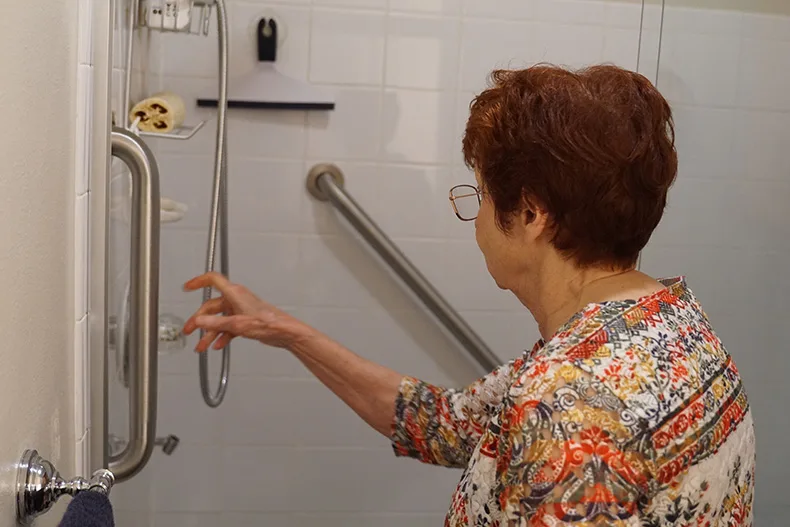
For Betta, she’s able to live on her own at 82 because CAPABLE installed rails in her shower and around her toilet, having a lifted pad on her toilet to make it easier to sit down, using a Rollator walker to get around the house and physical assistance tools for putting on her shoes and socks, and getting out of the car.
These were all things that she didn’t think about until an occupational therapist from CAPABLE brought it up.
“I really wasn’t thinking about ‘OK, what do I need to prepare, so I can stay in my apartment or my home longer on my own?'” she said.
CAPABLE helps older adults who need minimal assistance
One of the catalysts of The Good Faith Network championing the CAPABLE program is Kansas ranking #47 out of 48 states for the percentage of low-care residents in nursing homes, according to America’s Health Rankings 2024 Senior Report.
This means individuals who require minimal supervision and can still complete daily physical tasks like cleaning and using the bathroom could potentially live at home because of the CAPABLE program. Instead, because of Kansas’s lack of resources, they end up in expensive institutional settings like nursing homes, The Good Faith Network stated in a press release.
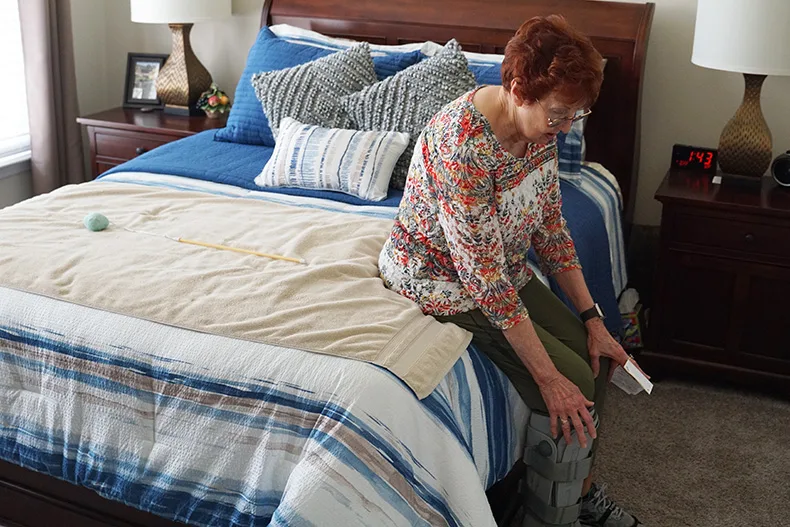
Betta is one of a handful of people that has stayed out of a nursing home because she received help from the CAPABLE program. While she has mobility issues, she’s still able to drive, cook, exercise and clean her home.
Living at a nursing home, she would lose that independence, she said.
“I’ve been to enough of the (senior) homes that, wow, it’s pretty limiting when you’re there, and that’s it,” she said. “You’re basically stuck, and you can’t get out and drive.”
It’s a worry for other Johnson County residents, like Cindy Heckman, who witnessed an aunt cognitively decline when she became a nursing home resident.
“She needed this service. She was low-income, physically impaired, but not cognitively impaired. She was put into a nursing home, and actually isolated. She had no easy access to a phone, and we all lived out of town, and it was very difficult for a social person to be so isolated, and she went downhill cognitively very quickly,” she said.
The program would also save Kansas and KanCare, the state Medicaid program, money by reducing hospitalizations, falls and nursing home costs, the Good Faith Network said, especially in a time when monthly costs for assisted living facilities and nursing homes in the Kansas City area range from over $2,000 to more than $10,000, depending on the type of care and living facility or nursing home, according to CareScout.
Having helped people in Johnson County, Findlay doesn’t want people to overspend or feel isolated in an assisted living facility when adjustments to their current environment and ongoing care would suffice.
“Sometimes all they need is one thing to help them do something they couldn’t do safely before, and to take that, which could be addressed by CAPABLE over a two- to three-month period, versus a permanent move into a health care facility — the cost benefit of that just doesn’t make sense,” she said.
Good Faith Network is asking for more stable funding
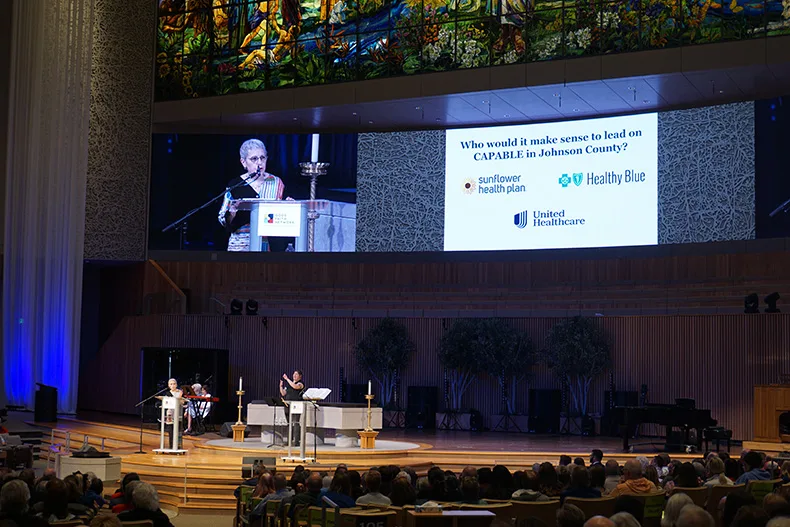
With the CAPABLE program now shuttered in Johnson County, the Good Faith Network wants to find funding between $132,000 and $176,000 to finance an 18-month program that would serve 25-40 Johnson County residents.
The problem they have now is convincing insurance companies the benefits of it and that it’s worth funding.
In July, Goodenow visited Johnson County to pitch the program to two Managed Care Organizations, or a health care company that coordinates medical services for members to lower costs while maintaining quality care.
While she said her presentation was received positively, even if it was funded, it would still be years out from happening.
“(MCOs are) planning for year ‘28 already, so it wouldn’t be something that we would necessarily potentially see immediately. There is a chance it could be seen sooner if it was done like via a grant or a small pilot or something like that, but it was received well, and we do have like future meetings planned via Zoom,” she said.
The Good Faith Network is remaining vigilant in their pursuit to bring the program back. Rev. Eileen Stulak said they’re still evaluating all of their options.
“There’s grants, there’s community reinvestment funds that MCOs that handle this for Kansas could tap into, and … There’s ideas that we might not have thought about yet that we can get creative or resourceful in it,” she said.
The state aging department is also trying to help.
“We’ve had a lot of discussion with our MCOs about whether or not this program might be a good fit for them. We’ve been looking at ways we might be able to pilot it more … We’ll continue to kind of look at ways that the state can explore implementing it,” Brown said.
Looking back on her experience helping others through CAPABLE, Findlay said at the Nehemiah Action Assembly that it’s important that it continues.
“There are hundreds of people in this community right now who are one fall, one setback, one accident, away from losing their independence. They deserve to age safely in their homes with dignity and with support. CAPABLE is how we do that,” she said.