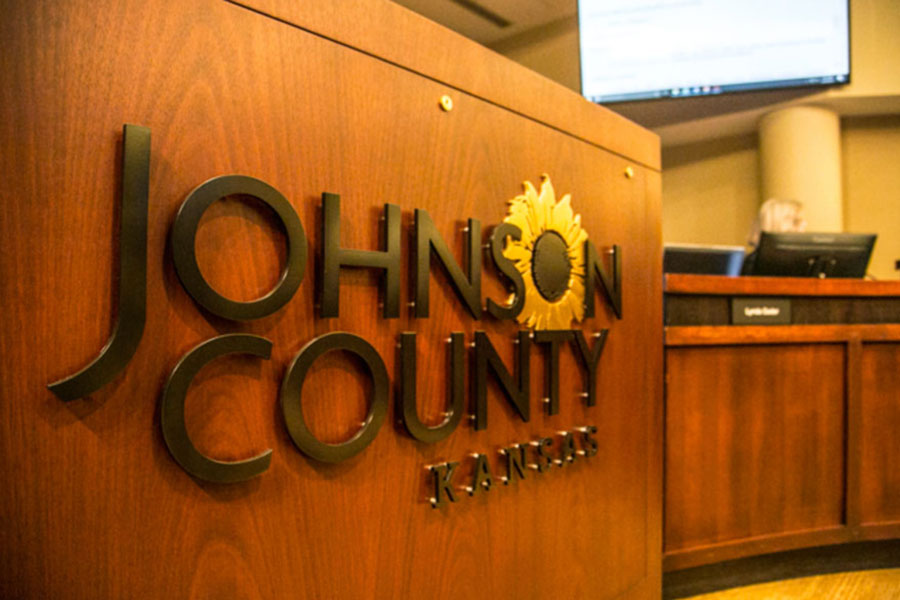
Johnson County commissioners gave the final OK to the $1.9 billion county budget Thursday, sending it on its way to be translated into a portion of the bill individual homeowners will get in November.
Commissioners finalized the budgets for the county taxing district, county library system, park and recreation district and three fire districts in a comparatively short session Thursday. Although about 175 people, including 36 speakers, came out to object to county spending during an Aug. 25 public hearing, only two spoke Thursday, both urging a no vote.
Phil Bauer of Leawood, reiterated some points he made during the August hearing, saying abandoning plans to build a new Corinth Library could save the county $30 million.
Gaylene Van Horn of Lenexa also urged a no vote.
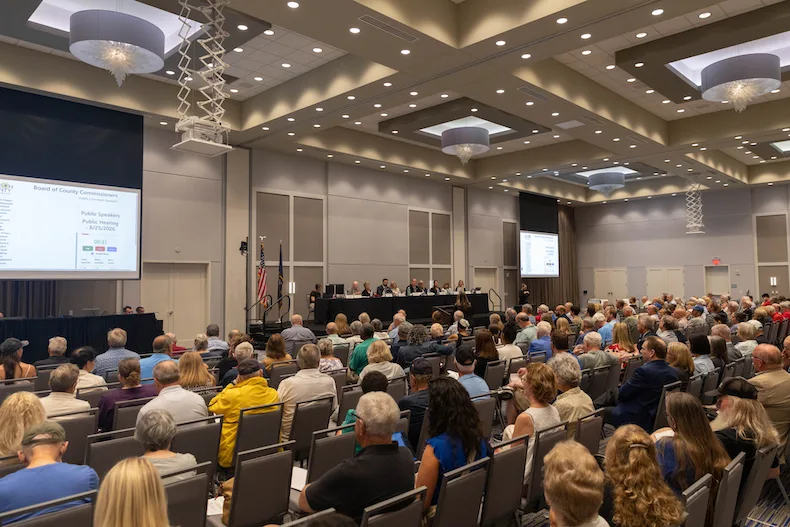
Commissioners expressed concern over taxpayers who had said they were having trouble keeping up with amounts they pay in taxes on top of high grocery prices and utility bills. But they emphasized that they took numerous cost-saving measures this year in order to have a balanced budget that maintains the services the public wants, including ambulance and mental health services.
Ultimately, they voted 6-1 in favor of the budget, pledging to do their best to keep expenses down. Commissioner Michael Ashcraft was the lone dissenter.
The budget covers the 2027 calendar year and is broken into separate mill levies for county services, the park and recreation district and county library system. However the county commission has approval authority over all three taxing bodies, as well as the fire districts, which are not included in the budget totals.
Budget key points

No changes were made to the budget that was discussed at the August public hearing. The county budget only represents a part of a homeowners’ total property tax bill. Together, county, library and park budgets make up about 20% of the property tax bill. Local and state school taxes account for about 47%.
Other key points:
- A total spending budget of $1.9 billion, which represents about a 0.36 % change from the current budget. That is spending from a variety of federal, state and local revenue sources, not just property taxes.
- A further breakdown of the budget shows $1.378 billion in expenditures and $532.9 million in reserves. The amount for reserves includes money that has been dedicated to specific departments. For example, money collected from a public safety sales tax can only be used for that purpose, and money from wastewater usage fees could not be put to other department use.
- The mill levy figured against property for the 2027 budget is basically the same as for 2026. Right now that’s 24.119, but after challenges to property valuations are concluded, it is expected to rise to 24.130. Speakers at the hearing argued that even with a flat taxing rate, their bills would go up because of increasing property values.
- The taxing rate can be broken down further, with a mill rate of 17.283 for the county, 3.815 for the library system and 3.021 for parks.
- According to county calculations, the average home, with a market value of $536,000 would have an assessed valuation of $61,640 against which property taxes would be figured. The total tax paid by that homeowner for county, parks and libraries would come to $1,487 a year. Put another way, every $100,000 of a home’s value would equal $277.50 annually for county services.
County commissioners did not engage in back-and-forths with people at the August public hearing, but a few of them referenced it Thursday before approving the budget.
Commissioner Becky Fast addressed the amount of reserves the county holds. Several speakers at the public hearing questioned the amount the county is keeping in reserve for unexpected costs, saying a reduction in reserves could be used to offset other expenses and bring property taxes down.
Fast noted that many of the reserve funds for different departments are restricted and not to be used for other purposes. Budget Director Robin Symes said when restricted funds are removed, the county general fund reserves are $139 million. That’s about the amount needed to preserve the county’s Triple A bond rating, she said.
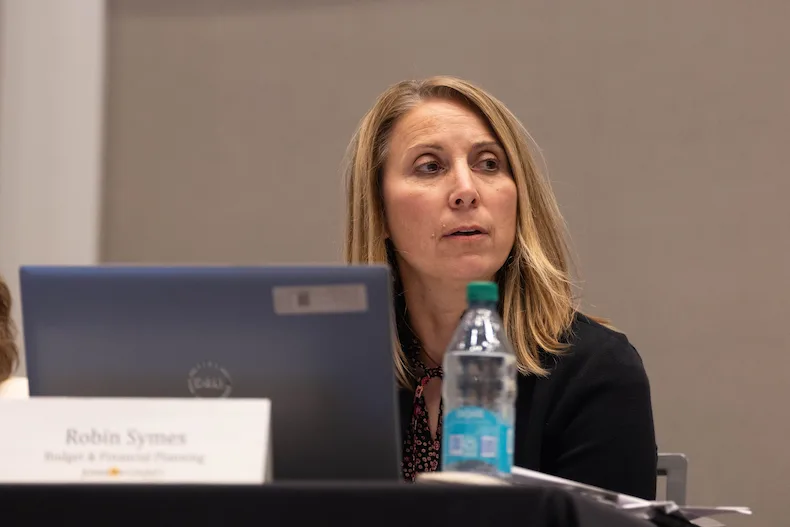
Public hearing speakers also had questioned whether it is worth it to the county to have such a high bond rating. Bond ratings are given by financial services companies to evaluate creditworthiness and determine interest rates for governments seeking loans.
Symes said she expects to hold a study session on reserve policy with commissioners in December.
Commissioner Jeff Meyers said it’s worthwhile to keep a good bond rating. “I know this about bond ratings, we don’t want to go backwards,” he said, adding, “you don’t want to give that indication that you’re going backwards because it has a larger effect than what you think.”
The public hearing in August was a requirement for jurisdictions planning budgets that raise more money in taxes than in the previous year. Commissioners have said Kansas’ way of measuring whether they are “revenue neutral” does not take into account the needs of growing and aging populations.
“That’s not in good faith,” Chair Mike Kelly said of the state legislature’s revenue neutral hearing requirement. “This was a process created that was intended to confuse, intended to misinform and doesn’t truly represent what a flat budget is.”
“It does not account for new growth, it does not account for new people, it does not account for inflation,” he continued.
Kelly stressed that county staff and commission have spent the year in study sessions and open houses working over ways to be more efficient, providing service with a smaller workforce. The budget does not include any new full time positions funded by property taxes for the county taxing district, and in fact some positions have been cut this year.
In a press release, Kelly said, “Our 2027 budget is up only 0.37% from 2026, and total authorized expenditures are down from the 2026 budget. Against inflation of 3.4%, this reflects the Board’s deliberate choice to absorb financial pressures instead of passing them on dollar for dollar. I appreciate the members of the community who took the time to learn, ask a question or voice an opinion.”
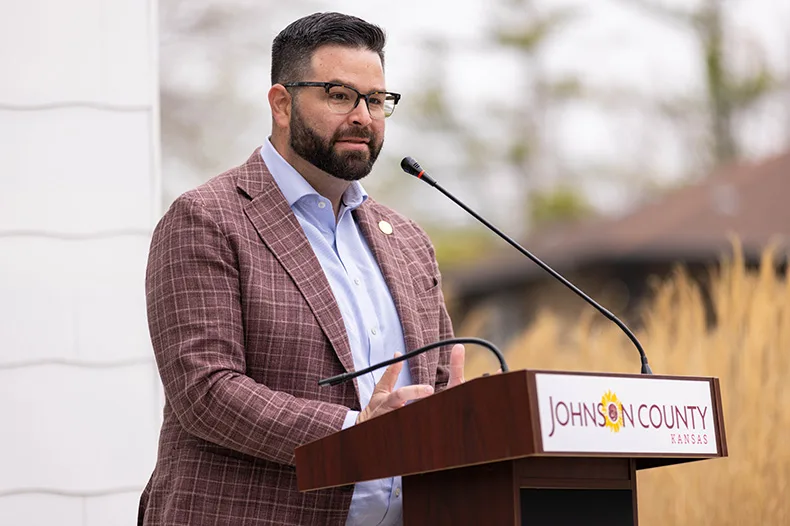
Commissioners took separate votes on the county, park and library mill levies. The vote was 6-1 each time with Ashcraft the only no vote on each. Those voting in favor were commissioners Fast, Meyers, Julie Brewer, Janee Hanzlick, Shirley Allenbrand and Chair Kelly.
Earlier on Thursday, the commission approved mill levies for the county fire districts. The fire districts cover rural parts of the county not included in a municipal district, or towns that do not have their own fire departments.
The districts were:
- Northwest Consolidated Fire District — with a $7.4 million budget and a 22.464 published mill rate. The vote was 6-1, with Fast, Meyers, Brewer, Hanzlick, Allenbrand and Kelly in favor and Ashcraft opposed.
- Consolidated Fire District No. 2 — with a $24.4 million budget and a 10.352 mill rate. This district covers the northeast part of the county, which has smaller cities that don’t have a fire department. The vote was Fast, Meyers, Brewer, Hanzlick, Allenbrand and Kelly in favor and Ashcraft opposed.
- Consolidated Fire District No. 1 — with a $23.7 million general budget and 13.648 mill rate. This district, covering the south part of the county, has existed since Jan. 1, 2026, when Fire District 1 and Fire District 2 consolidated. The vote was unanimous in favor, 7-0.
 Thanks for reading! If you value having an independent news outlet keeping tabs on local government, schools and taxes, we're asking you to contribute to our Education Reporting Fund.