Earlier this summer, we asked our readers about the issues you wanted to hear the candidates running for the Board of County Commissioners district seats for Districts 1, 4 and 5 address in the lead up to the Nov. 8 general election.
Based on the input we received, we developed a five-item questionnaire for the six candidates running in this nonpartisan race.
We’ll be publishing the candidates’ responses to one item per day each day this week. We’ve already published their responses regarding election integrity in Johnson County.
Today we’re publishing the candidates’ responses to our third question:
“Many Johnson County residents have seen the county’s appraised values of their homes going up double digits year after year without corresponding property tax rate reductions to offset them — meaning people’s out-of-pocket tax expenses have risen dramatically in recent years. What role do you think the county government needs to play in addressing rising property taxes here?”
District 4
Maria Holiday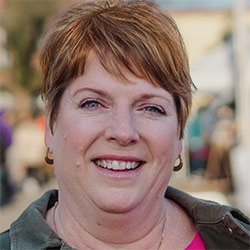
As a owner of a realtor group I deal with property taxes and budgets every day. Yes, home values rose with the market BUT the commission has an obligation to roll back the mill levy to a revenue neutral rate. But they didn’t. Now my opponent will say she rolled back the mill levy every year, but it’s important to note it was a pittance. It was not to revenue neutral. In fact, they have already amended to increase the next year’s $1.64 BILLION dollar budget and they passed it just weeks ago. I will insist on a revenue neutral rate.
I believe that if you don’t measure it, you can’t manage it. I will be asking for evidence of effectiveness of programs before granting additional monies towards them. Responsible spending means if we purchase a suicide prevention curriculum for schools we should know where and how or IF it’s being implemented.
The county says they are going to spend down the reserves that are well above their 20-25% target, but last year they projected ending 2022 at 42.5% and they anticipate having over 42.7% in 2023. That is your money! We could have granted property owners some relief or used those funds to satisfy first responder needs but instead we increased the budget. That is not being a good fiduciary.
My opponent has said she would look for ways to lower taxes, but why hasn’t she already done that? Instead she voted to give a developer a million dollar interest free loan with your money. She would not entertain rolling the mill levy back another percentage point to get us to a revenue neutral rate. She has voted for every expenditure that staff has put in front of her. She has had four years to show she can be fiscally responsible. Her record speaks for itself. Four more years of her will be four more years of reckless spending and tax increases for all of us in Johnson County.
 Janeé Hanzlick (incumbent)
I have voted to lower the county’s mill levy for the past three years. The 2023 decrease of one full mill is the largest one-time reduction in over 20 years. Johnson County residents have the lowest county mill levy in the state and we’ve kept it low through responsible spending and by reducing the mill levy as property appraisals increase.
At the same time, residents are not willing to live in a bargain basement county. They expect the county to provide quality services like ambulance and fire protection and invest in community priorities including mental health and aging programs. I support responsible budgets that balance reductions in property taxes with ensuring adequate revenue to meet residents’ needs and expectations.
In addition to lowering the mill levy, I’m working to save taxpayers money by:
- Relieving the tax burden on homeowners by expanding our commercial tax base and supporting local economic development, including renewable energy industries
- Actively pursuing ways to expand housing options so people who work in Johnson County can also live here – and keep tax money in the county
- Advocating for the expansion of state property tax rebates for seniors, including the Homestead and Safe Senior (SAFESR) programs
- Promoting sustainability efforts to lower the county’s energy costs
- Investing federal COVID relief dollars in small business assistance
Even with ongoing reductions in the mill levy, only about 20% of the average residential tax bill falls under the authority of the Board of County Commissioners (BOCC). Most residents’ property taxes go to support our outstanding public schools (58% of the average tax bill) and cities (16%). The BOCC has no authority over setting the mill levies for the school, cities, or the state.
District 1
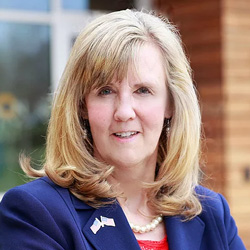 Becky Fast (incumbent)
We are all feeling the impact of rising costs. As a homeowner myself it is becoming more and more difficult to own a home. That’s why I’ve voted to relieve the burden of rising property taxes through lowering the mill levy during the past three budget cycles. The approved 1 mill reduction in the 2023 budget will be the largest decrease in the county’s overall mill levy since 1999. I will continue to be responsible steward of your tax dollars identifying ways to save money without cutting essential services.
The yearly increases in assessed valuations must be balanced with county mill levy reductions to ensure property owners aren’t unfairly penalized for the growth in their home’s value. I am proud that the 2023 mill levy will be lower than when I began my elected service in 2019. Although your property tax check is paid to Johnson County approximately 80 percent of every property tax dollar falls under the authority of other taxing jurisdictions with over 50 percent funding public schools.
Johnson County must advocate with our Kansas legislators to fully fund the Local Ad Valorem Tax Reduction Fund. This state fund suspended in 2003 was dedicated to counties and cities to reduce local property taxes. Johnson County’s lost revenue since 2003 is approximately $125 million dollars. In addition, the Kansas legislature not expanding Medicaid has resulted in annual loss of $5-8 million to our Johnson County Mental Health Department. This results in local taxpayers picking up the bill when fully funding mental health care is a state responsibility.
The County must explore and advocate at federal and state levels for expanded funding flexibility for municipalities beyond reliance on property taxes and continue to advocate for long-term solutions to tax duplication. County government is an administrative arm of state government. I will continue to bring forth consolidation and shared service agreements to maximize efficacy and opportunities for savings.
Audra McMahon 
The current, long-term residents of Johnson County are being phased out of their homes, many of them still having a mortgage, and with a fixed income, they can no longer afford the monthly payment with the increased tax bill due to property appreciation.
The county provides some resources as appointed by the state, but the income caps in place do not allow our Johnson County residents to fully utilize the services. The county is in charge of the county appraisal office, as well as the mill levy setting that determines the taxes. Albeit, the mill levy has lowered, the appraisal value has increased to a point where there is still a tremendous raise in cost for Johnson County residents, especially those on fixed incomes, and with lower salaries.
I believe a program of tax abatement specific to Johnson County for fixed income, educators and first responders should be put into place with reasonable caps, limits, and restrictions, making Johnson County a place where people of all incomes can continue to thrive.
District 5
Stephanie Suzanne Berland 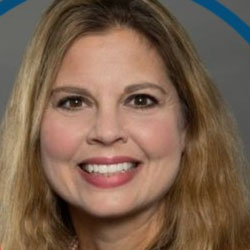
The County has the biggest role in addressing rising property taxes. The Board of County Commissioners appoint the County Appraiser, sets the mill levy rate, and approves the budget. They could address rising property taxes by reducing spending. Currently, spending is out of control and is unsustainable. There has been a HUGE disservice to the public from County Management and the Board of County Commissioners in highlighting a mill deduction as a tax reduction.
In addition, due to the legal fight on the dark store theory and the alleged unlawful assessment on commercial big box stores, citizens could bare more tax burden if spending isn’t reduced. I find it egregious that the county has not prepared for a “loss” case scenario. The case is back with the Board of Tax Appeals, and we need to know what we are paying in legal fees and a contingency plan regardless of the outcome. As a CPA, I will demand better budgeting and management. I will vote to appoint a county manager that will make the cuts and look for more. I will emphasize a budget that can weather good times and bad times. In 2012, the budget was $810 million. Today, it is $1.7 billion. There is no end in sight. It is not sustainable.
Finally, I find it misleading to create the problem and then try to implement relief programs to fix it. Most on the Board of County Commissioners don’t have a clue on what taxpayers are dealing with, and many don’t seem to care to know.
Michael Ashcraft (Incumbent)
Did not respond
Tomorrow, we will publish the candidates’ responses to item #3:
The county played a central role in setting and enforcing the public health policies related to the pandemic — including business closures and school mask mandates. Do you believe the county’s approach to managing the pandemic was a success? Why or why not? What should the county do differently if a public health emergency arises in the future?