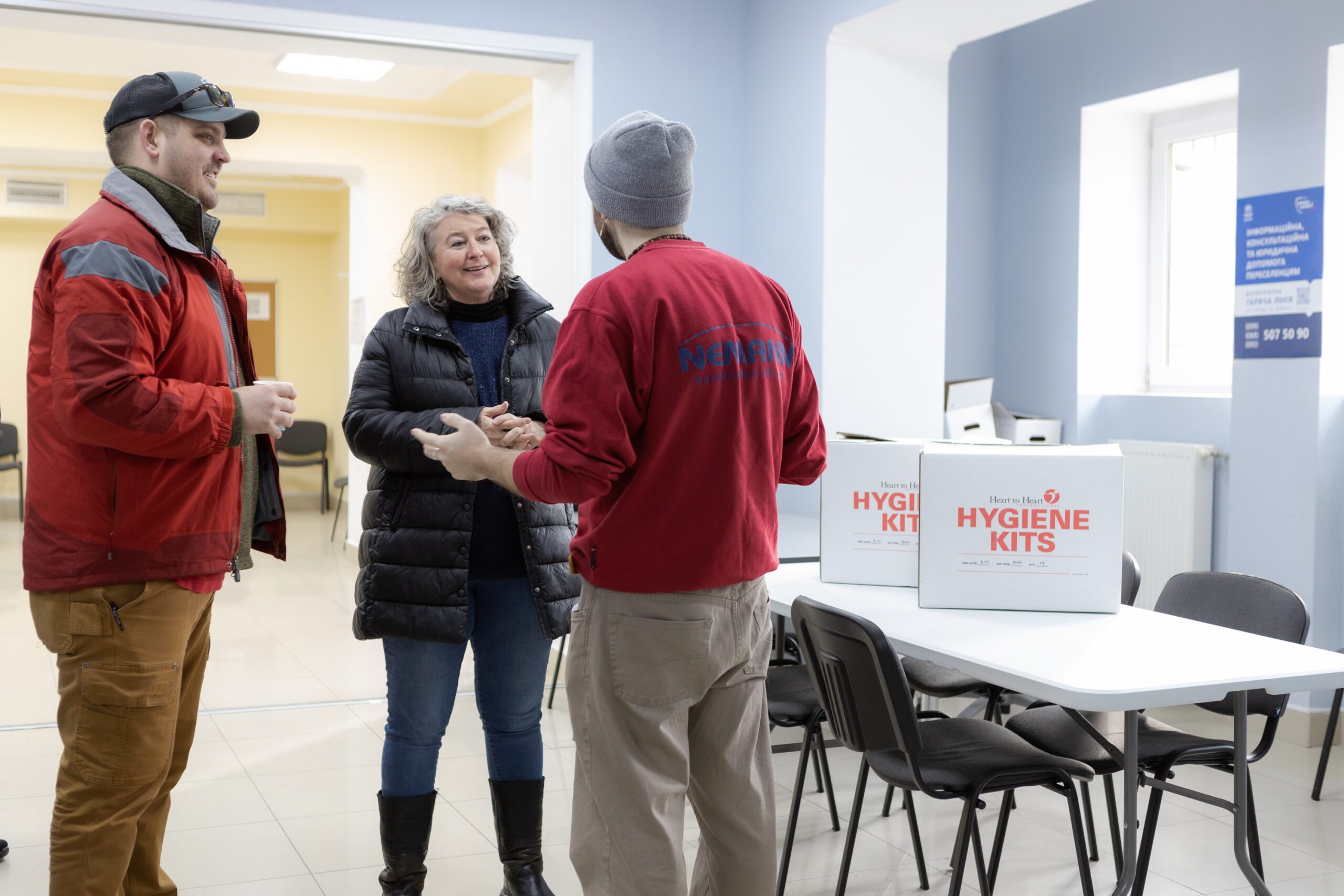
After a recent trip to Ukraine, officials with Lenexa-based nonprofit Heart to Heart International are hoping to grow their on-the-ground support for health care and humanitarian efforts as the war continues.
Christine Knudsen, the nonprofit’s new senior vice president of programs, was on the team that traveled to Ukraine, entering on the west side of the country through Slovakia on Feb. 19 and leaving through the east in Poland a week later.
She was joined by Wes Comfort, Heart to Heart’s disaster response leader, who had been in Ukraine two other times since Russia first invaded in early 2022.
Over the past year, the nonprofit has sent roughly $95 million in aid to Ukraine with plans to potentially expand their impact even more in the future.
Johnson Countians can still help
•Knudsen said one of the quickest ways to support Heart to Heart’s efforts in Ukraine is to give online through the conflict-specific donation page.
•You can also sign up to attend a hygiene kit build event here.
•Heart to Heart International will also host a Humanitarian Day at its headquarters this spring. More information about the event will be available at hearttoheart.org later.
Aid has included hygiene kits and medicine
One of the big focuses of the trip in February was making sure the aid Heart to Heart has been sending is arriving where it needs to and when it needs to so it’s most effective. For the past 13 months, the nonprofit has sent over medicine, hygiene kits and medical supplies.
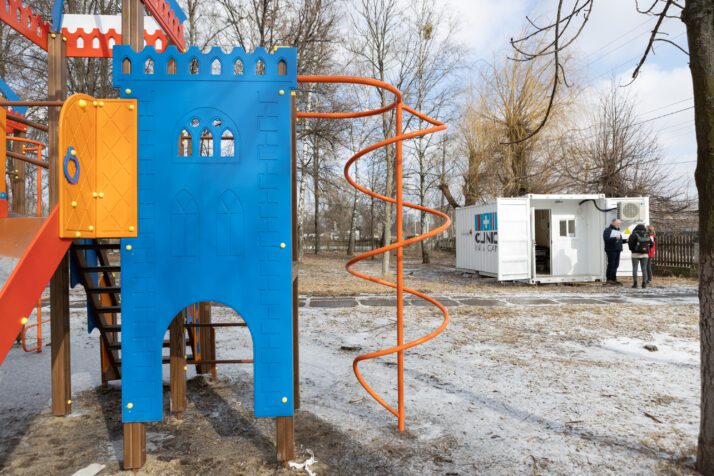
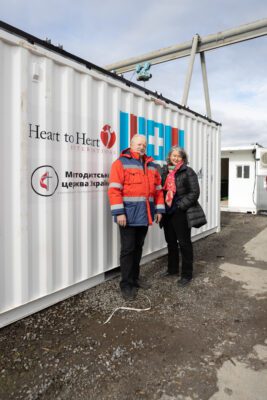
They’ve also sent over container health clinics, called a Clinic In A Can, that are manufactured in the Wichita area. They have been sent across the country, but most are concentrated in the east where much of the fighting has occurred.
The first two clinics were set up in the city of Chernihiv about nine months ago, and in all, 15 have been deployed. They’re equipped with a variety of medical equipment and can help with maternal health, primary care, trauma medicine and lab work.
Heart to Heart is reaching more than just physical needs
All of that aid, Knudsen said, meets physical needs and ties into Heart to Heart’s global mission to share health care with “under-resourced” areas.
Beyond that, it also shows moral support and solidarity with the Ukrainian people, she said.
“People said, ‘Thank you for not forgetting about us. Thank you for keeping us in your hearts,’” Knudsen said.
Officials visited with national health leaders
Part of the trip included a stop in the capital city Kyiv, where they met with officials from the Ukrainian Ministry of Health. Those conversations focused on humanitarian priorities in the periphery of the conflict, like continued support of health care.
They also discussed “how we can contribute to that overall effort and support [it],” Knudsen said.
Additionally, they made visits to other partners with local connections, like a group associated with the Lenexa Baptist Church that is working in areas where fleeing Ukrainians frequently stop on their way west.
Heart to Heart wants to grow its outreach in Ukraine
While in Ukraine, Knudsen said she found a need for rehabilitative medicine support. As people are injured in the war, they need equipment like wheelchairs, crutches and canes to help heal injuries or adapt. Heart to Heart could ultimately help with that, Knudsen said, though the logistics of that are still being worked out.
There’s also a growing need for psychiatric and mental health support as people continue to suffer through trauma in the war, she said. Heart to Heart may set up training programs to help doctors and health care providers already on the ground get equipped to offer that kind of support.
Growth into those areas of health care would come in addition to continued efforts to send over medicine, hygiene kits and supplies, Knudsen said.
Life in Ukraine continues
Knudsen noted that though the war is now in its second year, life goes on for many people in Ukraine.
“You see people in cafes, you see people doing their shopping, you see people going to work, going school coming home, you see the normal signs of life,” she said.
That feeling is frequently interrupted by tell-tale signs of war, Knudsen said, like air raid sirens or nearby gunfire. But, she said “you realize that people are just living with that stress constantly, and still getting on about their lives.”
Signs of solidarity: Mission Hills homeowner mows message of support for Ukraine into yard