Earlier this summer, the Post asked our readers what issues you wanted to hear candidates running for Overland Park City Council to address leading up to the Nov. 7 election.
Based on that feedback, we developed a five-item questionnaire centering the issues most important to Overland Park residents.
Each day this week, we’ll publish the candidates’ responses to one question.
Today, we’re publishing candidates’ responses to the following question:
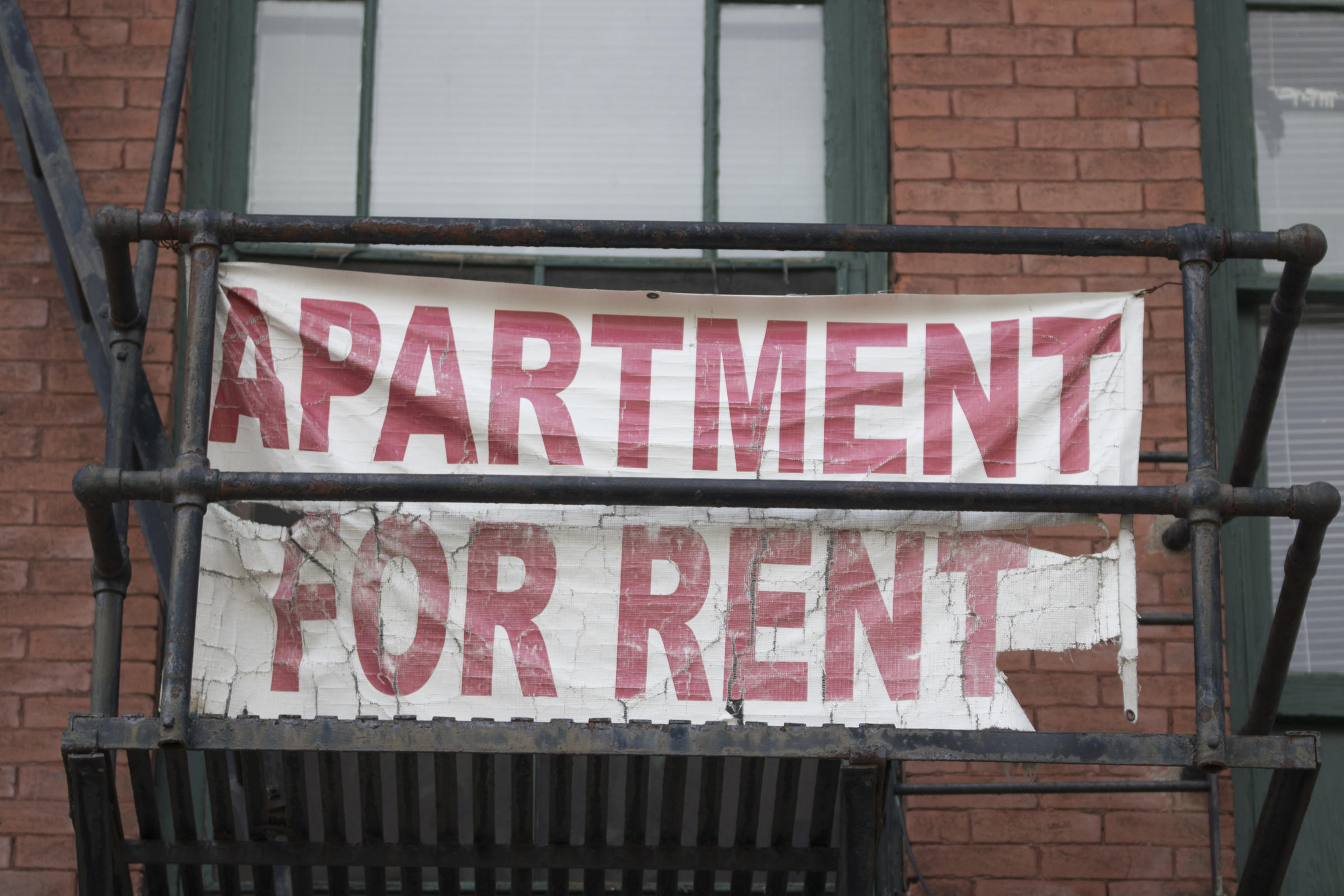
Housing affordability remains a hot topic among readers. Many older residents on fixed incomes feel like they can’t sell their homes and afford to stay in Johnson County, while many young, first-time home buyers can’t compete in this market with such tight, expensive inventory. Some of our readers say they want to see more affordable options come on the market, including so-called “missing middle” housing, like duplexes, townhomes and small starter homes. Do you want to see more types of these housing options in your ward? What things, if any, do you think Overland Park should do to encourage more “missing middle” housing development?
Below are the answers the Post received from candidates on this issue:
Ward 1
 Carol Merritt
As a Johnson County realtor who lives in Overland Park, I have some solutions to the problem of the affordable housing shortage.
According to some recent listings, there are at least 20 very affordable homes for sale in Overland Park. All of these are under $160,000. Even with interests rates high, it is a good time to buy a home. With interest rates high they are waiting for owners. Owners are eager to negotiate, and prices can be lowered, and people are unaware that there are government grants for down payments.
I work with several trusted senior mortgage lenders that can qualify clients and approve potential home owners with NO MONEY DOWN. Many of my clients walk into closing with no money and walk OUT WITH CASH. It is easy to qualify with less-than-steller credit. This is a great way to affordable home ownership in our city.
I would like to see investors turn some of the over abundance of apartments into affordable townhomes for sale. That would satisfy the need for people to live near their employment. The city council could suggest a certain percentage of builders to provide these. The council needs to consider this seriously and provide incentives to investors.
 Holly Grummert (incumbent)
I’m currently in support of a proposed pilot program for accessory dwelling units in Ward 1. I also support planning for a variety of housing options in our comprehensive plan and will continue to push for more affordable options in new development deals.
We must create more affordable housing options so our teachers and police officers can afford to live in the city they serve. We also need options for our longtime residents to remain in the community they love. And we must build new housing that today’s workforces are demanding and future generations will require.
Ward 2
 Drew Mitrisin
Overland Park needs to encourage a portfolio of housing options with a viable pathway to ownership. The housing affordability issue absolutely affects seniors on fixed incomes and young, first-time homebuyers, but it also means that people who work in Overland Park – our law enforcement officers, teachers and child care workers – are increasingly unable to afford to live in Overland Park. This issue causes our social fabric to fray and means that we are increasingly disconnected from the people we work with and the neighborhoods in which we serve.
Ward 2, which has great residential neighborhoods, also has a relatively balanced housing mix that should be a model as the city continues to develop down south. Nall Hills, where my wife and I are raising our daughter, has “missing middle” housing in the form of townhomes, duplexes, modest single-family homes and villas designed for senior residents. While Ward 2 has very little new development potential, the city should continue to encourage this balance of housing options by updating our city code to meet the recommendations of the 2019 Small Scale Development report commissioned by the city.
To promote housing affordability, we must also ensure our current housing stock is not being bought up by corporate entities to be used as short-term rentals. I am open to banning non-owner-occupied short-term rentals (Airbns, VRBOs, etc.) throughout Overland Park. The market is extremely tight right now, and we have to give first-time homebuyers a chance to build wealth and live in our really desirable community.
 Jameia Haines
We need to find affordable housing options that suit a variety of needs for our residents – especially those on fixed incomes. As a member of Framework OP’s Housing Choices Advisory Team, we have met over the last six months to evaluate the current code and explore alternatives. It has become apparent that improving housing options can be a difficult conversation, and there is no quick fix, but it is necessary to find solutions for a path forward.
We need to think beyond what we are familiar with in order to address the unprecedented issues we are facing. Land use has not been addressed by the city in the past. It will be necessary to track and contemplate it going forward.
Missing middle housing units such as cottage homes, pocket neighborhoods, condominiums and duplexes can better meet the needs of many households especially in redevelopment locations. Our city will need to be creative and inclusive as we move forward in the process. We would love for our daughters to return from college and live in Overland Park. Young adults just starting out and retirees ready to downsize deserve a path to affordable housing.
Another important aspect of maintaining existing affordable housing options is providing assistance to lower-income homeowners to maintain their properties. During my two terms on the Overland Park CDBG Committee I saw the way the Minor Home Repair Program benefited our residents to prevent their homes from falling into disrepair.
Ward 3
 Tom Carignan (incumbent)
Housing impacts us all. In 2019, before I was elected to the council, I took part in several meetings hosted by the city to learn more about small-scale development and housing options. After this I took part in presentations on “The Big Impact of Small-Scale Development” in 2021. Both sessions, and others, have helped to inform me of the ways land can be used to create choices in our housing stock.
I would encourage my fellow councilmembers, city staff, the planning commission, residents, realtors and the building community to work together. Residential neighborhoods are the backbone of Overland Park. If we collaborate, we can continue to welcome new residents as well as those who continue to choose Overland Park as their housing needs evolve.
 Richard Borlaza
This question is especially personal for me. Having experienced my own struggle to find safe, affordable housing on a single income, there is no question why housing is my number one issue. For young professionals like myself and others who are looking to become first-time home buyers, the struggle is real. For one, inventory is low and any new listings are gone in an instant and $30,000 over market value.
Everywhere I look, I see luxury apartments being built. We need to work with developers to develop different housing styles like duplexes, multiplexes and townhomes to give people variety and a chance at home ownership. I believe missing middle housing is a gentler approach to growth as opposed to the luxury apartments I see being developed.
And if we’re going to consider building more luxury apartments we may need to look at implementing inclusionary zoning policies that require developers to have a certain percentage of affordable units in new housing projects. This is how we make it affordable for our young professionals, families, and our elderly to live in Overland Park.
Ward 5
 Inas Younis
I sat on the Housing Choices Advisory board for Framework OP and diversifying our housing stock to include more missing middle housing was an important area of focus in our city’s comprehensive plan update process.
If we prefer a duplex or cottage community to the 200-unit apartment complex, we should consider simplifying the permitting process and amending our codes to allow for pocket neighborhoods and cottage communities to be developed. Those who build missing middle-style housing must be able to earn a comparable rate of return as someone who builds large apartment projects. The city can reduce the cost of building by streamlining the process of obtaining building permits.
As someone who is very concerned about the overall aesthetic of our architecture and maintaining the visual and communal appeal of our city, I like the idea of cottage housing which consists of a grouping of small, single-family dwellings clustered around a common outdoor space.
As someone who firmly believes that our teachers, police officers and firefighters need to be able to afford housing in the community they serve, I hope to find solutions that will not only allow for missing middle-style housing but starter homes as well.
As someone who is concerned about our rising property taxes, I know that constricting our housing inventory leads to higher home appraisals resulting in higher property taxes. It’s a difficult balancing act, but with enough political will and resident engagement, we can find a path forward.
 Faris Farassati, PhD, PharmD (incumbent)
There are so many innovative communities that incorporate duplexes, townhomes and small-lot single-family homes.
Unfortunately, the city council has a limited role in future development planning. We cannot force a developer to build starter homes, condos or townhomes. Land owners have a right to propose anything within the allowed zoning regulations. But it is up to the city to decide if the proposal conforms to city planning, municipal codes and the surrounding neighborhoods.
Unfortunately, the current council often votes to approve a drastic zone change where a gentle zone change with lower density (and NOT a gigantic apartment complex) would be appropriate. In fact, our municipal code requires a graduated zone change but many councilmembers vote to support deviations that are far more drastic.
Our ability to mold the direction of development in OP is limited to our “YES” or “NO” vote. Our “NO” vote is valuable to preserve the quality of life for our residents! Developers won’t embrace new housing options if they keep getting permission to build the same old massive mixed-use developments and in many cases with a multi-million dollar tax giveaway package!
I will continue to vote “NO” on ill-fitting developments where a lower density solution – one that might solve our missing middle by spurring creativity – would be a better solution. Also, a straightforward suggestion for helping affordability: don’t raise the property taxes every year. Overland Park’s government should live within its means just like we all do! Straightforward answers, no irrelevant justifications!
Ward 6
 Chris Newlin
Housing affordability is a pressing issue, not only in Overland Park but across Johnson County. Many older residents on fixed incomes are finding it increasingly challenging to sell their homes and remain in the area due to rising property values and the limited availability of affordable housing options. Simultaneously, young, first-time home buyers are facing significant hurdles when trying to enter the housing market due to the low and expensive inventory.
To encourage the development of “missing middle” housing in Overland Park, encompassing duplexes, townhomes and small starter homes, we should explore several strategies. For instance, in Ward 6, the Chapel Hill Neighborhood stands as an excellent example of this approach. Revising zoning regulations to enhance flexibility in housing designs and densities can create opportunities for developers to invest in such projects within the same neighborhoods.
Additionally, having the city and county partner with developers who build “missing middle” housing — such as advancing critical infrastructure like sewer lines or expedited permitting processes — can be a powerful way to stimulate construction. Collaboration between the city government, local housing organizations and developers will be crucial in crafting effective policies that promote the development of attainable and affordable housing options.
Addressing housing affordability in Overland Park requires a multifaceted approach. Exploring and supporting “missing middle” housing is a positive step in the right direction. By revising zoning regulations through our new, resident-led comprehensive plan and providing local partnerships, Overland Park can encourage the development of these housing types, ultimately benefiting both our older residents and young, aspiring homeowners.
 Scott Hamblin (incumbent)
Did not provide the Post with a response.
Tomorrow, we will publish candidates’ responses to the next question:
Earlier this summer, 53% of Overland Park voters approved a new special three-eighth cent sales tax dedicated to street and infrastructure maintenance. The tax takes effect next April and will replace the city’s current one-eighth cent infrastructure sales tax. Did you personally vote for or against this measure? In your mind, is this a prudent way to fund ongoing street maintenance? Why or why not?