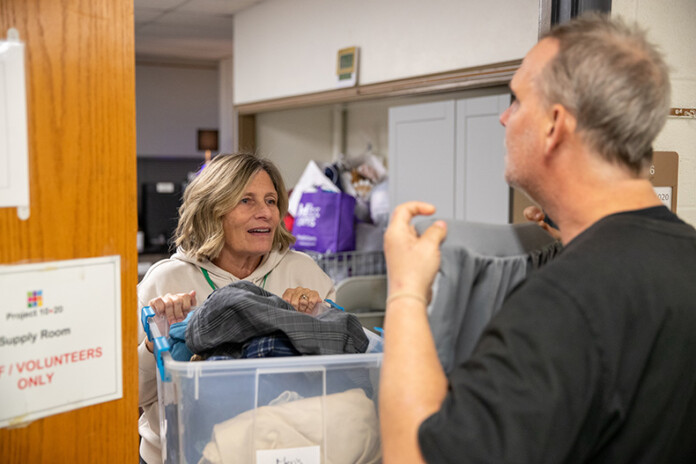
Lenexa may allow the only cold-weather homeless shelter in the city to house more overnight guests, but the deal would come with stricter enforcement and harsher penalties if it keeps getting caught over capacity.
Last summer, Project 1020 asked the city for permission to increase its overnight capacity from 30 to 50 guests, saying the shelter gets “overwhelmed” the first week of opening each winter and has had to turn away people, even as the number of people experiencing homelessness in Johnson County grows every year.
The nonprofit shelter also asked the city to relax rules around staffing, or the number of volunteers required to be on-site, particularly during quiet hours, when guests are sleeping.
City staff recommended allowing the changes, acknowledging that the shelter is already regularly exceeding its current 30-person capacity limit.
Staff also noted that the city’s first responder resources could absorb the increase in the number of guests and that limiting the number of guests to 50 shouldn’t impact the surrounding neighborhoods any more than the 30-guest limit already does.
What happened this week?
After hearing mostly support but some opposition during the meeting on Monday, the Lenexa Planning Commission voted 5-0 to advance the proposed city code changes that would allow Project 1020 to increase its nightly capacity from 30 to 50 people.
The Lenexa City Council will get the final say at a meeting later this month.
The code changes would directly apply to Shawnee Mission Unitarian Universalist Church, which houses Project 1020 at 9400 Pflumm Rd.
The rules approved Monday would also cover seven other houses of worship in Lenexa that are big enough and close enough to public transportation to qualify under city code to host their shelters, though none currently do.
Because of Project 1020’s past violations with exceeding capacity, city staff also proposed adopting stricter enforcement mechanisms and harsher penalties. For instance, Project 1020 and the church could potentially lose their certificate of occupancy after multiple violations.
While the planning commission was initially split on the amendment, commissioners ultimately agreed they liked linking increased capacity to stricter enforcement.
During a discussion Monday, commissioners also added another stipulation that caps the capacity of people in homeless shelters citywide at 250 people.
Commissioners Brenda Macke, Curt Katterhenry and Don Horine were absent.
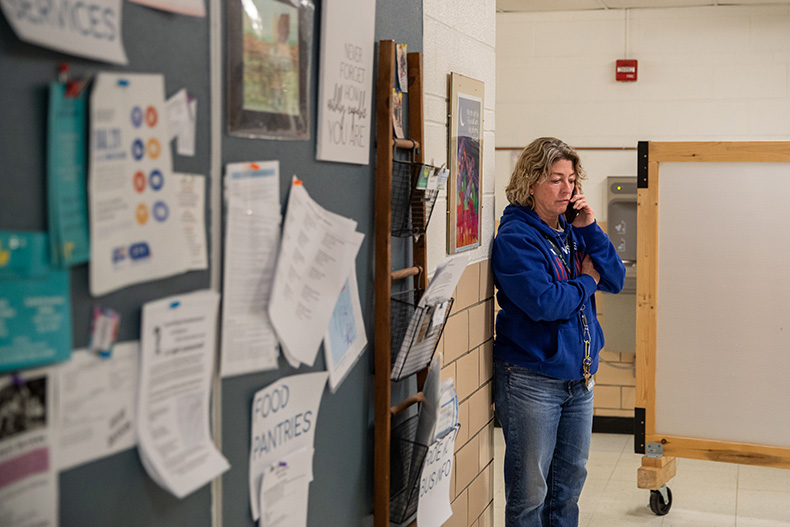
The amendment comes with rules and regulations
The proposed rule changes will only impact Project 1020 currently but would apply to all future places of worship in Lenexa that host homeless shelters as an accessory use.
The proposed code changes include the following stipulations:
- Shelters with a maximum of 50 people would be required to have at least four people on staff when at capacity.
- Shelters and their home churches that violate occupancy limits could face having their certificate of occupancy — which allows them to host the shelter — revoked for up to one year for multiple violations within a 12-month rolling period and potentially, longer periods if violations continue after the first revocation.
- An opportunity for an administrative hearing in municipal court would be provided if the violator wishes to appeal the city’s decision to assess a fine or revoke the certificate of occupancy for the facility. The judge presiding over the case would have the final say.
Public reaction was mixed to positive
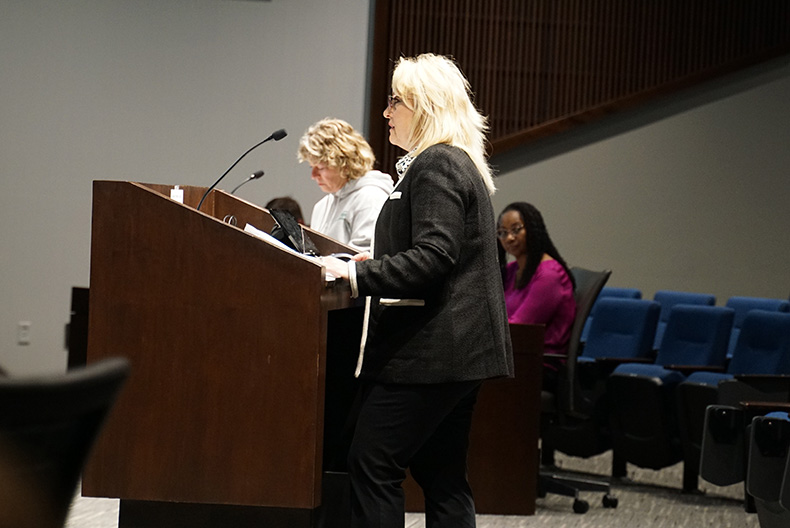
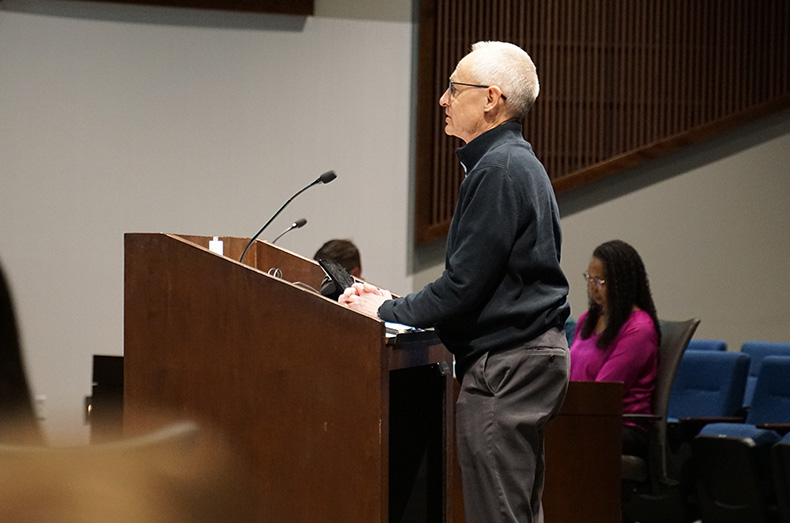
During a public hearing for the amendment on Monday, six people spoke, including Project 1020 co-founder Barb McEver and her husband, Marc, as well as Phil Hannon, a past president of Shawnee Mission Unitarian Universalist Church’s board.
Overall, four people spoke in support of the capacity increase, and two asked the planning commission to reject it.
“Let’s choose to be a city that stands for dignity and care and community,” said Jordan Schmeidler, a Lenexa resident. “Expanding this bed limit and supporting those who are doing this vital work will show that Lenexa values every person, rich or poor, housed or unhoused.”
The two people who spoke against the increase worried it could make the city a magnet for people without homes who come from outside Lenexa.
“The proposal appears to be an extension of [county] Chairman Mike Kelly’s failed homeless shelter initiative, which was imposed on Lenexa without proper consideration of its long-term impacts,” said Laura Owen, another Lenexa resident, referencing last year’s drawn-out fight over the proposal for a county-run homeless shelter in Lenexa.
“What is the rationale behind this proposed change, aside from potentially becoming the mecca for homeless in Johnson County?” Owen said.
Speaking as an attorney on behalf of Smith & Loveless Inc., a wastewater treatment equipment manufacturer about a half-mile away from Project 1020, Kelly Campbell said the business has experienced the negative effects of being in the shelter’s proximity.
“Smith & Loveless has already incurred and experienced some criminal activity, we believe, because of the nearness of the homeless people that are coming out to the church for Project 1020,” she said. “(It’s) minor, petty criminal activity in (our) parking lot, and as a result, Smith & Loveless has had to increase their security at their facility.”
Pushing back against such concerns, McEver said the shelter provides transportation for Project 1020’s guests to and from the shelter, and all drop-off points are outside of Lenexa. Many neighbors, she said, view the shelter as stewards.
“A lot of people don’t even know we’re there, and a lot of people that live in the neighborhood surrounding us volunteer at the shelter and they’re for it,” she said. “The need is much greater than 30, and we all know it’s more than 50.”
Project 1020 remains only shelter of its kind in JoCo
First established in 2015 and operating out of churches in Olathe, Project 1020 failed to obtain a permit to run the shelter in a house in Olathe due to neighborhood opposition there.
Its organizers then turned north in hopes of operating out of the Unitarian church in Old Town Lenexa.
After Lenexa city officials initially rejected the church’s request to host the shelter, the church successfully sued the city in federal court, after which Lenexa allowed the shelter to open in winter 2019-20.
Project 1020 has been operating out of the church each winter since, including during the COVID-19 pandemic when it temporarily expanded operations to 24 hours a day in March and April 2020.
In 2021, Lenexa adopted more rules for homeless shelters to operate in the city — the same codes now up for review — that allow certain houses of worship to host homeless shelters as an accessory use.
In Lenexa, eight churches qualify because they are at least 30,000 square feet in size and within half a mile of a public transportation stop, according to city documents. But so far, Project 1020 at the Unitarian church on Pflumm Road remains the only shelter in operation.
“Unfortunately, there isn’t any place in Johnson County for people that are homeless to go, except for us, and it’s only for that four months,” McEver said Monday.
Marc McEver added that Johnson County residents voice support for helping people facing housing insecurity through events like the annual Nehemiah Action summit, hosted by the nonprofit Good Faith Network. But more work needs to happen.
“There’s nobody stepping up,” he said. “The Good Faith Network … They have a meeting once a year at the Church of The Resurrection, and 1,100 people showed up last year, all wanting to help. Not one church said, ‘We want to help.'”
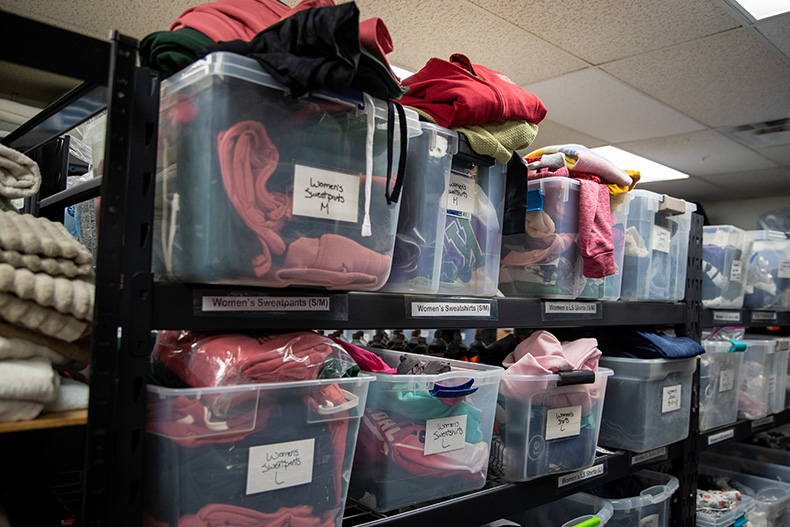
Project 1020 regularly goes over capacity
During Monday’s meeting, several commissioners brought up Project 1020’s previous citations for going over capacity.
“We know people are right now not doing what they agreed to do … And I cannot reward that,” Commissioner Mike Burson said.
Chairman Chris Poss also said the shelter’s history of violating its current 30-person limit gave him pause.
“The request is being made because they’re exceeding the capacity that’s outlined in the city code. So that gives the appearance to others that the rules don’t matter. And essentially, that’s our function as a board here: we apply the rules,” he said.
Other commissioners, like David Woolf, had issues with the amendment not increasing the number of volunteers along with the capacity.
In response, Barb McEver clarified that the shelter has 10 volunteers nightly from 6 to 9 p.m.
After 9 p.m., they have two shifts, from 9 p.m. to 1 a.m. and 1 to 6 a.m. with a minimum of four volunteers on each shift.
The 1 to 6 a.m. shift is the toughest for people to cover, she said. Increasing the required number of volunteers would make it even harder to fill.
“Between 11 (p.m.) and 6 (a.m.), there’s nothing going on. We have four volunteers there. Three of them are on their phones,” she said. “It’s hard to get people to come in and volunteer in the middle of the night, especially when they come there and realize ‘I’m not doing anything.'”
Following the meeting, Barb McEver told the Post that she was happy the commission approved the capacity increase.
“I appreciate that they’re going to move it forward to the city council,” she said.