Correction: Comments made by one public speaker at the meeting, Michael Garrett, have been changed to make clear he was referring to the Federal Reserve that lowered interest rates during the pandemic.
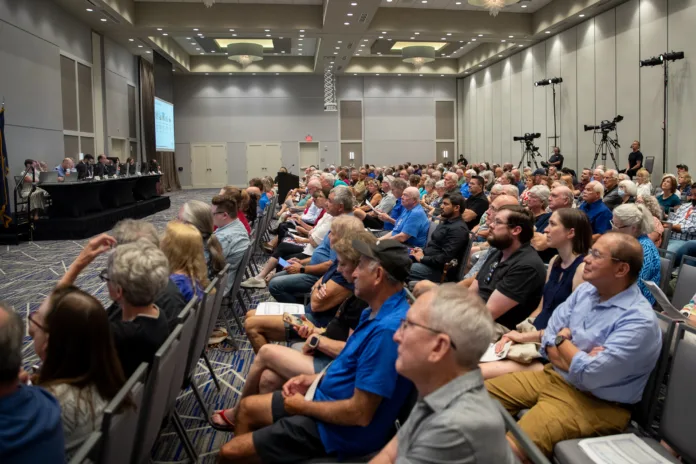
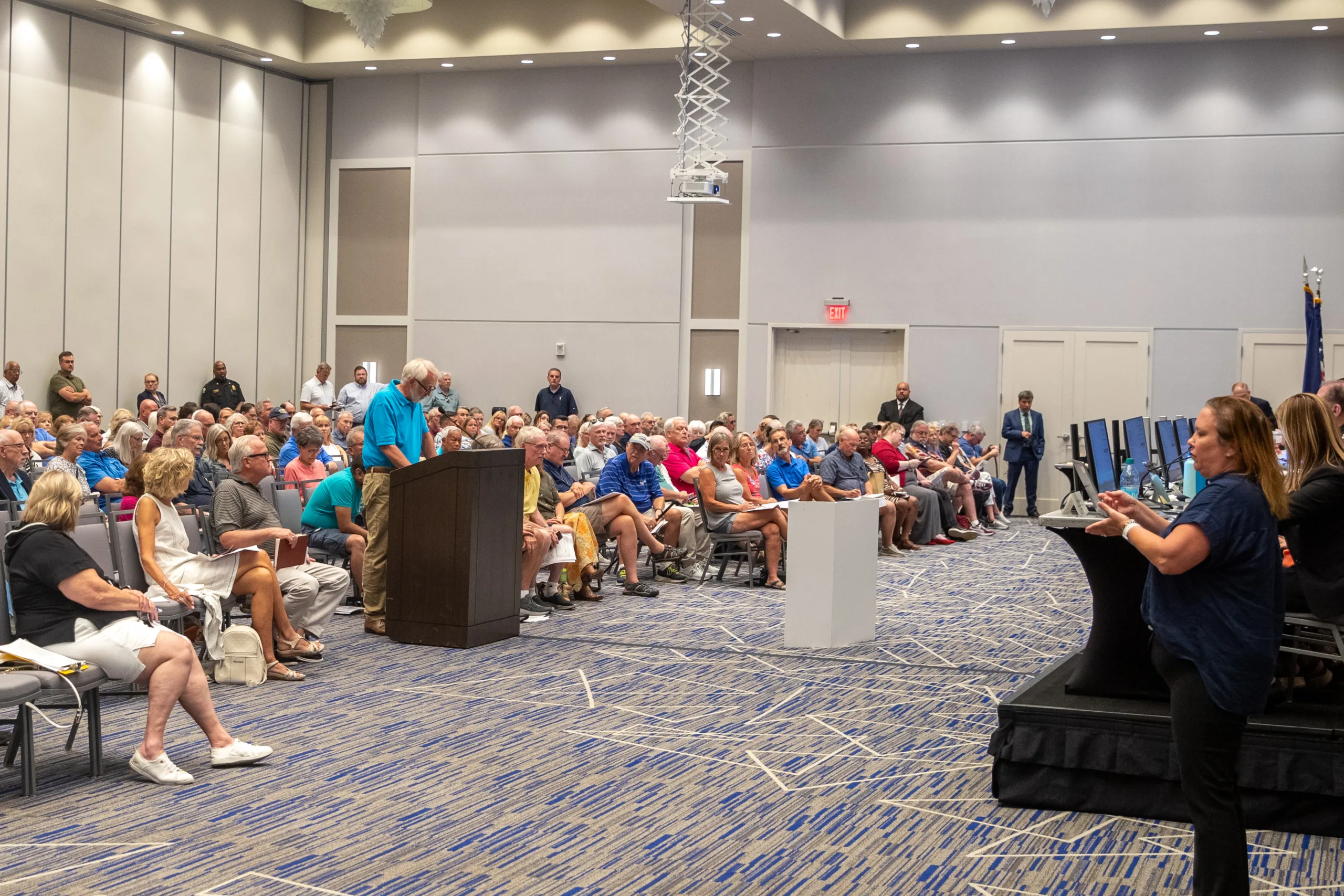
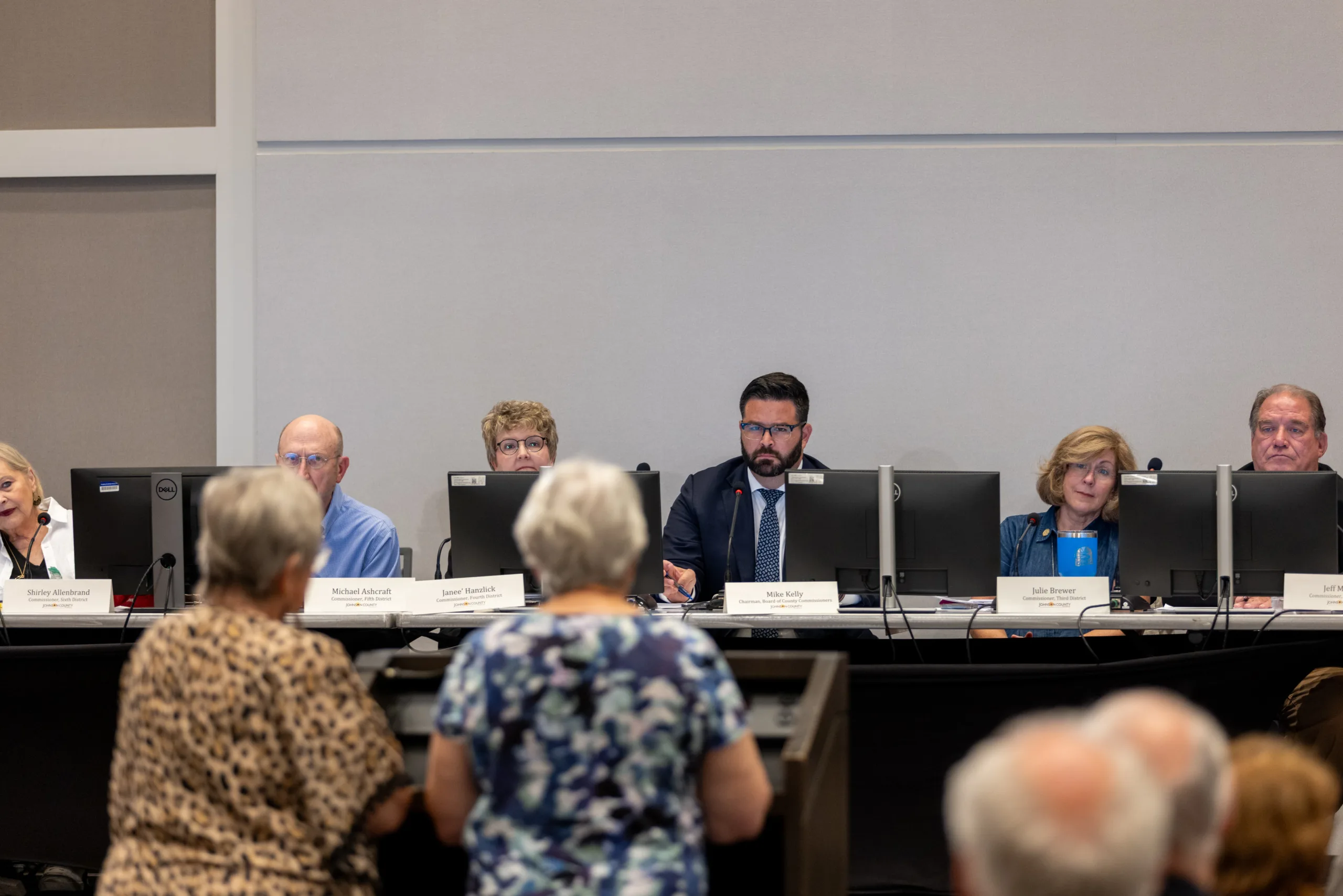
Around 200 people who felt unjustly squeezed by property taxes linked to the ever-increasing value of their homes gave Johnson County commissioners an earful Wednesday night in a loud and often angry public hearing.
All but seven or eight of the 47 speakers asked commissioners to abandon their intention to move ahead with a budget that keeps a flat property tax rate, which would still mean an increased tax bill for people who saw higher appraisals on their homes.
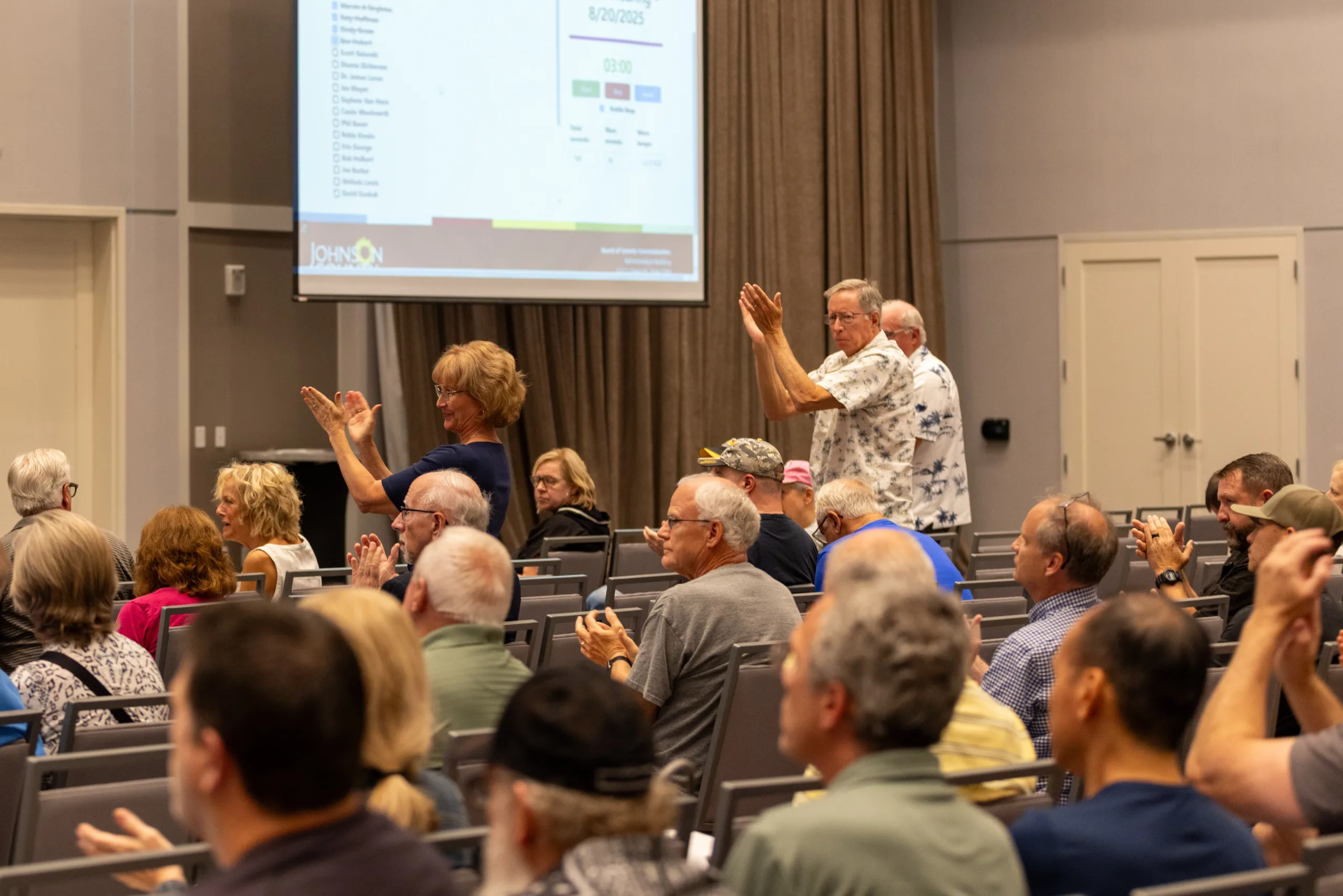
Some of the speakers recaptured some of the energy of the pandemic years, shouting, booing and loudly vowing to vote the commissioners out of office. (The soonest some of the commissioners will be on the ballot is next year.)
The annual budget hearing is normally held at the county administration building in Olathe. But after a crowded hearing with about 100 people in attendance last year, county staff decided to move it to the Olathe Conference Center, on Ridgeview Road just off Kansas Highway 10.
Many speakers on Wednesday night voiced worry about their ability to pay higher property taxes, while criticizing what they saw as wasteful spending and tax incentives to bring large companies to the county.
Eddie Croissant of Olathe said incentives to “the already-wealthy, while we fill in the gaps in the budget, don’t serve the public.”
Incentives given to companies “would be pointless if all we as an economic class can afford to do is sit at home, watch a little TV and cook ramen noodles just to keep our modest homes,” he said.
Flat property tax rate, but increasing tax revenues
The proposed budget for 2026 totals $1.9 billion, with $1.4 billion in expenditures and $505 million in reserves. But that includes revenue from grants, sales taxes and user-funded services like wastewater as well as property taxes.
The county operating budget that is supported by property tax is $558 million.
Commissioners are considering keeping the mill levy, or property tax, rate at 24.095 mills, a rate that will likely change to 24.125 mills after challenges to property values are settled in October.
That includes levies for the county’s three taxing districts, which are broken down:
- 17.263 for the county itself,
- 3.812 for the library system
- and 3.020 for the park and recreation district.
The property tax bill a person receives is based on their home’s value. Valuations went up 6.6% this year.
With a flat mill levy, budgeted revenues from property taxes in 2026 are set to increase 6.5%.
The impact of the levy for the county average appraised home at $508,000 would be $7.63 per month.
“We are cutting back. Why aren’t you?”
The hearing Wednesday was required by state law because it would exceed the “revenue neutral” rate. Revenue neutral, as defined by state law, is the taxing rate that would bring in the same amount of revenue from the previous year after increasing property values are accounted for.
Several speakers focused on the “unrealized gain” that comes when a house receives a higher valuation. If the owner doesn’t intend to sell, that increased value becomes a tax liability, they said.
“Property tax is a tax on unrealized gain, while our payment is in real dollars,” said James Lucas of Olathe. “The alleged increase in property value is a mythical number which the homeowner can’t use to pay the higher taxes unless he or she sells his or her property.”
Michael Garrett objected to government interference in the free market.
“We’re literally renting our property from the government in this system,” he said.
He blamed the Federal Reserve (which, he noted, is unelected) for cutting interest rates during the pandemic, a move he said resulted in skyrocketing housing prices.
“Kansas law mandates property taxes are based on this fair market value. How is this a fair market?” Garrett said.
Others shared personal stories and complaints about their own valuation increases. Scott Gdanski of Olathe said he gutted then rebuilt the home he bought in 2020.
“You were the thousand dollar bill that I always forgot was coming twice a year,” he said.
He also objected to the valuation process that he said compared his house to one twice its size.
Ron Johnson of Overland Park said he is a widower living on a pension and Social Security, and would like to continue living in Overland Park.
“Your apparent modest 6.448% [increase] in revenue kills me and all other residents on fixed incomes as well as discrediting the fed’s attempt to reduce inflation. We need help. We are cutting back, why aren’t you?” Johnson asked.
A few speakers defended the proposed budget
Several speakers said the county should do more to cut spending and also questioning the need for a $505 million reserve fund. County officials have sought to keep reserves at a certain level to pay for unexpected expenses and to maintain the county’s AAA bond rating.
Bonding companies prefer a 30% reserve, according to county staff.
The general fund reserves in the county’s budget are 43%, but will be closer to 28% as reserve money restricted to certain uses like law enforcement is spent down, said county spokesperson Anne Christiansen-Bullers.
A few speakers supported the budget plan.
Cassie Woolworth of Olathe pointed out that efforts to improve housing options with more shelter at the Salvation Army in Olathe, more housing for those with disabilities and a project by Habitat for Humanity to build 14 homes aimed at working-class families.
State legislators should have done more to reduce property taxes during this year’s legislative session in Topeka, she said.
Woolworth said she understood the financial strain, noting an increase in the cost of replacing her wood fence from $6,000 to $11,000 due to federal tariffs on Canada.
Jae Moyer of Overland Park said they work two jobs to rent in Johnson County but support taxes being used for the services and resources offered by the county.
Commissioners push budget towards final vote
Due to the tightness of funds and dwindling revenues from sources other than property taxes, commissioners have struggled with the budget this year.
The county is using Resource X, an artificial intelligence model, to find ways to cut expenses. They also plan to ask voters in March to extend the quarter-cent courthouse sales tax for 10 years to help pay for law enforcement, ambulance and other public safety-related services.
After the hearing, Commission Chair Mike Kelly said he is seeking ways to work with state lawmakers to find funding streams to lower property taxes. Commissioners have said part of their budget problem comes from inadequately funded state mandated services like motor vehicle licensing.
He also noted commissioners found savings in a sheriff’s office project for improvements at the Adult Detention Center. Former Sheriff Calvin Hayden last year recommended a project to add space for video court hearings at the jail at a cost of $8 million. Last week, the commissioners approved a revised plan at a cost of $1.8 million.
“While you may not agree with every decision that we make, we are paying attention,” Kelly said Wednesday night.
The commission voted 6-1 to move the budget forward, with Commissioner Michael Ashcraft voting against. That vote was only to exceed the revenue neutral rate. The final budget vote is scheduled for Aug. 28.