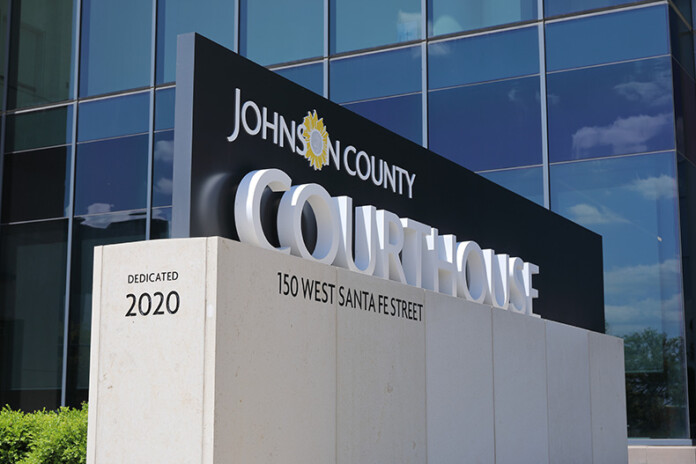
The American Civil Liberties of Kansas has filed a lawsuit on behalf of four people against multiple officials, including judges in Johnson County District Court, for determining their probation based on whether they can pay restitution.
On Thursday, the ACLU of Kansas filed the lawsuit in federal district court in Kansas City, Kansas, over what it considers “unlimited, harsher punishment of poor defendants who cannot pay their restitution,” while favoring those who are able to pay it.
The organization filed the lawsuit against Kansas Attorney General Kris Kobach and six district court judges in Johnson County, including Chief Judge James Charles Droege as well as five other Johnson County District Court judges, the Kansas Office of Judicial Administration and collection agency Butler & Associates, P.A.
“The protection from arbitrary and unequal treatment under the law is a fundamental right under the Constitution, and that includes unequal treatment based upon how much money you have,” Monica Bennett, ACLU of Kansas’ legal director, said in a press release.
The Post’s request for comment from Kobach’s office and Johnson County District Court officials was not returned ahead of publication of this story.
The lawsuit claims unfair practices by Kobach, Johnson County
The plaintiffs in the lawsuit include:
- Jeffrey Englund, a Kansas resident who was sentenced to 36 months of probation in 2018 for one count of mistreatment of an elderly person.
- Alicia McKnight, a Jackson and Clay County, Missouri, resident who was sentenced to an eight-month prison term and 18 months of probation in 2016.
- Debra Nicole Rice, a Missouri resident who was sentenced to seven months in prison and 18 months of probation in 2018 for forgery and theft of less than $25,000.
- Alanna Carter, a Jackson County, Missouri, resident who was sentenced to a six-month prison term as well as 18 months of probation for one count of computer crime and one count of theft in 2018.
At the center of the lawsuit is Kansas Statute 21-6608(c)(7), which specifies that a court may continue a defendant’s probation for as long as the person has not paid the ordered restitution.
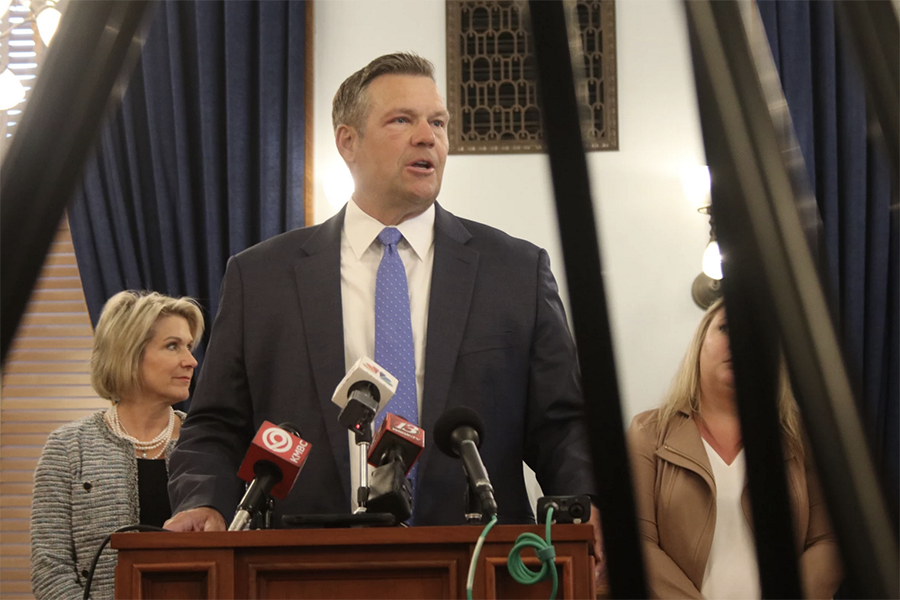
The ACLU considers the statute unconstitutional because they see it as punishing poor defendants who are unable to pay, while defendants with the means to satisfy restitution are taken off probation quicker.
“(The statute) provides a higher statutory ceiling to punish poor defendants than it does for defendants who committed identical offenses but have the ability to pay court-ordered restitution. In fact, for poor defendants, there is no ceiling,” the lawsuit stated.
The lawsuit, among other things, asserts the plaintiffs’ constitutional due process and equal protection rights have been violated.
It also argues the practice of charging restitution and extending probation indefinitely violates the Kansas Constitution by prohibiting those on probation from voting and being subject to “invasive searches of their person and possessions without a warrant” as part of their probation.
“By barring otherwise eligible Kansans from voting, indefinite probation punishes the poor and thereby functions as an extension of the legacy of the poll tax,” Micah Kubic, Executive Director of the ACLU of Kansas, is quoted in the press release.
“Democracy is inherently about whose voices we believe are worthy of including and who gets a seat at the table. This probation scheme condemns people to lose their seats and their voices simply because of the money in their pockets,” Kubic said.
Plaintiffs had probation extended for years
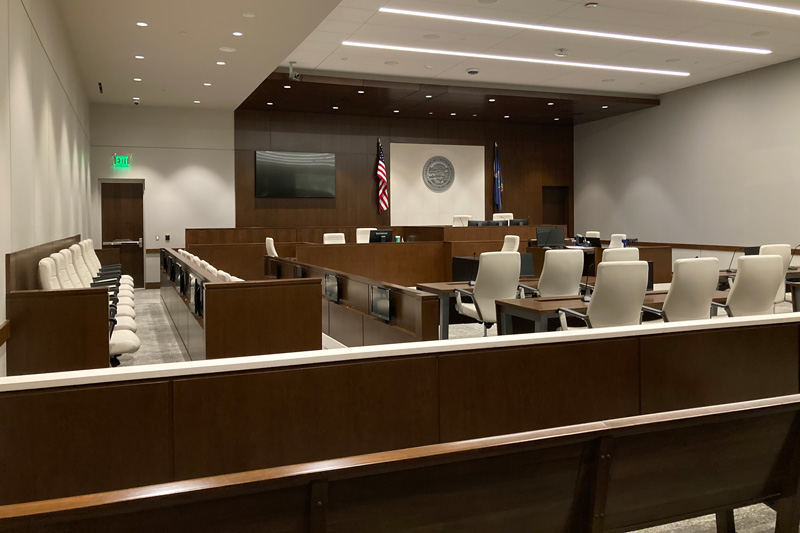
The lawsuit claims judges in the cases of the plaintiffs extended their probation term on multiple occasions for years and in some cases, decades longer than the probationary period prescribed by the legislature for the crime for which they were convicted.
Johnson County judges were allowed to keep extending probation for the plaintiffs because the statute’s language allows it, the lawsuit stated.
“The statute’s broad grant of discretion … is unaccompanied by binding standards or uniform criteria guiding how that discretion should be exercised, thereby inviting inconsistent and erratic application from case to case,” the lawsuit states.
In some cases, restitution payments would be remitted to Butler & Associates, a debt collection agency, which would add administrative fees and interest to the plaintiffs’ restitution balance.
“The discretionary imposition of third-party collection — layering additional costs that accrue over time — further obscures the path to discharge and deprives probationers of any reliable means to predict the total amount necessary to terminate supervision,” the lawsuit goes on.
The ACLU is asking for jury trial
The ACLU is demanding a jury trial, including, seeking a declaration that the current practices are unconstitutional.
The lawsuit seeks to have the state change its practices regarding restitution payments so that it would not violate convicted person’s rights.
The ACLU is also seeking an award of actual and compensatory damages to the plaintiffs, which would be determined at the trial as well as cover the costs for attorneys’ fees.