
Editor’s Note: This story was updated to include comments from District Attorney Steve Howe.
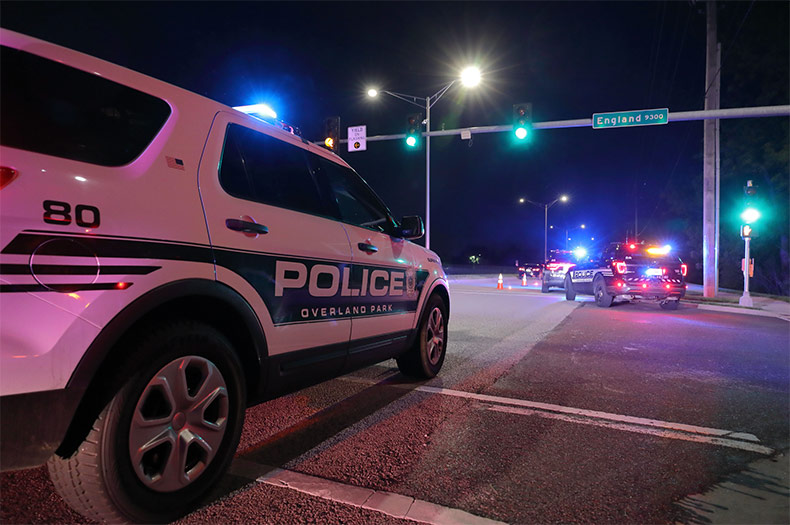
Overland Park Police could begin releasing body camera footage in critical situations involving police officers, like shootings or instances of potential misconduct — something, historically, the department has rarely done.
This week, the department announced it was rolling out a revised policy on body cameras, crafted with input from department leadership, community stakeholders, the civil rights group ACLU and legal professionals, Police Chief Doreen Jokerst said.
“I wanted to make sure that it was clear and defined that we would be releasing [footage] post-officer-involved shooting [and] critical incidents,” she said.
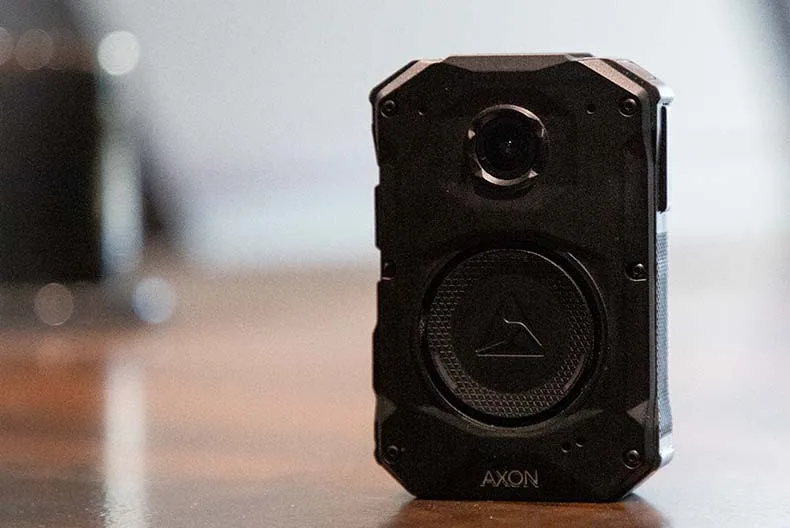
The new policy, which became official Tuesday, takes effect a couple of months after Overland Park Police rolled out new body cameras as part of a technology overhaul with what department officials have described as a more integrated, more efficient and easier-to-use system.
The $22.4 million package purchased from Axon Enterprise came with other digital recording devices, tasers, new training, drones and software that links the technology together.
It also comes as tensions across the country are high over law enforcement’s use of force, with the recent killings of Renée Macklin Good and Alex Pretti in Minnesota by federal immigration officers, and going back to prominent incidents like the killing of George Floyd in 2020.
Sheila Albers, a prominent advocate for more transparent policing, told the Post that she sees this as a “monumental step forward” for Overland Park.
Albers’ teenage son, John, was shot and killed by an Overland Park police officer in 2018 while in a mental health crisis, a year before the department started requiring officers wear body cameras.
Still, she said she hoped to see similar steps taken to increase transparency in the Overland Park Police Department and beyond.
“The policy doesn’t go far enough, but we have to take a step forward, and this is an excellent step forward,” Albers said.
What is changing about Overland Park’s body camera policy?
Jokerst set her sights on updating the policy early on in her tenure with the Overland Park Police Department, which began in late 2024.
In an interview shortly after her hiring, she told the Post that she valued transparency in officer-involved incidents.
“I do think if things can be disclosed, they should,” she said in 2024. “I usually say, ‘Bad news does not age like fine wine.’”
That mindset is part of what prompted her to examine the body camera policy.
“I’m really hoping this opens the lines of communication to our community that they know, as a police leader here, I promote transparency and accountability for our department, that I want people to run to us for help and not run away,” Jokerst said on Thursday. “Community trust, for me, is not a one-and-done; it’s an intentional act that our police department is committed to.”
The key change to the policy centers on the release of footage and how the presence of possible officer misconduct would not necessarily keep the department from releasing such footage.
Specifically, the policy now reads, “The existence of an ongoing investigation into misconduct shall not be used as the sole determining factor to not publicly release body-worn camera footage, as doing so would create a blanket exception to releasing footage; thereby undermining the transparency and accountability functions. In these cases, the totality of the circumstances and applicable legal and policy considerations should be considered.”
The policy also says decisions to release such footage would be made from a “consensus” that includes the police chief, the District Attorney’s Office, the city manager and city legal staff, and that special care will be taken to protect “the sensitivity and privacy rights of those individuals involved.”
(Read the full policy here.)
The Overland Park Police Department’s former policy on audio and video recordings governed how the devices should be used and maintained, as well as how the resulting files should be labeled, stored and reviewed. (Officers are still required to have their cameras on during essentially every interaction with the public, which was also a requirement under the old policy.)
However, under the old policy, the decision to release footage, audio, images or metadata collected by a department body or mobile camera was left to the discretion of the chief. It dictated that “video files are OPPD property and are considered a criminal investigation record.”
Kansas law does not consider body cam recordings public records
Though the first department in Johnson County to take the step toward potentially releasing more footage from police body cameras, the Overland Park Police Department is the second law enforcement agency in Kansas to amend its body camera footage release policy this year.
The Topkea Police Department announced in January that it would be making similar changes under the leadership of that department’s relatively new Police Chief Chris Vallejo.
While some states in the U.S. have rules that require the release of body camera footage following officer-involved incidents, Kansas does not, leaving individual agencies to make their own standards — or even sometimes case-by-case decisions.
Under current state law, audio and video recordings made by law enforcement and peace officers are classified as criminal investigative records and are released at the discretion of the possessing agency.
In practice, that means such recordings are seldom released to the public.
(Overland Park has released body camera footage at least once before, after a racial justice protester was arrested for alleged battery of a law enforcement officer in mid-2020.)
Past efforts to amend Kansas law in favor of more transparency with police body camera footage after fatal officer-involved shootings have been unsuccessful.
For instance, then-Rep. David Benson, an Overland Park Democrat, sponsored a draft bill in 2020 that aimed to have departments release footage when an officer is cleared of wrongdoing after a fatal shooting. That bill died in committee.
Transparency advocate views it as a “historical step” but wants more
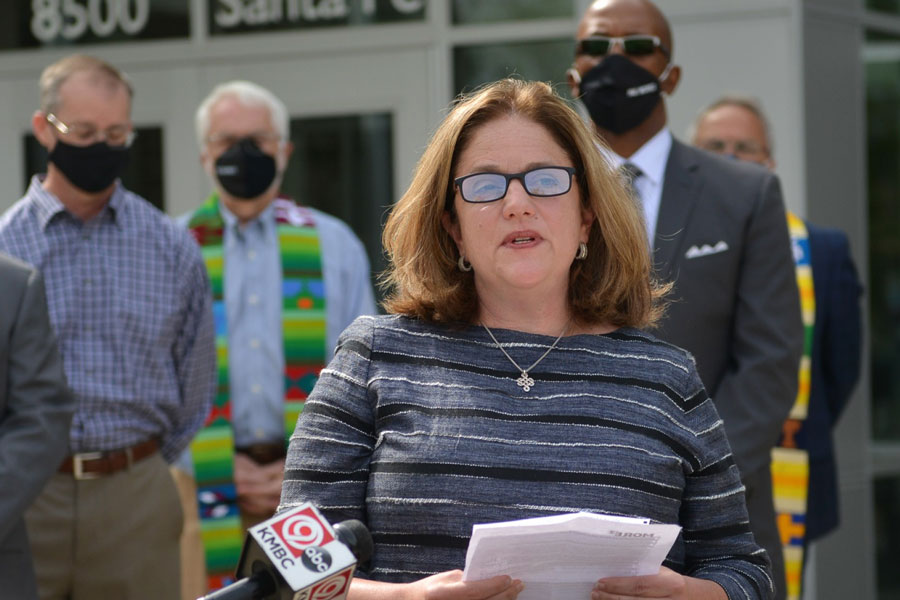
Shortly after the new policy was announced, Albers voiced her support for the change.
“I am intensely proud of our Chief of Police Doreen Jokerst and our city government, for taking what is really a historical step, saying that ‘We’re going to release body-worn camera footage, especially in instances when it involves an officer-involved shooting,’” Albers said.
Still, she wants to see more.
“Now, there are some other steps that we probably need to take further down the road; I’m hoping in the near future, not the far-off future,” Albers said.
Among her top concerns is that she thinks the District Attorney’s Office should be excluded from the decision-making process on releasing footage, because the police department owns the body camera footage and is ultimately tasked with its storage.
In Johnson County, the DA’s office makes determinations about whether to charge officers accused of wrongdoing based on the Officer Involved Critical Incident Investigative Team’s findings. That’s why Jokerst said she thinks it’s important to include the DA’s office in decisions around releasing footage from officer-involved incidents.
District Attorney Steve Howe said he believes the office he leads needs to be involved in body camera footage release decisions.
“When we do release this information, we have to have a balancing test,” he said, pointing to a need for investigative integrity, protecting individuals’ rights in a given situation, as well as the public’s right to know. “You work through those processes on a case-by-case basis. … It ultimately comes down to not if we release it, but when we release it.”
In an incident involving an officer — usually a shooting or another critical situation — Howe’s office typically plays portions of body camera footage from the scene in a press conference format, usually around the time he releases a report of his findings.
Still, Howe acknowledged it is a tough balance to strike, one he feels is complicated by an information ecosystem that prioritizes immediacy.
“The ‘Here and now, we need to know now’ doesn’t always play well in the legal system,” he said.
More Overland Park Police policy changes are on the table
Looking ahead, Jokerst said she’s still considering more policy revisions with department leadership and community stakeholders.
In general, she has plans to review the full Overland Park Police Department Standard Operating Procedures, a multichapter document that covers a range of topics, everything from citizen complaints and discipline to departmental vehicle maintenance.
Jokerst said she specifically wants to look at rules on the use of force and police pursuits of suspects.
“Maybe what was inherent 20 years ago or even 10 years ago in a police department is not necessarily a best practice now, and so it’s something that has to continually be reworked and revamped on an ongoing basis to make sure that we are doing what the community expects and at the same time meeting national standards and best practices,” she said.
Keep reading: Drones, AI, new body cams — Overland Park Police get $22.4M tech overhaul