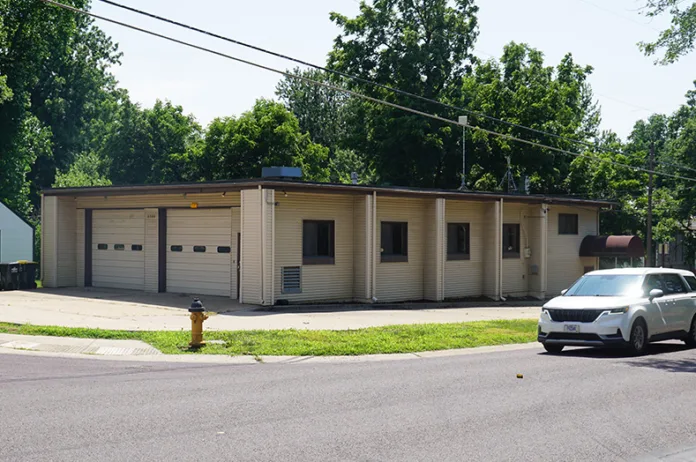
A former ambulance station in Overland Park is now in the hands of a local private, nonprofit organization to turn into affordable housing for adults with disabilities.
On Thursday, the Johnson Board of County Commissioners unanimously approved the land transfer of a 0.2-acre lot in central Overland Park that once housed a MED-ACT station, located at 8500 Grandview Lane in Overland Park, to the Friends of Johnson County Developmental Supports to build two to three affordable and accessible housing units for adults with intellectual or physical disabilities.
Friends of JCDS is a nonprofit that supports individuals with intellectual and/or developmental disabilities who receive services at Johnson County Developmental Supports. The group focuses on rehabilitating mostly single-family homes in Johnson County for this population demographic, but it has another apartment complex in downtown Overland Park in the works.
Depending on what the city of Overland Park determines when it rezones the property on Grandview Lane, it will provide two to three affordable housing units for people with disabilities, with two two-bedroom, one-bathroom units and, if possible, one single-unit space with a bathroom.
The transfer is the first use of the county’s new Leveraging Assets for New Development (LAND) policy it adopted in April that asks that wherever feasible, housing be included in the mix of possible uses for redevelopment of its underused properties. The policy emphasizes partnerships with other entities, public or private.
The MED-ACT Station hasn’t been used since 2024
The MED-ACT station has been vacant since 2024, after MED-ACT transferred their services to the Lenexa station.
After MED-ACT relocated, Johnson County staff determined the property no longer aligned with its needs, due to its size, location and placement within a residential area. From there, Paul Davis, director of the county’s Department of Emergency Services, began looking into repurposing the building.
“We resolved to find a purposeful use with strong binds to the community for this property. This initiative meets that purpose,” he said in a press release.
With part of its mission dedicated to repurposing buildings for affordable housing, Friends of JCDS agreed and wanted to see it be redeveloped, rather than torn down, said Janel Bowers, director of development for Friends of JCDS.
“If we can’t use it for its intended purpose, (i was like) ‘Gosh, let’s really think about that, because think about not only the benefit it gives to providing affordable housing, but can you imagine tearing that building down?'”
Seeing the need for affordable housing for adults with disabilities, Bowers said the project provides an answer to that problem.
“It’s actually a big pocket of need for people with disabilities that have have a heck of a time finding a place to live for a multitude of reasons,” she said.
The city of Overland Park also expressed its support for the project.
“We’re pleased to see Johnson County found a creative solution to reuse the property and provide more housing in Overland Park,” city spokesperson Meg Ralph said in a statement to the Johnson County Post.
The building will be repurposed into 2 or 3 units
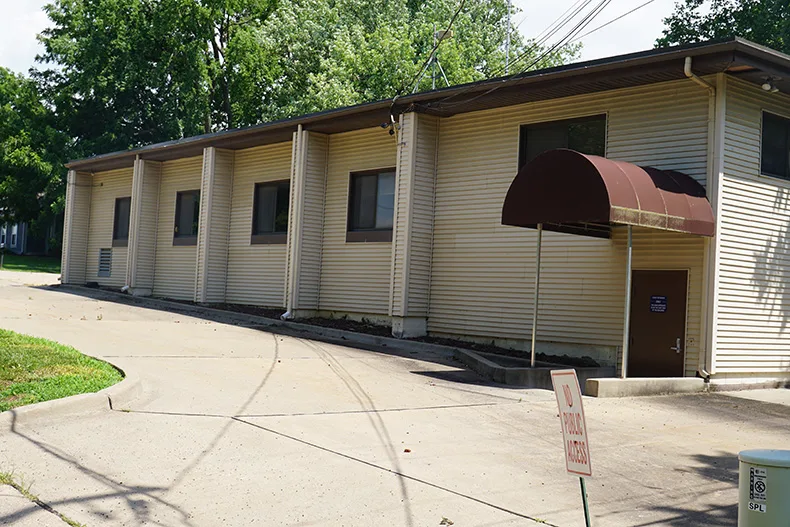
The former MED-ACT building is located in the Elmhurst neighborhood in Overland Park, next to residential housing near Shawnee Mission West High School.
Before being a MED-ACT station, it was the Elmhurst Fire Station until the early 1980s, when the then-privately owned Overland Park Fire Department sold it to the county.
The building will be repurposed into two or three affordable units and will fit into the residential community, Bowers said.
“We’re not tearing it down, but we are removing some walls … (We’re going to) make it energy efficient,” she said.
JCDS will pay for the property through the cost of the transfer fee or if that fee is covered, a flat $99 payment, according to county documents.
The units will be income-restricted and subject to HOME rent maximums, or the maximum amount a landlord can charge for affordable housing set by the U.S. Department of Housing and Urban Development, for 30 years, enforced with a deed restriction.
The total cost estimated to convert the property into residential housing is $970,000. The organization is pursuing a combination of grants, tax credits and local sources, Bowers said.
2 Johnson County residents spoke out against it
Accusing the county of violating Kansas state laws, including selling a marketable property without public notice, Ben Hobert of Westwood Hills (who has also filed to run for a county commission seat in November’s election) said the county board should veto the proposal.
“It is my judgment that the transfer will be null and void if a court were to review the issue,” he said. “This board seeks to violate state law and deprive taxpayers of fair value for their property.”
The county did follow state law in the land transfer, said Peg Trent, the county’s chief counsel and director of its legal department. As outlined in the resolution, state statute delegates the authority to a county board of county commissioners to determine the process and procedure for disposal of surplus property.
Gaylene Van Horn, of Lenexa, also opposed the land transfer because of a number of questions she had, like who gets to live in the units, who is paying for the property’s rehabilitation and how the property will be appraised.
Commissioner Jeff Meyers said most of Van Horn’s questions were answered in the agenda packet, and any that weren’t could be answered by people like Bowers, who was in the audience but did not speak at the meeting.
The commission supported the land transfer
Referencing the county’s new Ad-Hoc Working Group, which aims to find solutions for affordable housing in Johnson County, Jeff Meyers said this was an example of that work.
“It’s a perfect example of, I think, how this ad hoc committee is really working towards having success at meeting some of the criteria and some of the goals that we set out from the beginning,” he said.
Poking fun at his age, Commissioner Michael Ashcraft said he remembered when the building was constructed.
“I remember that year well. I am actually that old, and that property has served the county well in that time. But its usefulness for the county has evaporated for a lot of different reasons,” he said.
While he was skeptical of the proposal, he ultimately decided it was a good idea.
“There will be a long-term benefit for that property for those inhabitants and for that organization,” he said.
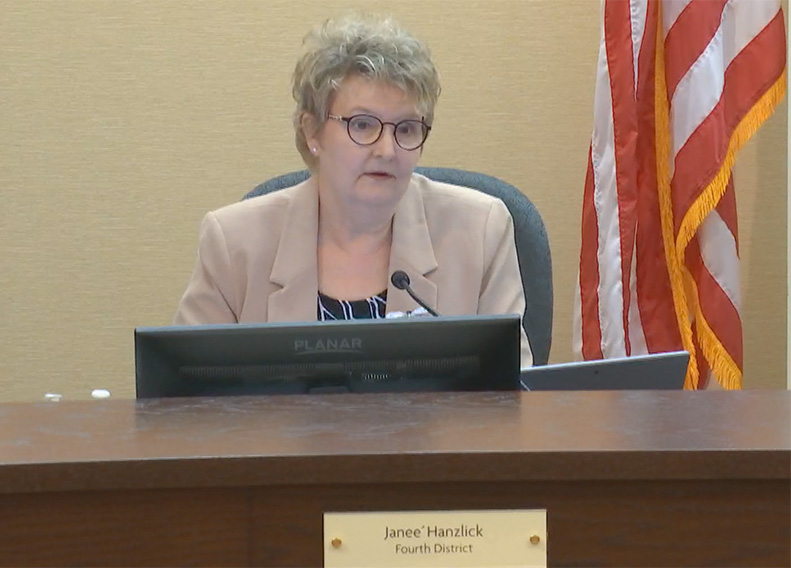
Deeming it as “perfect” for the area, Commissioner Janeé Hanzlick expressed enthusiasm for the proposal.
“I think it’s perfect for this use. It’s close to (a) grocery store, close to transit, tucked right into a neighborhood. I can’t think of a better use,” she said.
What’s next
The city of Overland Park must still rezone the property in order for the housing project to move forward.
If it’s determined to be an RP-3 district, which is usually reserved for higher-density projects like apartments, it will be repurposed as a triplex.
If it’s determined to be an RP-2 district, then it will be remade into a duplex, Bower said.
“Our hope is, based on what space we have, is we have two really good, solid, two-bedroom, one-bath apartments for a duplex. If we can go to the triplex, we have an area that we can make into a really good one-bedroom, one-bath apartment,” she said.
She added: “You’d have five total people that could benefit from the space … We’ll ensure that rent is affordable, and that the living space makes sense to the individual.”
Go deeper: Johnson County eyes using its own public property to tackle housing crunch