Earlier this summer, the Post asked our readers what issues you wanted to hear candidates in federal, state and local races address leading up to the Nov. 3 election.
Based on that feedback, we developed a five-item questionnaire centering the issues most important to residents across Johnson County.
Each day this week, we’ll publish the candidates’ responses to one question. So far, we’ve published responses on property taxes and county spending, and voting access.
Today, we’re publishing candidates’ responses to the following question:
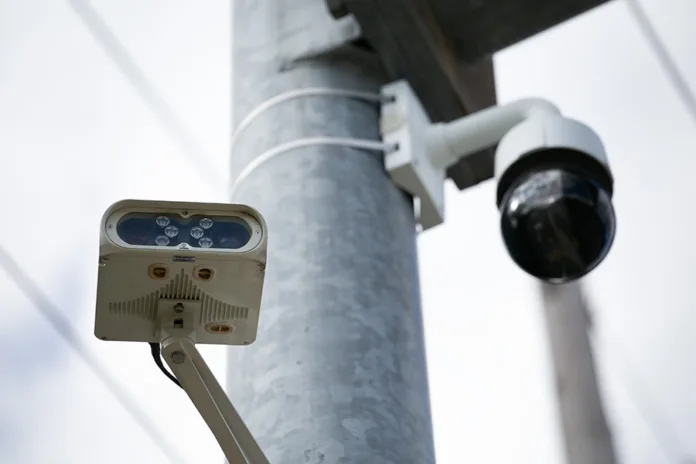
Local law enforcement agencies’ use of automated license plate reader cameras has quickly become one of the most talked-about issues in the county, as controversy over the devices and their potential abuses has grown nationwide. According to independent observers, thousands of these devices are deployed in Johnson County, including by the sheriff’s office. What limits, if any, would you set on how county agencies collect, keep and share data from these devices?
Below are the answers the Post received from candidates on the issue:
Chair
Karen Crnkovich
 License plate readers may have legitimate law enforcement uses, but I have serious concerns about how quickly this technology can expand and how much information can be collected about law abiding residents.
Johnson County residents deserve transparency before surveillance technology expands, not after.
The Sheriff’s Office currently requires searches to be tied to a documented case, records who conducts each search, allows searches to be audited and generally deletes data after 90 days. Those are important safeguards.
I support firm limits on retention, strict controls on who can access or share the data, regular auditing and public reporting on how the technology is being used.
Public safety and privacy do not have to be competing goals. Technology should support our officers, not create an unchecked system for tracking residents’ movements. Any expansion should be transparent, narrowly focused and subject to meaningful oversight.
Mike Kelly (incumbent)
 There’s a fundamental feeling of safety in Johnson County. Crime in the State of Kansas, and in Johnson County, is at its lowest levels in decades. I’m proud of how we’ve partnered with municipal agencies to keep our County safe. Our emergency services are the best in the region. As our County continues to grow, we’ll work diligently to maintain this high safety standard that protects everyone in our community.
Law enforcement tools must always respect the civil liberties and privacy rights of our residents. These tools, when used appropriately, can help track down crime and keep our community safer. Sheriff Roberson has implemented a policy that keeps a tight leash on the way license plate readers are used and how the data is stored or accessed, limiting access and auditing its use. Records are secured locally – not in the cloud – for a maximum of 90 days and then deleted unless preserved as part of an investigation.
We only use this data for local law enforcement. Like many of you, I’m deeply troubled by ICE’s actions across our nation, and I understand that residents have major concerns about the use of local data for Federal immigration enforcement. It is not our job to conduct Federal immigration enforcement. We don’t have a 287(g) agreement with the Federal Government, and I don’t advocate that we enter into one. Every person, regardless of their skin color or their immigration status, should feel comfortable seeking the help of local law enforcement when necessary.
District 1
Becky Fast (incumbent)
 Going forward, I would be hesitant to approve additional funding for automated license plate readers (ALPRs) without clear policies, safeguards, and accountability measures in place. I’ve heard from many residents who are concerned about privacy and how this technology is being used.
Across the Kansas City metro region, the widespread use of these cameras from companies like Flock raises serious questions about who can access the data, how often it is searched, and how the information is shared. A KCUR analysis found that out-of-state law enforcement agencies accounted for most searches of license plate data in the Kansas City area. KCUR also reported that the Kansas City, Kansas, Police Department’s database was queried nearly 1.1 million times during a 30-day period.
The Johnson County Sheriff’s Office currently has 45 ALPRs. The Sheriff’s Office began implementing license plate reader technology in 2022 after receiving a grant. Although the Board of County Commissioners authorizes funding through the budget process, we do not exercise control over the policies governing the Sheriff’s utilization of this technology.
The Sheriff is an independently elected official directly accountable to the residents, which distinguishes him from a Chief of Police. I urge residents who share these concerns to contact Sheriff Roberson and provide input as he evaluates policies regarding ALPR technology. Public input is crucial in ensuring that public safety tools are employed responsibly while safeguarding residents’ privacy and civil liberties. We need clear rules governing data access, retention, sharing, and use, along with meaningful oversight and accountability.
Ben Hobert
Did not provide the Post with a response.
District 4
Teresa Erb
 Automated license plate readers can help law enforcement locate missing persons, recover stolen vehicles, and investigate serious crimes. However, widespread collection and retention of license plate data creates significant privacy and civil liberties concerns. Law-abiding residents should not have their movements routinely tracked and stored in government databases.
I support strict, enforceable limits on the collection, retention, access, and sharing of this information. Searches of historical license plate data should require reasonable suspicion of criminal activity and a documented investigative purpose. Data unrelated to an active investigation should be automatically deleted within a short period, preferably no more than 30 days.
I am particularly concerned about sharing this information with outside agencies, including federal immigration authorities. Data collected for local public safety purposes should not become a tool for unrelated surveillance or civil immigration enforcement. Access should be strictly limited, with no unrestricted sharing across law enforcement databases. I would also support independent audits, public reporting, and meaningful consequences for misuse. Surveillance technology should never be used to monitor people exercising their constitutional rights, including attending protests or engaging in political activities. The County Commission should use its budgetary and oversight responsibilities to insist on appropriate safeguards and transparency.
Public safety is important, but it should not come at the expense of the fundamental privacy and constitutional rights of Johnson County residents.
District 5
Michael Ashcraft (incumbent)
 License Plate Readers (LPRs) have become ubiquitous. They have come under increased scrutiny because of certain companies and their lack of internal control over the use and distribution of information collected by their cameras. Johnson County has several camera surveillance systems mostly located around key structures like the airports, wastewater facilities, public safety building and certain administrative offices.
In general terms, the point of LPRs is to improve public safety. The core issue, however, is how much Civil Liberty are we willing to relinquish to achieve some measure of safety? I would suggest that once Civil Liberties are minimized, it’s the devil to reestablish them. Consequently, I would hesitate to use LPRs without the strictest oversight possible if at all.
Greg Mitchell
 Automatic License Plate Recognition (ALPR) systems have become a hot topic in recent months. Many people are understandably concerned about the potential for abuse. That said, they can be a useful tool for investigations and, according to the Sheriff’s website, have been used throughout the county since 2022 and across the country for over 20 years.
The key to effective use (not abuse) of these systems is good data and system governance, including policies on who has access, when the system can be accessed, when to share data with other agencies, and a robust audit regime to ensure these policies are followed.
Once again, according to the Sheriff’s website, the Johnson County Sheriff’s Department has successfully utilized these technologies to locate missing people, recover stolen vehicles, and apprehend an armed man who threatened a daycare. They should not be used to unlawfully violate people’s privacy, check in on old “friends”, and see who is visiting your neighbors.
Good data and systems governance can avoid these scenarios. Like many technologies, ALPRs deserve respect for both their benefits and their pitfalls. Policies and enforcement on responsible use should reflect this, and their use should focus on protecting the people they are intended to serve.
Coming up:
Tomorrow, we will publish the candidates’ responses to the following question:
In recent weeks, Edgerton’s city council overrode its own planning commission to approve an $860 million data center over residents’ objections, and a proposed data center project in De Soto has more than doubled in size. These were city decisions — the county directly controls only unincorporated land — but readers still want answers on the impacts data centers could have on water, power and noise. What can the county do when it comes to data centers? Set countywide standards, coordinate with cities or impose a moratorium? What approach do you support?
 Thanks for reading! If you value having an independent news outlet keeping tabs on local government, schools and taxes, we're asking you to contribute to our Education Reporting Fund.