The Post asked readers in August about the issues they wanted to hear candidates running for Prairie Village city council address. Based on that feedback, we developed a five-item questionnaire with the most important issues to Prairie Village residents.
Each day this week, we’ll publish the candidates’ responses to one of five questions. Today, we’re publishing candidates’ responses to the following question:
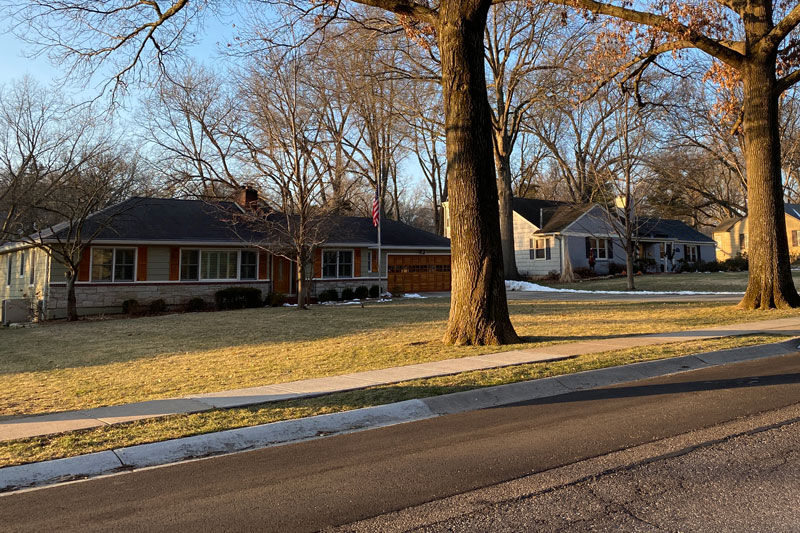
The rising cost of even “starter homes” in Prairie Village has put home ownership in the city out of reach for many middle class families. Should the city be looking to add more “attainable” housing options? If so, in what form should that take?
Below are the answers the Post received from candidates on this issue:
Ward 4
 Dave Robinson
“Affordable Housing” is defined as housing that costs 30% or less than one’s income. For seniors, this can be more challenging on fixed incomes. And it is equally challenging for standard wage earners who work within our community. In any case, it is a struggle against market forces that drive housing and rental costs in desirable areas. This situation is very evident within Prairie Village, most notably by the recent action in the Kenilworth complex to move out long-time residents in order to upgrade housing units and significantly increase rents by 40% or more. Something the city has little control over.
Some options may include rezoning and replatting options for more density (i.e. small homes, Accessory Dwelling Units, etc.) on larger parcels to be created. But lets also be realistic. There is very limited opportunity for larger scale new development in our bordered city with 10K+ homes. Even with these options, can the city make any meaningful impact to “affordable housing” options as long as demand is high and supply is low? This issue of affordable housing is a real economic challenge for all of Johnson County and cities throughout America.
 Jessica Priestland
One of the greatest aspects of living in Prairie Village is the multi-generational neighborhoods. My family currently lives next door to original homeowners. They tell us stories of how they were allotted 5 trees when they bought their lot and designed their home. Just a few houses up the street, we have neighbors that have a stork in their front lawn – a sign of a growing family. Over the 13 years of living on this street we have seen kids begin Kindergarten and just recently leave for college. It has been a wonderful opportunity for our family to learn and find support from our neighbors that represent so many different life stages.
When we first moved to Prairie Village in 2005, we were able to purchase a 4-bedroom, moderately updated home in the low $200K. It is very evident that these “starter” homes are much harder to come by these days and we are beginning to lose a segment of residents that are important to our community. Moreover, while walking the neighborhoods and introducing myself to residents, I’ve heard several people mention that their older children would love the opportunity to return back to Prairie Village with “their” new families, but they can’t find any homes in their price range. Many of the lower priced homes seem to get “snatched up”, many times by builders who are able to provide “cash offers” to sellers. Unfortunately for those young buyers, many of those lower priced homes are torn down or majorly renovated and are eventually put back on the market for double or even triple the original price. These renovated and new-build homes are great for our neighborhood housing values, but not so great for young families trying to build their life in Prairie Village.
The solution to this growing problem isn’t overtly apparent and will take great deliberation and creativity from our City Council, as well as strong community engagement. After doing some research online, it seems that many established suburbs across the US have been experiencing the same issue. Some of these suburbs have looked into creating more “attainable” housing while others have accepted that the rising home values and the high demand of their neighborhoods is not a bad problem to have for their town. I am hopeful Prairie Village will be able to find a solution that not only benefits those in need of “attainable” housing but also enriches and blends well with our unique, treasured community.
Most of the young families I’ve described above are looking for detached single-family homes. On the contrary, most discussions surrounding the development of “attainable housing” seem to suggest multi-unit attached housing. Unfortunately, I don’t believe there is enough available land in Prairie Village to build several new detached single-family homes that are affordable for new young home buyers. The solution to finding and/or creating more “attainable” housing for this specific group of home buyers may inevitably rely on developing policies or programs to help assist or moderate the home buying process for qualified individuals that have to compete with “cash offer” buyers.
It has been mentioned that there may be a few areas along 75th Street where smaller multi-unit complexes could be built. These particular housing options may appeal to young professionals or recent empty nesters looking to down-size. I would be in favor of the construction of multi-unit complexes if they had the following characteristics: the units could only be purchased and not rented, they were no more than 2-stories in height, and the surrounding neighborhoods were given full transparency on the project and multiple opportunities to meet and discuss the project with the builders and the City.
Prairie Village currently has 9 apartment complexes, with nearly 1,000 units, varying from studios to 3-bedrooms. Some of these apartment complexes are very affordable, while others are more high-priced and luxurious. There seems to be a solid spectrum of multi-unit rental options for Prairie Village residents, so at this time, I don’t believe there is a need to create more multi-unit rental complexes.
As a City Council member, I would hope to be assigned to the Affordable Housing Committee. I’d like to contribute effective, productive ideas and develop potential remedies that will provide more “attainable” housing for new home buyers, young professionals and those wishing to down-size. It will be important for this committee to work closely with our current residents to develop a solution that is in the best interests of the entire Prairie Village community.
Ward 5
 John Beeder
Prairie Village is a beautiful city that has become a highly popular place to live. This fact is the prime reason property values are increasing rapidly in our city. People are voting with their real estate investment decisions and they are choosing Prairie Village. New home buyers are making investment decisions based on the personality and character of the neighborhoods they are moving into. City planning needs to emphasize preserving the character of each neighborhood consistent with the expectations and wishes of its residents. I would oppose any initiative that affects neighborhoods in a way that its residents feel changes the character of the place they assumed they would be living.
 Gregory Shelton
I believe we should preserve our existing attainable housing options as our property values continue to increase due to rising demand in the housing market. After reading the United Community Services of Johnson County’s, “Housing for All Toolkit,” I found some specific opportunities where we can address concerns related to attainable housing in Prairie Village. The three things I am eager to work on with City staff and the Council in this area are:
- Preserving and rehabilitating our existing housing stock.
- Reducing overall household expenses by improving energy and water efficiency of older and renovated homes.
- Improving or updating our building and permitting codes to support sustainability and affordability for existing housing types in Ward 5 and throughout Prairie Village.
Additionally, our community is fully developed so opportunities to add new housing stock is limited. This is especially true with Meadowbrook now being near completion of their buildout. So, I’m eager to work with our new Housing Affordability Taskforce to explore innovations in housing like the AARP’s definition of accessory dwelling units (e.g. basement suites, in-law suites, etc.). Particularly how they could improve the quality of life for our residents seeking to age in place by offering them an additional income stream through rental revenues, or serve as a place where family or a dedicated caretaker could reside to provide them support on a day-to-day basis.
Ward 1
 Thorne Daimler
Residents have expressed they do not want more apartments or affordable housing, so I would not support these initiatives. Prairie Village is a suburban bedroom community with mainly single-family homes. Residents like that charm and do not want to change the housing density. The average home price is still in the $300,000’s with options below that. Prairie Village is a highly desired area to live in, hence higher than surrounding area home values. That is just supply and demand. Families, including mine, must decide if they want more house elsewhere, or less house with the great Prairie Village community experience.
 Cole Robinson
Prairie Village residents and those hoping to move here are facing increasingly limited affordable housing options. By now, we have all seen a neighbor’s house sell for an eye-popping amount and I’ve heard from many residents who are concerned about what those rising costs will mean for our city.
I applaud Prairie Village for recognizing this issue through the creation of an ad hoc Housing Committee. This committee is tasked with using the Village Vision 2.0 plan, the Johnson County Housing Study, and the Housing for All Toolkit, among other resources, to generate recommendations for strategies to preserve access to housing in Prairie Village.
A path towards alleviating housing challenges should include a diversity of housing options and a focus on maintaining and rehabilitating the current housing stock.
There are several housing rehabilitation programs already in place at the federal, state and county level, and Prairie Village recently introduced two grant programs to incentivize the maintenance of existing homes:
- Exterior Grant Program – a grant to cover 20% of exterior maintenance expenses (driveway, roof, siding, windows etc) up to $2500 per resident.
- Residential Sustainability Grant – a 20% match on a minimum of $2500 spend (up to $12,500) by the resident towards home upgrades that improve energy efficiency (energy efficient windows, HVAC, water heater, insulation, window-sealing, etc) There is no income or home valuation cap on this grant.
Residents can learn more about the specifics of these grants, as well as the application process, by visiting the city’s website at www.pvkansas.com.
I support initiatives such as these that provide targeted assistance to those who need it most in order to make Prairie Village a welcoming and attainable place for everyone.
On Thursday, we’ll publish candidates’ responses to the following question:
Climate change continues to be top of mind for many Shawnee Mission Post readers. What steps can Prairie Village take to prepare neighborhoods for increased flooding, along with extreme heat and drought events? What steps would you like to see the city take to build climate resilience?