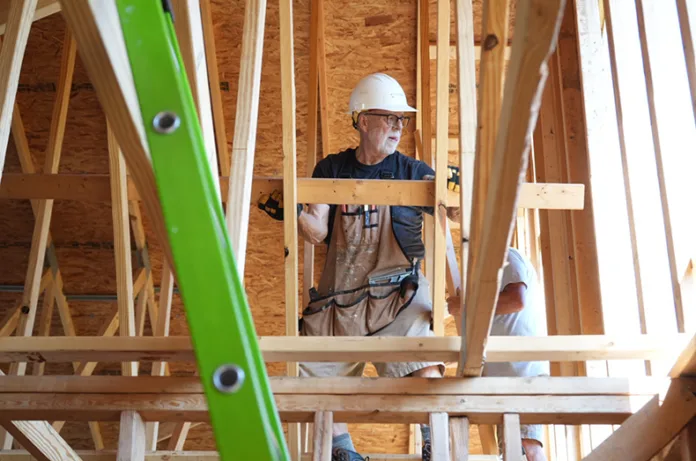
A plan to build 50 affordable single-family homes in western Lenexa cleared a key hurdle on Monday.
Habitat for Humanity of Kansas City wants to use a 17-acre property currently owned by the city near the southwest corner of 86th Terrace and Clare Road for a new neighborhood of homes that would be attainable for qualified families.
The project, if ultimately approved, would be the second neighborhood by the affordable housing nonprofit in Johnson County as it focuses more energy on the suburbs. The inaugural project, dubbed Pathway at Heritage Park in Olathe, celebrated the completion of its first home in late January.
At the end of Tuesday’s lengthy public meeting involving hours of comments from neighbors and community members, the Lenexa Planning Commission voted unanimously to recommend approval of the rezoning and preliminary plat for the Highlands at Clear Creek neighborhood.
Ahead of the vote, Commissioner Ben Harber lamented the growing unaffordability of housing of all types in Lenexa and Johnson County more broadly as shortages in the supply become more pronounced. He also pointed out that a variety of residential projects raise strong opposition from neighbors for all sorts of reasons.
“As we lose $350,000 and $400,000 [homes and] below, what are we going to do with folks?” he said. “I think we need to be broad-minded.”
How does Habitat make the homes affordable?
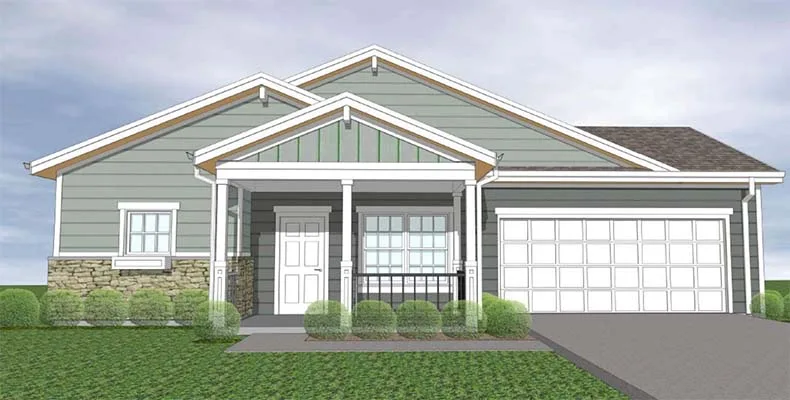
Each home in the Highlands at Clear Creek subdivision is expected to cost around $250,000, less than one-third the average sale cost of new homes hitting the market in Johnson County. Still, the homes are intended to blend in with the surrounding area, officials from Habitat KC have stressed.
That’s possible because all of the homes would be part of a Community Land Trust, an arrangement through which a homeowner would own the house but the trust would maintain ownership of the land. It’s more affordable for the homeowner because they wouldn’t be paying for the cost of land — a large component of a home’s end cost typically.
Then, those homes would be set aside as affordable housing, even if they are resold.
“What a community land trust allows us to do is to build these homes and to make sure that they stay affordable into perpetuity,” said Habitat KC President and CEO Lindsay Hicks. “We’re continuing to have affordable housing, not just for today, but for the future as well.”
Habitat KC requires prospective homebuyers to meet a number of criteria.
For instance, a buyer needs to prove at least two years of steady income and must fall within the set minimum and maximum for their family size.
They also must demonstrate:
- Their ability to afford a mortgage payment that is 30% of gross monthly income.
- At least one year of good rental history.
- That they have less than $1,000 in non-medical collection debt.
- The ability to pass a criminal background and sex offender check.
- Proof of U.S. citizenship or permanent residency status.
Lenexa has intended to develop this land for 10+ years
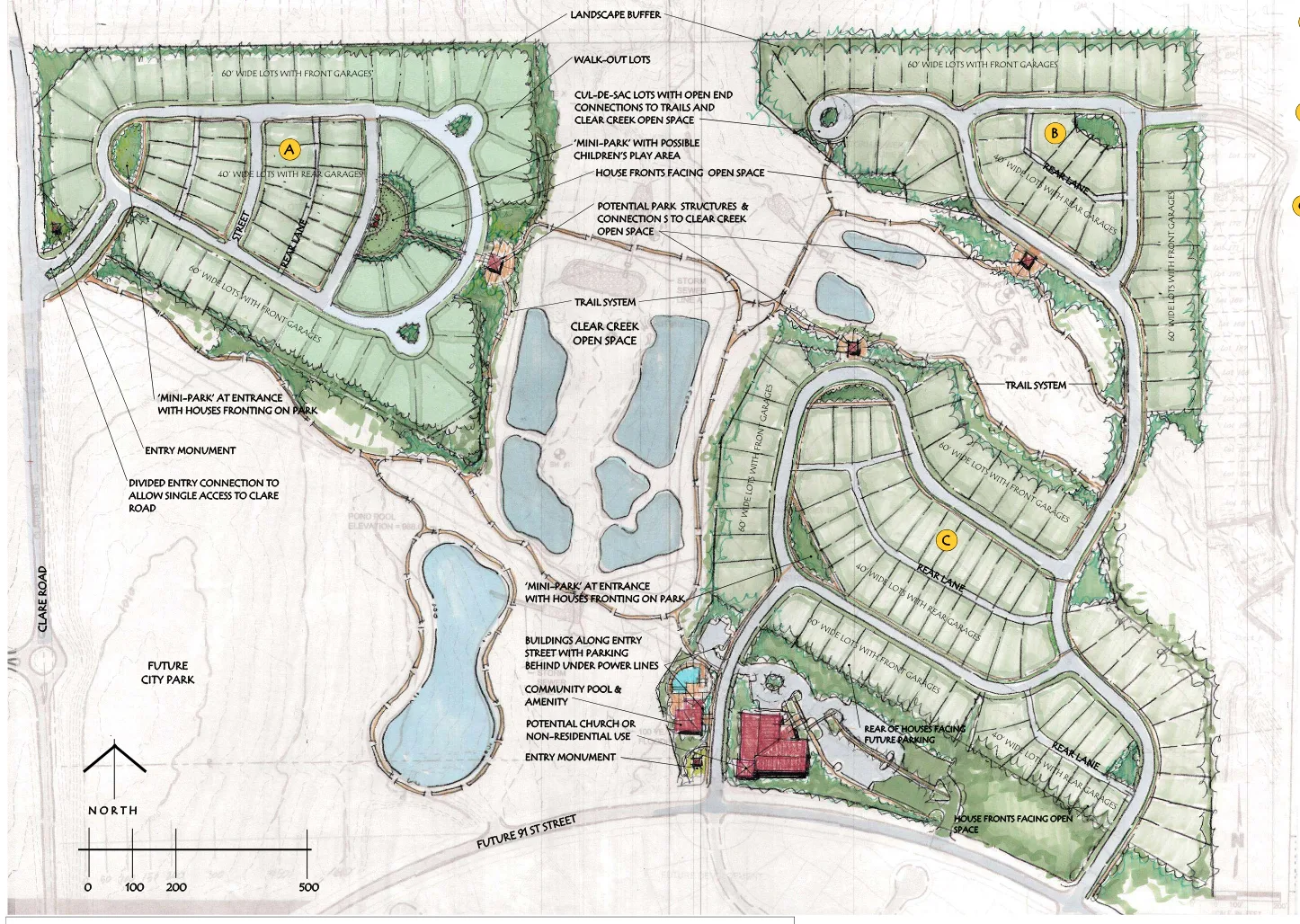
Lenexa started buying up property in that area — currently zoned for agricultural uses — in the late 1990s and eventually acquired around 130 acres by 2006. The plan at the time was to convert it all into a regional lake, like what exists today at Black Hoof Lake.
Later, around 2015, Lenexa moved away from those plans and turned several acres into wetlands with a trail system.
At the same time, Lenexa took steps to decommission three chunks of the property as dedicated future parkland under state law, with the intent of seeing it developed with residential uses in mind.
That plan leaves about 40 acres for future development as Centennial Park, which remains part of the city’s long-term park goals. (In the capital improvement plan list maintained by Lenexa, design on the new park is scheduled to commence in 2027.)
In 2018, Lenexa tried to attract attention from developers to purchase and build on some of that acreage, but nothing serious came of those efforts.
Now, the Habitat proposal would build out one of the three tracts separate from the wetlands and future Centennial Park, leaving additional pods of land that could be developed down the road.
Community members split on Habitat project
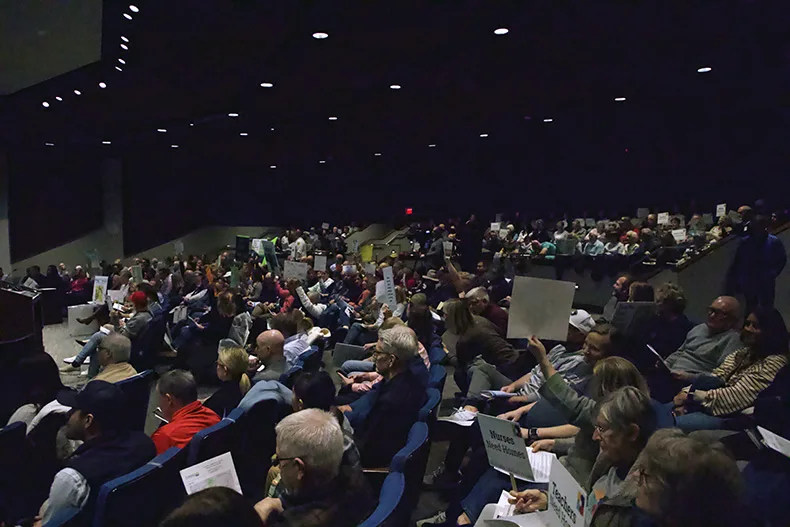
During the planning commission meeting on Monday, more than 50 individuals spoke during the public comment time, both for and against the Habitat neighborhood at Clear Creek.
The speakers who favored the project slightly outnumbered those who opposed it. Several speakers indicated their affiliation with the Good Faith Network — an interfaith group that has organized around housing issues in Johnson County.
“We are providing much-needed housing and socioeconomic diversity that is necessary to propel our community’s growth,” said Evangelos Brisimitzakis, who lives south of the proposed development. “Many of the points being made tonight will and have amounted to nothing more than ‘not in my backyard.’ Well, I support the establishment of this neighborhood in my backyard.”
Neighbors who opposed the Clear Creek Habitat project touched on a variety of concerns, including traffic, the potential impact of their property value and the impact it would have on wildlife. The most common complaint was that they didn’t feel like the project would fit in with the existing neighborhoods.
“I just don’t think it’s a good fit,” John Lanham said.
Many also fretted that the development would take away land they believe they were promised as parkland, though no currently dedicated parkland will be developed under this project. That said, part of an existing trail will need to be realigned to accommodate access to the Clear Creek Habitat project.
Kevin Hobbs, who lives near the Habitat project, said he was initially opposed to the project when he first heard about it from a neighbor, who billed it as “an environmental disaster.” But, he said, after he did some of his own research and reading, he changed his mind.
“I am actually all for the Habitat for Humanity project; it’s going to be a great thing for this neighborhood,” he said. “Protecting the environment is critical, but building quality and affordable housing for our neighbors is crucial.”
In addition to the dozens of speakers for and against the Clear Creek project, city officials received hundreds of pages of correspondence from the public on the matter. Plus, some opponents have taken their concerns digital with a Facebook group and a Change.org petition that has garnered 1,700 signatures.
Next steps on the Lenexa Habitat project:
- Now, the application goes to the Lenexa City Council for consideration, tentatively scheduled for Feb. 17.
- At a later date, the city council will also need to vote on a negotiated contract to formally sell the land in question to Habitat for Humanity of Kansas City, which is contingent on the approval of the rezoning.
Keep reading: She always wanted to own a home in JoCo, but couldn’t afford it. Now she can thanks to new Olathe project.