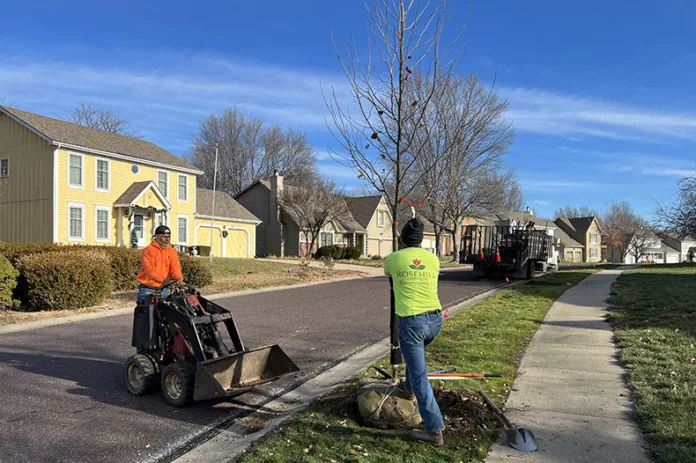
Overland Park officials worry that thousands of saplings planted to replace ash trees along city streets in the past couple of years might not be getting the care they need.
That could threaten the long-term health and longevity of the tree canopy, City Forester Bailey Patterson warns.
So far, the city has planted about 3,000 trees to take the place of the removed ash street trees, and another 630 will be planted by the end of this calendar year, all paid for with federal COVID-19 relief funds totaling nearly $1.6 million.
Overland Park has also budgeted about $700,000 in regular city capital and maintenance project funds to replant another roughly 1,500 trees next spring.
Why did Overland Park plant these trees in the first place?
In the past few years, Overland Park has proactively removed ash trees that lined city streets because the emerald ash borer, a type of invasive beetle species native to Asia that’s been documented locally, decimates ash tree populations.
At one point, Overland Park had close to 10,000 ash trees in its street canopy, and in parts of the city, entire neighborhoods were full of ash street trees.
Those trees would have certainly been wiped out in the next several years now that the emerald ash borer has been found in the area. Some trees that had received prophylaxis were able to stay standing, but the vast majority have been or will be removed.
Councilmember Melissa Cheatham said she knows people were upset about seeing their trees removed, and many people, herself included, view the trees as a “community asset.”
Nonetheless, Councilmember Logan Heley, who serves as an ex officio member of Overland Park’s Legacy of Greenery Committee, said it’s good the city was proactive about removing the ash trees instead of waiting until they were all dead.
It allowed the city to use some one-time federal dollars instead of footing the entire bill itself, Heley said, and also it set an example for other communities on how to improve a tree canopy with a wider variety of tree species.
Because of that, Jim Dunn, former chair and current member of the Legacy of Greenery Committee, said he anticipates Overland Park will likely have “the most varied tree canopy in the metropolitan area.”
“Having that variance is going to make a real difference in the next 15 or 20 years,” he said, adding that it will protect the city’s tree canopy from more pest-related “devastation” because there will be more species diversity.
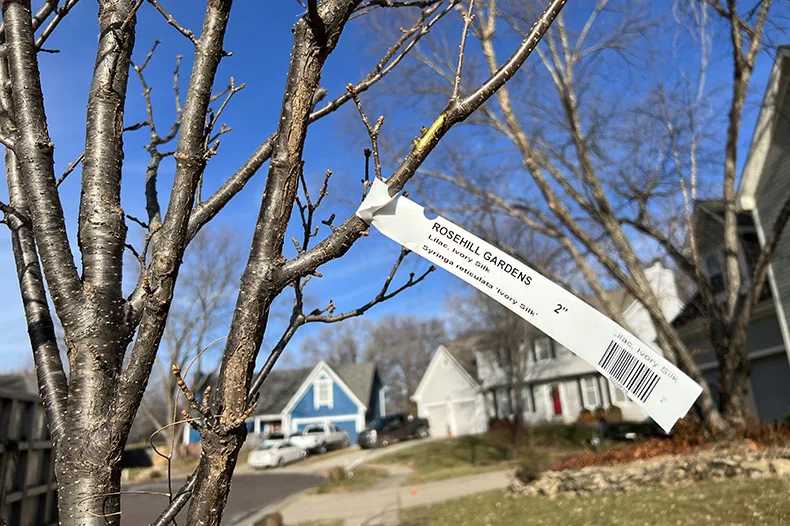
Saplings need a lot of water, mulch and regular pruning
In Overland Park, care for street trees — whether they’re young or mature — is the responsibility of the adjacent homeowner, though they’re in a city right-of-way.
Patterson said saplings need:
- Plenty of water all year round, including in the winter.
- Mulch to its drip line with annual reapplication, which reduces resource competition from grass and can protect the tree from lawn care activities that might damage its trunk.
- A proper pruning schedule based on the tree species (some trees need annual pruning, and that’s best done in the winter).
If all that doesn’t happen when they’re young, then the tree may die prematurely or be unhealthy when it does mature.
“A healthy tree at a young age becomes a healthier tree in its more mature age,” she said. “Just those initial care elements to a tree really can set it up for the better for the rest of its life.”
Patterson said the city has put out door hangers with all this information on them in neighborhoods that had ash trees removed and are now getting saplings planted in their place. The city also included information about tree care in the latest issue of its Overview magazine.
As trees age, they’ll need less water and less frequent pruning (maybe every five to seven years), but are likely to require a wider mulch radius as their drip line expands with their canopy.
Improper care now could negatively affect the tree canopy long-term
It’s not just the health of the individual trees that Overland Park officials worry about — though that is a concern given the large amount of time and resources invested in replacing doomed ash trees with other varieties of trees.
In the end, the city is worried about the quality of the wider tree canopy if this large number of saplings don’t reach maturity or are unhealthy when they do.
“If somehow none of those trees get proper care [while they’re young],” Patterson said, “it can become kind of a massive problem.”
For instance, if all of these trees aren’t pruned and cared for properly at this stage, then they could have structural defects and are unlikely to develop a strong branching structure. Those trees could be more susceptible to breakage or outright failure. In that case, they would be more likely to cause property damage or injuries due to fallen limbs.
“We’re hoping that this will be our future canopy in 30, 40, 50 years,” Patterson said. “But if every one of these trees doesn’t receive a good amount of care, then there’s really not going to be that future canopy.”
“We’re never going to get those mature trees back,” she added. “They’re all going to fail before it reaches that point.”
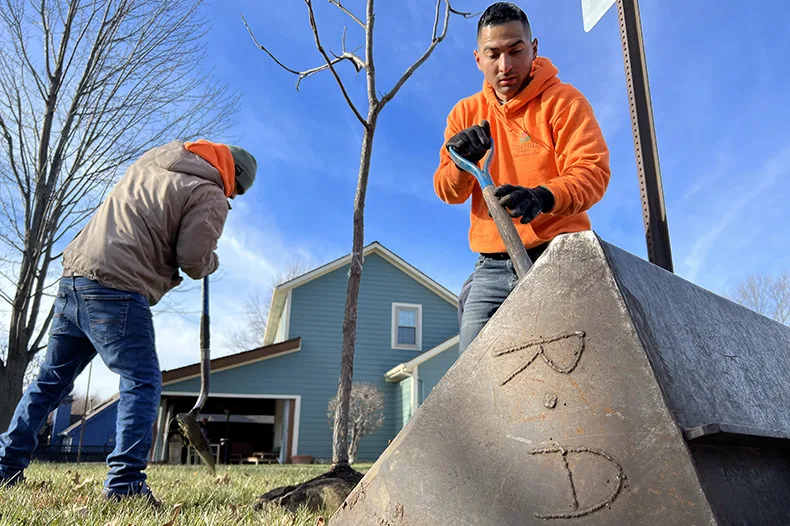
Dunn, from the Legacy of Greenery Committee, said having a healthy, mature tree canopy offers a lot of benefits — like aesthetics, shade, clean air, a reduction in the urban heat island effect and a reduction in stormwater runoff.
The canopy is also a major part of the city’s identity as a park-like community, he said — so deeply ingrained Overland Park recently approved a new city flag featuring its signature red oak tree.
“Park is in our name,” Dunn said. “We like to say, ‘Let’s keep the park in Overland Park.’ … What would the city look like if it didn’t have the trees?”
That’s something Councilmember Cheatham echoed.
“Overland Park loves its trees,” she said. “A big part of our community identity is that we are a green park-like community.”
Urban Forest Plan might have suggestions on street trees
Looking toward the future, the long-awaited Urban Forest Plan might weigh in on the street tree care issue.
That strategic plan, still in the drafting phase, is expected to come to the Overland Park City Council for adoption sometime in the next few months alongside a new parks and recreation master plan called Playbook OP.
“I’m hoping that that is going to provide us with some additional guidance about how we take care of our trees, how we increase our tree canopy and how we maintain it and protect it,” Cheatham said.
She also said she’s interested in revisiting whether street tree care should continue to fall to adjacent homeowners, something she expects the Urban Forest Plan could broach as well.
Heley also said he expects the pending Urban Forest Plan to offer recommendations about improving the care framework for street trees that he views as “essential city infrastructure.”
“I think treating trees as assets for our community and as city infrastructure is really important,” he said. “I think to do that, we need to have some creative processes and programs.”
He suggests a cost-sharing program of some kind, and he wants to see the city increase its internal capacity to care for its trees like it does any other public infrastructure.
Cheatham also wondered if there were ways to create more of a shared responsibility instead of putting it all on the homeowners, suggesting a volunteer tree steward program in neighborhoods.
“I think there’s probably some room for creativity,” she said. “This is a community that really cares about our trees and would probably be very open to those solutions.”
Keep reading: When Overland Park streets are rebuilt, older trees often have to go. Could more be saved?