Earlier this summer, the Post asked our readers what issues you wanted to hear candidates in federal, state and local races address leading up to the Nov. 3 election.
Based on that feedback, we developed a five-item questionnaire centering the issues most important to residents across Johnson County.
Each day this week, we’ll publish the candidates’ responses to one question. So far, we’ve published responses on property taxes and state tax policy, public schools, special education and vouchers, and housing affordability.
Today, we’re publishing candidates’ responses to the following question:
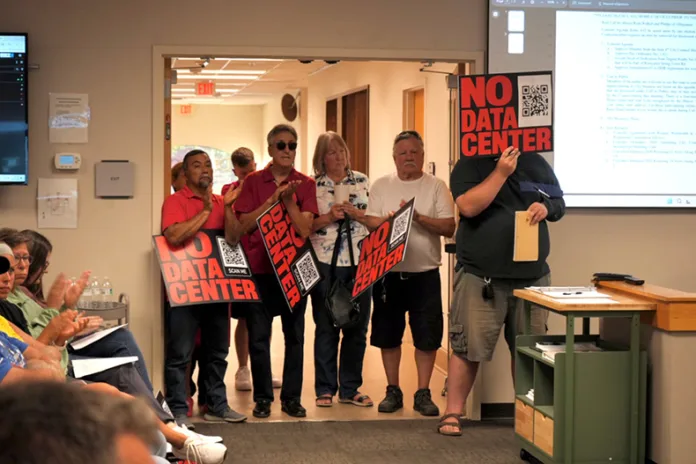
More than a dozen readers asked to hear candidates’ stances on large data centers proposed across Johnson County. Readers are concerned about who will pay for the water and electricity these facilities use. Currently, Kansas offers large data center operators sales tax exemptions in exchange for commitments on water conservation and energy grid preservation. Some readers, though, are calling for a statewide moratorium on data centers until projects are more thoroughly vetted. Do you support a data center moratorium? Why or why not?
Below are the answers the Post received from candidates on the issue:
District 5
Henry Johns (Democratic)
 Data Centers & AI are part of our future like it or not. Our Legislature needs to establish guidelines to protect Kansas communities and our resources, that will allow the construction of Data Centers on every scale. There can be economic benefit to communities, but it could also put a strain on resources and quality of life. With proper guard rails, people will be able to make the best decisions for their communities. The construction of these businesses like any other, should be left up to local government and the people they serve.
Courtney Sappington (Republican, incumbent)
Did not provide the Post with a response.
District 8
Megan Phillips (Democratic)
 I understand the desire for a moratorium. Data centers and AI are growing faster than we can adequately understand or legislate them, and this makes people worried. The environmental and economic impacts are very real, and we don’t want to promise more than we can deliver. I would like proposed data centers to come up with plans of time on how they play to pay for their own utility bills and water usage without straining natural resources or passing the bill along to consumers. I’m in favor of plans that require data centers to pre-pay for their power reserves, and I would love to see a data center get developed alongside renewal energy developments like wind and solar panels so they could potentially be energy neutral. I would also want to see an independent environmental impact study in any spot where a data center wants to develop to make sure that they won’t disrupt the natural ecosystem or generate pollution that the local community will see the impacts from. I’m also aware that the technology exists to create water usage in a “closed loop” which helps to sustain this precious resource. My goal would be to see this built into any new proposal that comes to the legislature’s doorstep. And lastly, I don’t want to see tax breaks for data centers either. They have enough money that they can pay their own tax bills.
Chris Croft (Republican, incumbent)
 I support thoughtful guardrails for data center development, not a blanket ban that would prevent new investment and put Johnson County and the state of Kansas at a competitive disadvantage. The decision to host a data center is ultimately a local one and each community should have the ability to determine whether a particular development is the right fit for its residents.
Johnson County has a long history of responsibly embracing emerging technology and innovation and that is something we should continue. At the same time, the state has an important role in establishing clear safeguards. The Legislature has already taken steps to protect ratepayers, preserve natural resources such as water, and address national security concerns. As this technology and its demands continue to evolve, we should continue evaluating and adjusting those safeguards when necessary.
With responsible statewide guardrails in place, local communities should be empowered to weigh the benefits and impacts of each proposed development and decide for themselves whether a data center is the right fit for their community.
District 14
Sherry Giebler (Democratic)
 I do not support a blanket statewide moratorium on data centers; a pause may be needed as we are seeking out information from stakeholders regarding changes to the laws that would address community concerns. I believe in local control.
I’m not anti-progress, and data centers can bring economic growth to Kansas, but we need strong statewide standards, transparency, and local control to protect our water, environment, and communities. I will fight to ensure corporations pay their fair share and that residential customers aren’t stuck footing the bill for higher utility costs.
I believe data centers should not automatically qualify for state incentives. These are major investments that can bring jobs and economic growth, but we have to ask whether the benefits outweigh the costs to Kansas taxpayers and communities.
I want Kansas to attract responsible investment, but economic development must benefit our communities and working families, not simply the corporations receiving the incentives. Public dollars should deliver a public benefit.
Charlotte Esau (Republican, incumbent)
 Whether a data center is the right fit for a community should ultimately be a local decision, with local citizens having a meaningful voice.
The state’s role is to establish strong guardrails that protect ratepayers and natural resources. Data centers should pay their fair share of energy costs rather than shifting those costs to Kansas families and businesses.
We also need safeguards to ensure these facilities don’t jeopardize local water supplies or place an unreasonable burden on other resources.
I don’t believe taxpayers should be asked to subsidize these developments.
Bottom line: set strong statewide protections for taxpayers, ratepayers, and resources, then allow local communities to decide what works for them.
My record shows that I evaluate economic incentives independently. I’ve been willing to stand up and vote no when I don’t believe an incentive is a good deal for Kansas taxpayers.
District 15
Allison Hougland (Democratic)
 I do not support a statewide moratorium on data centers. I believe local communities should have a voice in deciding what gets built in their neighborhoods, while the state establishes thorough safeguards to protect our residents and natural resources.
Data centers may bring economic investment, but that investment should not come at the expense of Kansas families. The public should not be left paying higher electricity bills or footing the bill for new power generation and infrastructure needed to serve these facilities. All costs associated with meeting a data center’s electricity and water needs should be borne by the company building it, not shifted to taxpayers or other utility customers.
The state must establish strong, enforceable requirements for water conservation, energy use, infrastructure costs, and protection of our utility customers. Companies receiving tax incentives should be held accountable for meeting their commitments, and the public deserves transparency about the long-term costs and benefits of these projects.
We can welcome responsible economic development without giving corporations a blank check. Local communities should retain a meaningful role in these decisions, and Kansas must ensure that residents are protected before projects move forward.
Lauren Bohi (Republican, incumbent)
Did not provide the Post with a response.
District 16
Linda Featherston (Democratic, incumbent)
 I support a limited moratorium on hyper scale data centers until regulations that protect our water and control the impact on energy prices can be devised. It is not unreasonable to tap the breaks and address concerns held by a majority of Kansans. My own water utility had a six month moratorium to allow time to create guidelines and regulations.
I voted no on SB 98 which gives certain data centers a 20 year sales tax break. As a member of the Water Committee, I could not in good faith vote for this until concerns about water usage were resolved. While I do respect local entities’ ability to create regulations that fit their community, the law says that water belongs to the people of Kansas. These are the people to whom I answer.
I’ve recently had the opportunity to tour both a large and a small scale data center. At the larger center, we were told that it would be untenable for all data centers to use a closed loop cooling system because it would drive up energy costs. At the smaller data center, we were told that modern data centers use a closed loop system to lessen water usage. Herein lies a conflict that needs to be resolved.
Besides the water and electricity cost concerns, I can’t ignore the fact that every dollar given to big business is money that can’t be spent on public schools or to give my constituents tax relief.
District 17
Jo Ella Hoye (Democratic, incumbent)
 My record shows support for rules and regulations. Industry provides jobs and bolsters the Kansas economy. Corporations must operate in a way that safeguards human health and the environment. Our region is a major engineering hub fit to address energy challenges and protect air and water resources by leveraging technologies and implementing industry-specific best practices. A statewide moratorium on data centers is not necessary to accomplish this. Local governments should be allowed to work through the planning process to determine whether developments meet the Golden Criteria and fit the character of their communities.
Bills don’t move quickly. I would rather invest time on a bill to ensure that data centers have environmental impact studies, including sustainable water usage. Kansas already has permitting requirements for stormwater and air quality, and local governments have additional requirements. Data centers should be connected to power at startup to minimize generator usage, and we need to strengthen protections for utility ratepayers.
These issues are not unique to data centers. I support the cannabis industry coming to Kansas. This would have similar water and energy impacts, whereas data centers are essential infrastructure for hospitals, schools, banks, pharmacies, hotels; they assist the daily operations of modern life. The skepticism seems to surround AI, and I support robust guardrails for AI. I am serving on the 2026 Special Committee on Protecting Children from Online Harm, and this will provide an opportunity to bring solutions for concerns about misinformation, deepfakes, cybersecurity threats, national security, data privacy, and mass surveillance.
Jim Eschrich (Republican)
 Local communities should decide whether a data center belongs there; it’s ultimately their call. The Kansas Legislature still has a job to do: set clear environmental standards any data center must meet if it wants to operate in the state. The state should also require that the company causing a grid upgrade and/or increased electricity use pay for them. I don’t support a blanket 20-year, 100% sales-tax exemption. If the state does feel compelled to offer a tax break of some sort, it should get something for it in return like insisting a public referendum be held to properly gauge community wide support (or the lack thereof).
District 18
Cindy Neighbor (Democratic, incumbent)
 Data Centers have become a hot topic during this election cycle. They are not for every city or county. That is really determined at the local level because of availability of land, power and water. I know Shawnee does not have land available for a data center.
Many other cities and counties have the available resources, but the decision to locate a data center in their area should really be made by the local authority by working with the local citizens. There are communities that desire the data centers for economic growth, and the Legislature should not take that option away from the local entities. If moratoriums are put in place, the decision should be made locally, not by the Legislature.
Robert Whitman (Republican)
 I do not support a moratorium on data centers. It is a short-sighted policy. Make a law governing data centers follow certain guidelines.
Units of government may not condemn land or use eminent domain to build a data center. Water and electricity rates must not be raised for any ratepayers as a result of building a data center. Improved technology will assist keeping utility rates down. Noise from data centers must NOT affect any residents, including seemingly inaudible noise. Ideally, data centers should be located in sparsely populated areas.
District 19
Stephanie Sawyer Clayton (Democratic, incumbent)
 I voted in favor of SB 98, which did apply strong guard rails to data center development in Kansas, including controls that keep the costs of electricity down for residential consumers, requirements that a very limited amount of water be used for coolant in a closed-loop system, and that local governments retain the right to deny construction. My support of this was primarily due to the potential of building and trade construction jobs that this would create. I have heavy concerns regarding data centers being constructed in Kansas, because I strongly oppose the use of generative A.I., and I also think that data centers are vulnerable military targets, which creates a danger to those who are living nearby. The Kansas legislature needs to revisit our policy regarding data centers and impose strong guardrails, and to set a good example by no longer using generative AI, unless the individual using it needs it due to a physical, intellectual or developmental disability. Reducing the use of this unnecessary and dangerous technology will negate the need for hyperscale data centers because the free market will no longer have a need for it.
Mark Hermes (Republican)
 Data centers are a concern for Kansas citizens. Senate Bill SB98 is enacted to strategically position Kansas as a competitive destination for data centers and technological industries. Kansas offers large data centers, investing over 250 million and employing 20 Kansas citizens, a 20 year sales tax exemption. This shifts the long-term and infrastructure tax burden to Kansas taxpayers.
One can consider that data centers may require large amounts of electrical and water resources. The location of data centers is crucial to determining the impact to local power grids and water management and long-term water security. One could postulate that data centers would provide or secure the necessary electric capacity, and defined managed maximum water usage in disclosed proposals. Non-disclosure agreements are not comforting to Kansas citizens and taxpayers offering tax exemptions. Proponents argue that energy consumption and electrical grids are not concerning. And, that water consumption management security is not an issue due to recycled closed loop usage.
Economic development for Kansas is necessary and beneficial for long term state planning. The gift of tax exemptions that benefit one industry may not be optimum for achieving economic development in Kansas. One could support other industries for Eco Devo in our state. Promoting opportunities in the medical industry has been a preference to some citizens. Agriculture industry could be developed and expanded in areas. Aircraft aerospace and entrepreneur businesses could be helped with legislation and tax exemption gifts.
A statewide moratorium on data centers would not be preferred. Ideally, the local governments would govern and regulate their jurisdiction and dominions. Senate Bill 98 is more in the benefit of data centers than for Kansas taxpayers.
District 20
Mari-Lynn Poskin (Democratic, incumbent)
Did not provide the Post with a response.
District 21
Jerry Stogsdill (Democratic, incumbent)
Did not provide the Post with a response.
District 22
Reed Krewson (Democratic)
 I don’t support a one size fits all moratorium from Topeka, because I trust our communities to make these decisions for themselves. Several Kansas counties have already paused new projects, and the state should protect every community’s right to do that or to say no entirely. What the state should do is set strong protections that apply everywhere. Regulators have started requiring data centers to pay for the power infrastructure they need, and I’d make sure none of those costs end up on household or small business utility bills. Data centers should also disclose their water use up front. Depending on how a facility is cooled, it can use almost no water or millions of gallons a day, and communities deserve to know which one they’re getting. And we should take a hard look at the sales tax exemptions we’re offering and make sure Kansans get real value in return. This isn’t about saying no to investment. It’s about making sure growth happens on terms that protect our natural resources and our ratepayers.
District 23
Susan Ruiz (Democratic, incumbent)
 Yes, I support a data center moratorium. I have no idea how many data centers are operating in Johnson County. There is a data center located within my district. I attended the grand opening and toured the facility. I was impressed with the operation of the data center. I had no idea at that time about the controversies associated with the centers. I didn’t know enough to know what to ask, like the impact on the environment and utilities. I remember asking about the staff levels and noticing very, very few staff. Again, I didn’t know enough to ask about the construction; how many construction workers were employed and were they union and/or local workers?
I am concerned that I don’t know enough about Data Centers. Meanwhile, there are Corporations attempting to build them across the state. Seriously, does anyone know enough to make these decisions? I support local control even when it comes to these data centers. I would like to see the state have expert knowledge; know what to ask; have a say so regarding the use of local union workers; ensure that the Centers employ local workers to maintain the buildings on an ongoing basis. The state could operate as a consultant or a safety net for cities building data center(s).
District 24
Scott Speicker (Republican)
 Rather than a blanket statewide moratorium, I support an immediate pause on new state sales tax exemptions for data centers until strict grid, water, and taxpayer protection benchmarks are enforced.
Data centers consume immense amounts of electricity and water. Kansas taxpayers should never foot the bill or subsidize utility upgrades for private tech giants. While state incentives require resource commitments, taxpayers and rate-payers deserve full transparency to ensure these facilities carry their own weight.
Using a data-driven approach, the Legislature must establish three non-negotiable standards before granting approval or tax abatements:
- Grid and Rate Payer Protection: Data center operators must secure direct power purchase agreements and pay for necessary electrical grid infrastructure upgrades upfront so residential electric bills do not spike.
- Water Safeguards: Require closed-loop cooling and water recycling technology to protect local aquifers and municipal water supplies from depletion.
- Strict Enforcement & Clawbacks: If a facility fails to meet water conservation metrics or job targets, tax exemptions should be immediately revoked.
By pausing corporate handouts until robust, enforceable standards are enacted, Topeka can protect Johnson County’s resources and taxpayers while insisting on accountable growth.
Jarrod Ousley (Democratic, incumbent)
 I support Gubernatorial Candidate Cindy Holscher, and her calls for a pause so that the state can make sure there are guardrails in place to protect local communities who may or may not have the resources and information available to negotiate and contract on an even playing field with multinational conglomerates like Facebook and Google.
Kansans are concerned that deals struck with these types of industries often wind up larger or more utility intense than initially proposed. The smaller data centers already in operation are not the same as the massive centers being proposed in Tonganoxie and elsewhere within the state. I support opportunities to invest in Kansas, but we have to make sure there are regulations in place that will prevent unanticipated costs and negative impacts from being born by Kansans, instead of the outside entities that want to build the massive centers here.
District 25
Rui Xu (Democratic, incumbent)
 This is one of those cases where nuance matters a lot, which is difficult on the hot button topics of the day. Obviously, WHERE data centers are sited matters; what residences are in the area? Is there plenty of water nearby? How much infrastructure needs to be built out to serve the data center?
What kind of data center also matters. Are these for ‘regular’ data storage purposes, or are these hyperscalers serving the next generation of technology that have increased needs?
I support broad regulations at the state or federal level, but it’s really local cities and county who 1) are the ones answering the major questions posed above, and 2) who stand to benefit the most (in terms of property taxes paid; this would lower the property tax burden on the rest of the taxing jurisdiction) from the data centers.
District 26
Laura Johnson (Democratic)
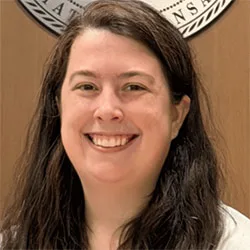 I am open to a year data center moratorium if that is what is required to ensure we move forward with proactive guardrails on this industry. What is more important, from my perspective, is supporting our local governments as most data center decisions will be made on the city and county level. There are already data centers in Kansas which operate with relatively low impact. We know this is possible, but the large demand created on the national level by AI has led to exponential growth. The speed of these projects can make communities feel left out of the conversation, a feeling only increased by layers of NDAs. Kansans want to know who is coming into their community, the impact they will have, and if they will actually give back to the area in a meaningful way. How can we ensure that localities that want data centers can enter into contracts that benefit the community and have enforceable protections against abuse? The State can not tell a county how it should grow, but we should provide a baseline quality and support for everyone. If we can provide the needed regulations and protections with a moratorium and the people support it, then we can proceed that way. But if my constituents are calling for a moratorium, then I believe we should deliver for them.
Chip VanHouden (Republican, incumbent)
Did not provide the Post with a response.
District 27
Sara Kiewiet (Democratic)
 I do not support a moratorium. Technology and artificial intelligence are increasingly important to our economy. Avoiding data centers altogether is neither practical, nor in Kansas’ long-term economic interest. If planned responsibly, data centers can bring jobs, expand the local tax base, and create opportunities for surrounding businesses and communities.
That does not mean Kansas should offer incentives without strong safeguards. Incentives should come with clear expectations for responsible water use, energy efficiency, reliable grid capacity, and long-term community benefits. Companies receiving public incentives should demonstrate that they are good partners and the benefits outweigh the costs.
I also support meaningful clawback provisions when companies fail to meet commitments tied to their incentives. Those clawbacks need to be more than words on paper. Incentive agreements should require appropriate financial security – such as a bond, letter of credit, or other guarantee – so Kansas taxpayers can actually recover funds if a company fails to deliver. Agreements should also prevent companies from avoiding their obligations by restructuring, transferring the project, or moving it into another LLC.
I support the Kansas Corporation Commission’s Large Load Power Service (LLPS) tariff. Very large electricity users should bear the costs associated with serving their demand so residential and small-business ratepayers are not left subsidizing major infrastructure investments.
The question is not whether Kansas should allow data centers, but how we manage their growth. We should welcome responsible investment while protecting our water resources, maintaining a reliable electric grid, respecting local communities, and protecting Kansas taxpayers.
Sean Tarwater (Republican, incumbent)
Did not provide the Post with a response.
District 28
Bryan Mouber (Democratic)
 I do not support a data center moratorium. I was not present when the law was negotiated and passed in 2025. I don’t know all of the reasons behind approving, but now that this is law, we need to monitor and enforce the provisions that kept the final decision to approve data centers with local cities and counties.
The law provided limited sales tax exemption only with no income or property tax exemptions, so, it does not erode our property tax base. It limits water use, requiring recycling and recirculating of water, and any water discharged must be used for either irrigation or water conservation, or another purpose if the local government agrees to it. Importantly, local approval of the data center is required, and the local government may take into account the environmental impact of the facility. It also requires a new state agency to also approve plans.
We need to see if this works for Kansas, and we have a policy in place that allows Johnson County, Leawood, and Overland Park to approve or refuse to approve data centers with no impact to its property tax base and no mandate from Kansas to build. If we don’t want a data center near us, we need to enact zoning, noise, water use, and other ordinances at the city and county level to prevent it.
Alex Bergman (Republican)
 I do not support a statewide moratorium on data centers. I believe these decisions are best made at the local level, with meaningful community input and appropriate safeguards in place. First and foremost, we must ensure that new developments do not drive up utility rates for existing homeowners and businesses. We also need safeguards to prevent these projects from placing undue strain on our water and energy resources, along with protections to ensure these critical facilities are not owned or controlled by foreign adversaries such as China. The state’s role should be to establish clear guardrails that protect ratepayers, taxpayers, and our national security while allowing local communities to determine whether a proposed development is the right fit for their area.
District 29
Heather Meyer (Democratic, incumbent)
Did not provide the Post with a response.
District 30
Laura Williams (Republican, incumbent)
 Kansans are watching data centers reshape our landscape, and they deserve a voice in that process. I do not support a moratorium on these projects, because blocking development outright takes away local control rather than strengthening it. What our communities need are clear guardrails. That means protecting our natural resources, particularly water, and ensuring that the energy demands of these facilities do not drive up utility rates for residential ratepayers who had no part in creating that demand. Large users should bear the cost of the infrastructure they require, not pass it on to families already struggling with higher utility bills. Economic development generates substantial property tax revenue, and if managed responsibly, that revenue can ease the burden on homeowners and renters across their community. Property tax relief and smart growth are not competing priorities. They can work together. I will keep pushing for policies that let Lenexa and Olathe grow on its own terms and continue to put guardrails in place to protect our natural resources.
Amelia Wiederaenders (Democratic)
 Date Centers are a complicated issue and I think a statewide moratorium is too simple. Currently Kansas has data centers around and my understanding after talking with the Tri-State Union about this issue is that they use less water than the average golf course, pay taxes that help fund local schools and the building and maintenance of date centers are a source of well paying jobs. That being said I understand where the fear comes from when one is told that data centers are using too much water and are heating the area around them by 10 degrees, I understand where the concern comes from. However, living in the modern world, we need data centers to store our digital information. I trust that local communities know what is best for their communities as they understand their environmental and financial situations best.
District 39
Angela Stiens (Republican, incumbent)
 I do not support a blanket statewide moratorium at this time, but I strongly support giving local communities the authority to determine whether large data centers are appropriate for their neighborhoods.
In 2025, we passed bipartisan legislation establishing robust protections and requirements for large data centers seeking tax incentives, including water conservation, protections for our energy grid, and national security reviews. I believe that was an important first step, but as we have learned more about these facilities and their potential impact on our communities, it is clear that we must do more.
Kansas families and small businesses should never be forced to subsidize the enormous electricity and water demands of hyperscale data centers. These facilities should be responsible for the infrastructure costs associated with their operations, and those protections should apply whether or not they receive tax incentives.
I am particularly concerned about hyperscale data centers proposed near residential neighborhoods. Residents deserve a meaningful voice in decisions that affect their property values, quality of life, and community resources. I support strengthening local zoning authority and protecting communities from costly litigation when they exercise their right to reject inappropriate developments.
I believe in economic development, but not at any cost. We must protect our neighborhoods, preserve our natural resources, and ensure that the people who live and work in Kansas come first.
Zach Maier (Democratic)
 No moratorium. No tax breaks. Let the people who would be living next to a data center decide if they want one or not.
I’m the only candidate in this race with an engineering degree, and I may very well be the only soon-to-be-elected computer engineer in the entirety of the state. If you want a leader who can reason about data centers beyond sensationalist rhetoric, I’m the guy to make that happen.
Data centers are like power plants. Modern society needs them. My kids’ photos and your kids’ photos are backed up in one. Google Maps uses them to get you around. But, just like power plants, nobody wants to live next to a loud, polluting, bad one, and nobody wants to give them a free pass. A good data center cools itself in a closed loop, pays for its own power, hires local labor to build and maintain it, and follows the local regulations and approvals process. A bad one drains the water table, puts its grid costs on your electric bill, and gets a 20-year tax holiday.
I will vote to end the tax break my opponent voted for. I will help write and pass guardrails that data centers pay their own grid costs and meet strict environmental impact rules. It’s your decision if you want to live next to a data center or not. We need guardrails, we need sane tax policy, but most importantly, Topeka needs to let local communities decide.
District 43
Kristen Schultz (Democratic)
 I do not support a statewide moratorium because I believe local communities should have a voice in decisions that affect their future. What works for one community may not work for another, and local leaders should have the authority to respond to the concerns and priorities of their residents.
That does not mean I support unchecked data center development. There are legitimate questions about environmental impacts, water and energy consumption, infrastructure capacity, and who ultimately pays for the costs. Before Kansas commits public resources or offers substantial tax incentives, we need independent, credible research to understand the long-term consequences of these projects and establish appropriate safeguards.
I question why the Legislature committed to a 20-year sales and use tax exemption for data center developers before these fundamental questions had been adequately addressed. My opponent voted for that exemption. I would not support offering such incentives until we can demonstrate a meaningful public benefit, understand the potential impacts on our natural resources and infrastructure, and ensure taxpayers are protected from shouldering the costs.
We saw this issue firsthand in Gardner. After tax incentives were removed from consideration, the data center developers withdrew their application. That raises a fair question: if a project depends on substantial taxpayer-funded incentives to move forward, are the benefits to the community sufficient to justify that investment?
Kansas can pursue economic development while protecting its communities and natural resources. But we should do so transparently, with reliable information, enforceable protections, and accountability for the long-term costs. Local communities deserve the information and authority they need to make informed decisions about their own futures.
Bill Sutton (Republican, incumbent)
Did not provide the Post with a response.
District 48
Dan Osman (Democratic, incumbent)
 I would support a moratorium on the use of state tax incentives for data centers during which we work out clearer guidelines and establish a comprehensive community benefit agreement. I would want that review to more thoroughly address water availability, electricity demand, effects on utility rates for residents and small businesses, environmental impacts, and the costs and benefits to taxpayers. All this would still allow for private funding options and for municipalities to make their own determinations in their communities on local incentive options.
A.I. is so new and so much money from every sector is being thrown at it. What happens ten years down the line if something different emerges as the way to go? What happens if a company determines that there isn’t a proper return on investment and abandons the project? We need to prepare for these things with proper guardrails and stronger claw-back provisions in the redevelopment agreements.
Data centers can bring investment and economic opportunities to Kansas, but those benefits should not come at the expense of our communities or leave taxpayers footing the bill. Kansas currently offers tax incentives to attract these facilities, and we need to make sure those incentives deliver a genuine public benefit. My goal is not to rule out data centers altogether, but to ensure that development happens responsibly, with strong protections for Kansans. If you have questions or ever need to reach me, e-mail me anytime at [email protected]
District 49
Nikki McDonald (Democratic, incumbent)
 In my district, this topic has not come up often at the doors because my district is compact & has no room for a hyperscale facility.
SB 98 gives hyperscale data centers a sales tax exemption on the materials needed to build their facilities, but it does not give an exemption to property taxes. One of these facilities would dramatically increase a community’s local tax base, which could lower or even eliminate property tax bills for residents.
Unlike large load manufacturers, data centers must pay sales tax on the energy they use, and they must agree ahead of time on a minimum amount of energy they plan to use. This would be guaranteed sales tax revenue that would go into the state’s General Fund. I have been actively looking for increased sources of revenue for the state & this would be a significant amount of guaranteed/stable revenue each year.
I am not opposed to discussing additional regulations, however, this bill included many safeguards to ensure that consumer rates will not rise because of data center development. These measures were necessary to protect residential customers. In addition, the Kansas Legislature has put in place regulations, checks and balances on development and utilization of our water resources, with the Kansas Water Plan in mind. Companies that plan to build these facilities in Kansas must create their own electricity generation & pay their own way to connect to and upgrade the grid.
Approval of developments like these are (as they should be) a local decision.
Tricia Sinclair (Republican)
Did not provide the Post with a response.
District 78
Tim Lundberg (Democratic)
 I don’t believe a statewide moratorium is needed. There are sufficient restrictions in existing law to limit the impact on our electric grid and water. What I don’t want to see is the state getting in the way of cities and counties placing their own zoning and other restrictions on mega scale projects. We need to ensure local communities have the final say on if a data center is a good fit for them. I do think the current 20 year sales tax exemption is excessive.
Robyn Essex (Republican, incumbent)
 I do not support a statewide moratorium on data centers. An all-or-nothing approach is not the best way to address this issue. Other countries would welcome the opportunity to host these facilities. So first and foremost, we need to ensure our data and the economic opportunities they create stay here in America.
I voted yes on SB 98 only after saying no to several other versions. The initial Bill asked for 60 years of sales tax exemptions, and no guard rails. The final version substantially lowered the number of years for sales tax exemptions, and added guardrails for water conservation and protecting the electrical grid. I felt that was a good compromise. Soon after this vote, Evergy announced it was charging high-demand customers a premium to help protect other customers from higher energy costs.
I believe the decision on data centers are best made by local governments, which know their communities and can determine whether a project is the right fit. Some communities may welcome data centers for the revenue they generate. De Soto’s Beale project, for example, is projected to generate more than $300 million in city revenue over 25 years through electric franchise fees, sales taxes on electricity, and property tax related payments.
Ultimately, data centers aren’t right for every community. We need responsible safeguards, transparency, and local decision-making to ensure they are located where the benefits outweigh the impacts and where the community supports them.
District 108
Brandon Woodard (Democratic, incumbent)
 Two years ago, the State Legislature passed SB 98, which included guardrails for water usage and consumer protections for utility ratepayers to ensure that the data center, not Kansans, would foot the bill. While I stand by my vote supporting that issue, I believe that the Legislature needs to be vigilant and proactive to watch this evolving technology to ensure that any protections for Kansans, assurance of our water quality, and ensuring that ratepayers aren’t footing the bill remain. I support our community listening to the People and addressing each of these issues as they come up.
District 117
Adam Turk (Republican, incumbent)
Did not provide the Post with a response.
Brandon Holland (Democratic)
Did not provide the Post with a response.
District 121
Kelsey Stock (Democratic)
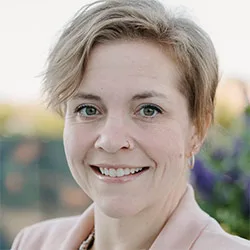 I do not support a broad moratorium because I am concerned about the unintended consequences that would impact already developed data centers. I believe we need to develop sensical guardrails around the issue of data centers as we move forward.
Thomas Palenske (Republican)
 There is too much misinformation around data centers to make a blanket decision on a moratorium without careful review. Early in the legislative session, I want an unemotional, bipartisan conversation that develops good policy, protects water and electricity customers, requires developers to pay their costs, and respects local communities. Decisions should follow facts.
That conversation should also explore how smart development could lower residential and small-business property taxes. When projects add taxable investment, they can spread the cost of local services across a broader base. But we must compare revenue after incentives with infrastructure and service costs. Then we need spending discipline so new revenue actually eases pressure on existing taxpayers. I want Kansans protected from unfair costs and positioned to benefit from responsible growth. The test is what happens to their bills, not the size of an announcement.
Coming up:
Tomorrow, we will publish the candidates’ responses to the following question:
Kansas is using STAR bonds to help pay for a new Chiefs stadium in KCK and a team HQ and training facility in Olathe. More than 20 readers emailed about this, most of them expressing worry about the long-term cost to the state budget of this project. Do you or did you support the stadium deal? How would you keep the state budget balanced in the years ahead?
 Thanks for reading! If you value having an independent news outlet keeping tabs on local government, schools and taxes, we're asking you to contribute to our Education Reporting Fund.