It was another busy odd-year election for local offices in Johnson County.
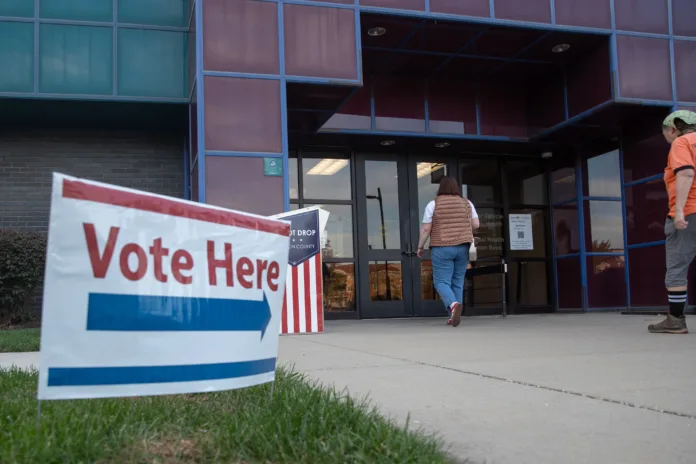
For the third straight cycle, dating back to 2021, election turnout for purely local races — mayors, city councils, school boards and more — is set to get close to or surpass 25%.
The Johnson County Election Office reported Tuesday that more than 113,000 voters cast ballots this year through Nov. 4, with that number likely to tick up as mail-in and provisional ballots are counted this week.
(For comparison, elections in 2017 and 2019 drew turnout of roughly 17% each year. Before that, odd-year local elections in Kansas were held in April and turnout figures in Johnson County were even lower.)
Even though the final count is not yet official (that will happen at the county canvass on Nov. 13), many election night results were decisive enough that we can glean some clear takeaways from what voters told us.
Here are some things we noticed:
Prairie Village says “Stop the Drama”
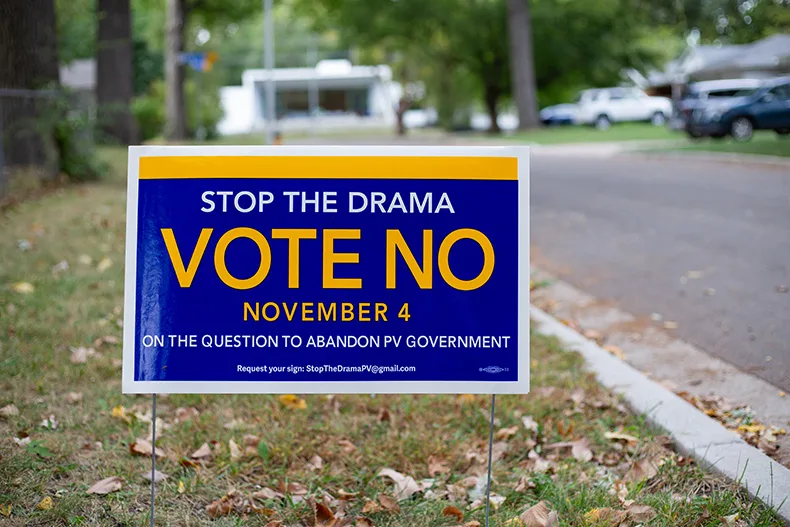
In what may have been the most-watched election in Johnson County this year, voters in Prairie Village didn’t mince messages: “Stop the Drama.”
That was the campaign rallying cry for the slate of candidates who supported moving ahead with a new city hall project and also opposed a ballot measure asking whether the city should “abandon” its mayor-council form of government.
All six of those “Stop the Drama” candidates won handily, leading by double-digit percentage point margins on election night, and the “abandon” vote also swung resoundingly toward the “no” side.
Two years ago, the resident group PV United was able to successfully organize opposition to the city’s tentative forays into housing policy and zoning, with four of the group’s favored candidates winning seats on the city council that year.
The group’s cause this year was opposing the new city hall project, but that message didn’t seem to resonate as deeply. All six PV United-backed candidates this year lost. (The group also stumped for a “yes” vote on the “abandon” question.)
The election results coupled with news this week that a federal judge had tossed out a lawsuit challenging the city hall project seems to clear the way for the much-discussed proposal to move ahead, ending the drama for now.
Overland Park endorses Skoog’s vision
Voters in Johnson County’s biggest city also sent a message at the ballot box: they like what they see.
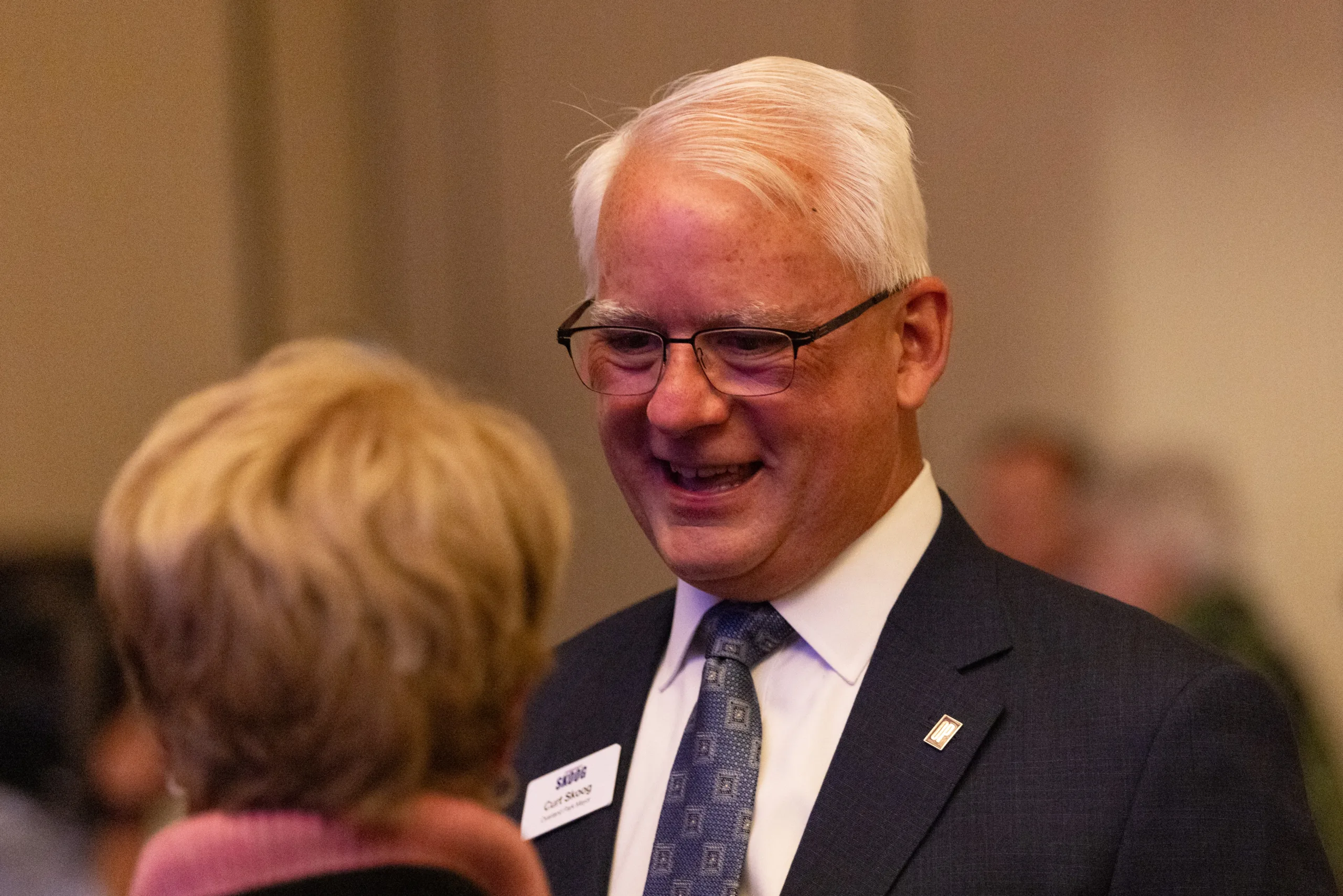
Overland Park Mayor Curt Skoog won a second term going away over former councilmember Faris Farassati. Skoog garnered more than 70% of the vote in unofficial tallies on election night.
During the campaign, Skoog touted the city’s relatively low property tax rate, its consistently high quality of life ratings and various economic development projects — including a new farmers market pavilion downtown and a plan to remake the College Boulevard corridor — as evidence he’s taking the city in the right direction.
Farassati railed against tax incentives, highlighting campaign donations Skoog took from entities connected to prominent developers, and also inveighed against what he called the “apartment invasion” and the possibility of the Royals building a new stadium in Overland Park.
But voters clearly cottoned more to Skoog’s vision.
That trickled down to the city council races, where candidates who espouse many of the same priorities and messages as Skoog also did well on election night, seemingly entrenching the mayor’s support on the city’s governing body.
Vibes high for local Democrats
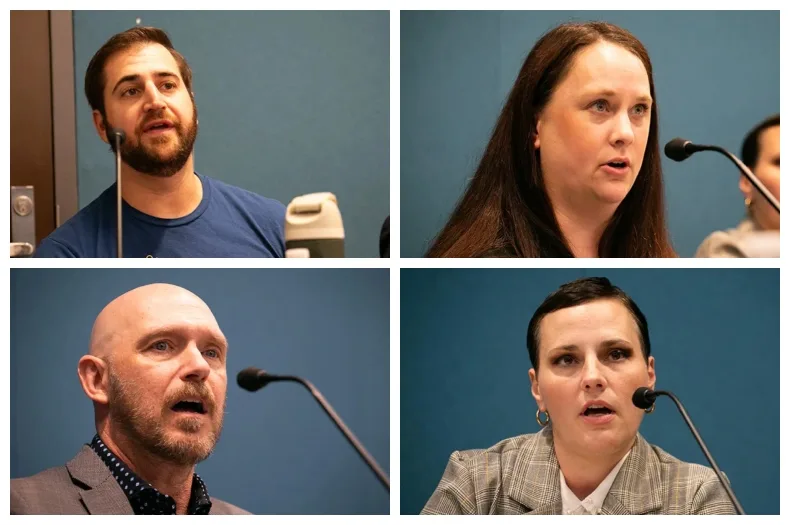
The story nationally on election night was the resurgence of Democrats, with high-profile wins for the party in contests for New York City mayor, governorships in New Jersey and Virginia and a redistricting ballot measure in California.
Johnson County elections didn’t have as much of a partisan bite, but that didn’t stop local Democrats from doing a victory lap this week.
For better or worse, the party’s endorsement lists appear to be an increasingly important shorthand for Johnson County voters in these odd-year elections when turnout is generally lower and party labels don’t appear on ballots.
JoCo Dems say 94% of the candidates the party backed this year either won or were leading after Tuesday, and there were some particularly telling results.
Four newcomers in Shawnee backed by Democrats won by comfortable margins on election night, ousting two conservatives on the city council (two more conservatives did not run for reelection), completely remaking the ideological bent of that governing body.
The top four vote-getters for Johnson County Community College Board of Trustees all were backed by the Johnson County Democrats, and 12 of the 13 school board candidates the party endorsed were leading after Tuesday.
At the bottom of the ballot, Jennifer Gunby was the winner of the lone contested seat for WaterOne board. With Democrats’ endorsement, she beat out longtime incumbent Bob Reese by 40 percentage points.
Republicans in Johnson County have managed to hold serve and even gain ground in recent elections for statehouse contests, so the vibes could very well shift back next year when state and federal races return to the ballot. But on this night, Democrats were feeling good.
Are school boards moving past controversies?
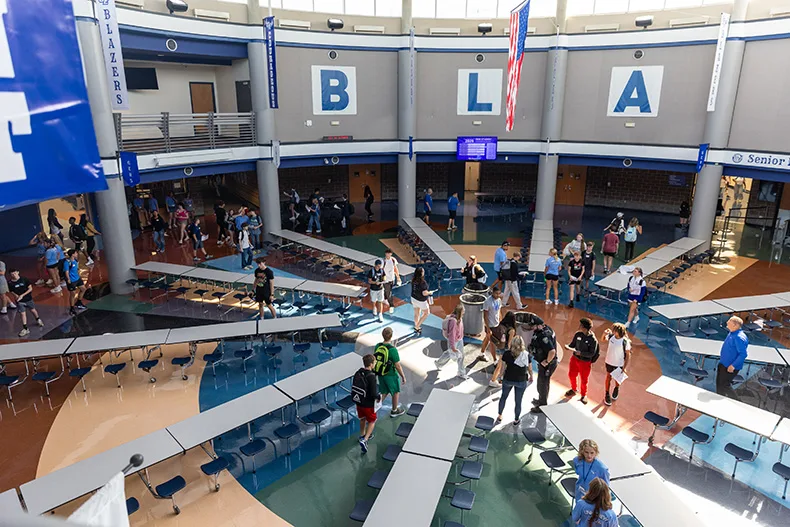
Four years ago, Johnson County school board elections were raucous and controversial, amid debates over schools’ COVID policies and diversity and inclusion efforts.
This year’s slate of school board elections felt much calmer, but some of those old ideological fault lines still exist and had an impact.
That was maybe most clear in southern Johnson County, where a handful of school board races after election night had razor-thin margins between candidates who split over hot-button issues like transgender rights and removing books from schools.
In both Spring Hill and Gardner Edgerton, incumbent board members who opposed policies like allowing trans students to use their preferred pronouns and bathrooms conforming to their gender identity were in close contests with challengers who supported such policies.
Voters elsewhere sent a clearer message. In Blue Valley, incumbent Jim McMullen was defeated by former superintendent David Benson. McMullen was first elected in 2021 and found himself battling controversy early in his tenure after tweeting about the “poison of gender ideology.”
In USD 232, Calley Malloy and Brandi Jonasson, two board members first elected in 2021 amid a particularly bruising fight with more conservative opponents, easily won reelection this year.
Another telling result was in Shawnee Mission. All three incumbent board members on the ballot — April Boyd-Noronha, Heather Ousley and Mary Sinclair — faced no challengers at all, suggesting at least in that district, that the post-COVID culture war fights have been put to rest.
Candidates who eschewed Post’s forums didn’t fare well
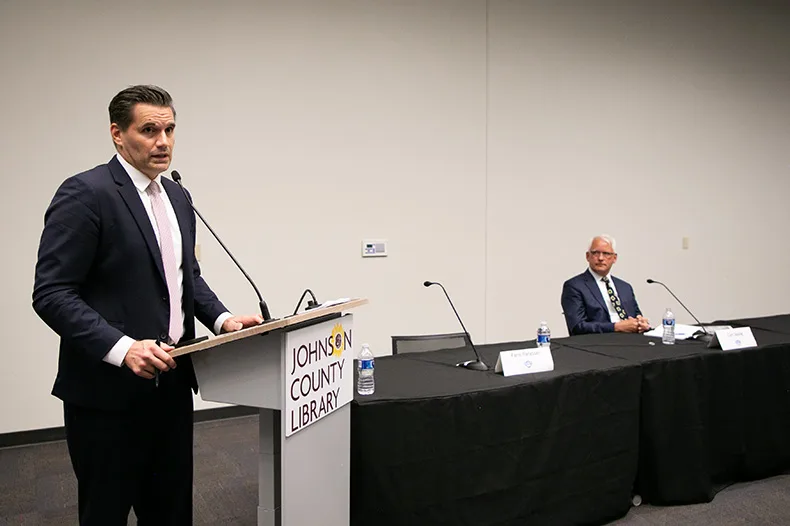
Here at the Post each election cycle, we try our best to inform our readers and the voters of Johnson County about their choices at the polls.
The primary vehicle through which we try to do that is our live, in-person candidate forums, where we invite candidates running for local office to share their visions and priorities and take questions directly from voters.
For the first time in our nearly 15 years of doing these events, the forums themselves became somewhat part of the news of the election.
That’s because a slate of candidates — six in Prairie Village — decided as a group not to participate. Their ostensible reason was they wanted all 12 city council candidates on stage at once, a condition the Post felt was too unwieldy.
Those candidates, all backed by the aforementioned group PV United, ended up hosting their own event that ultimately included 11 of the 12 Prairie Village candidates.
Meanwhile, Overland Park mayoral candidate Faris Farassati also declined to participate in the Post’s forum, in what would have been the only face-to-face meeting between him and Curt Skoog in one of this year’s highest profile races. (Farassati said he would only participate if the Post acceded to a number of conditions we deemed unreasonable.)
All six candidates in Prairie Village and Farassati in Overland Park lost on election night.
I can’t say that skipping the Post’s forums was the reason for those results, but based on feedback we got from readers and subscribers, I can say that voters noticed those candidates’ absences.
The Post will continue to strive to host nonpartisan and balanced forums in the future as part of our election coverage, and we hope candidates of all political persuasions take us up on our offer to speak directly to Johnson Countians in an effort to earn their votes.